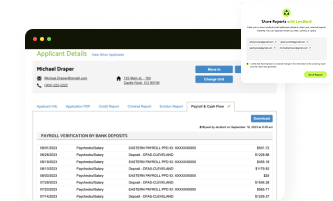
A California portable tenant screening report is a reusable background check that lets renters apply for multiple homes without paying repeated fees. In California’s competitive market, a portable tenant screening report speeds up the process by consolidating credit, eviction, and criminal history into one secure, 30-day file.
We use this state-compliant tool to give applicants more data control while providing landlords with instant, verified documentation under AB 2559. This guide covers the legal requirements and how to secure your report efficiently.
California Portable Tenant Screening Report Facts
Overview of California AB 2559 and How It Affects Screening
The California portable tenant screening report is governed by AB 2559, a state law designed to modernize the application process and reduce financial barriers for renters. This legislation provides a formal framework for how background data is shared between applicants and property owners under modern California tenant screening law.
- Who it applies to: All residential landlords, property managers, and rental applicants in California.
- Purpose: To eliminate the need for renters to pay separate, redundant application fees for every property they apply to.
- Impact on Renters: Allows for a single, reusable tenant screening report to be used for multiple applications within a 30-day window, saving significant costs.
- Impact on Landlords: Acceptance is currently voluntary. However, landlords who opt to accept these reports cannot charge the applicant an additional screening fee, leading to faster vacancy fulfillment.
By establishing these rules, AB 2559 ensures that every portable tenant screening report meets high standards for security and data accuracy.
What is a California Portable Tenant Screening Report?
A California portable tenant screening report, often referred to as a reusable tenant screening report, is a comprehensive background check that includes your credit history, eviction records, and criminal background.
Unlike traditional reports tailored for a single property, a PTSR is designed for reuse across multiple rental applications within California. To stay ahead of the competition, many renters now choose to run a tenant screening by themselves so they can address any issues before submitting their final application to a landlord.
A single, third-party verified report can thus be submitted to various landlords and typically remains valid for 30 days. The PTSR streamlines the application process, eliminating the need to pay for multiple, separate background checks for renters in California. To maintain strict portable tenant screening compliance, these reports must be sourced from reputable providers that verify all sensitive data. It is equally important for both parties to recognize exactly what information is included on a rental background check to ensure the documentation meets all state-mandated criteria.
You can obtain a PTSR from trusted, state-compliant sources such as LeaseRunner and CIC Reports. These providers follow strict state rules and issue comprehensive, accurate, and up-to-date reusable tenant screening reports.
The reusable tenant screening report offers clear benefits: it is both simple and highly cost-effective. Designed for use across many applications, the PTSR significantly saves applicants time and money, a key advantage introduced by recent changes in California tenant screening laws.
PTSR vs. Tenant Screening Report: Differences in California
There are key differences between a California portable tenant screening report and a traditional tenant screening report. We look at the main points below.
California Tenant Screening Laws (AB 2559) – What’s New for 2025?
The legal landscape for California portable tenant screening report usage continues to evolve as the state prioritizes housing transparency. While AB 2559 originally established the framework for these reports in 2023, the 2026 rental market operates under even stricter habitability and data-sharing standards.
Both landlords and tenants must stay updated on the latest regulations governing tenant screening in California to ensure they are following the most recent updates to application procedures.
Key Updates of California AB 2559
Current California law clarifies that a portable tenant screening report remains a recognized, high-standard alternative to traditional background checks. It is a common misconception that all landlords are mandated to accept them; under AB 2559, acceptance is generally voluntary (opt-in). However, if a landlord chooses to accept a reusable tenant screening report, they are strictly prohibited from charging the applicant any further screening fees.
Before finalizing any lease, property owners should also confirm their property has a valid certificate of occupancy for a rental unit to maintain full legal compliance with local housing codes. Furthermore, 2026 introduces several adjacent protections that impact the screening phase:
- Habitability Mandates (AB 628): As of January 1, 2026, landlords must provide functional stoves and refrigerators in almost all units. Screening criteria now often include "appliance addendums" if a tenant chooses to bring their own.
- Security Deposit Defaults (AB 414): Electronic deposit refunds are now the legal default if the tenant paid electronically. This shift towards digital-first transactions mirrors the rise of the California portable tenant screening report.
- Eviction Protections (AB 246): Renters are protected from eviction if non-payment is caused by documented delays in Social Security benefits. Landlords must account for these “income stability" variables when reviewing a portable tenant screening report.

Legal Responsibilities for Landlords
We advise landlords to maintain a consistent written policy regarding the California portable tenant screening report to ensure Fair Housing Act compliance. If you elect to accept these reports, they must be less than 30 days old and include verified credit, eviction, and criminal history.
Understanding your specific landlord obligations in California is vital, as you cannot add “processing fees" to a reusable tenant screening report, and you must provide a written explanation if you decline an applicant who meets your baseline criteria.
Renters’ Rights Under AB 2559
The 2026 updates empower renters to utilize a single portable tenant screening report across dozens of applications, significantly lowering the moving costs. You have the right to review your reusable tenant screening report for accuracy before sharing it, allowing you to dispute errors in credit or eviction records proactively.
This transparency ensures that you put your best foot forward in a competitive market while keeping your sensitive data secure from multiple, unnecessary credit inquiries.
For further details on tenant screening and legal requirements, visit LeaseRunner’s guide on portable tenant screening reports.
When Must Landlords Accept a Portable Screening Report?
Landlords in California must accept a California portable tenant screening report only if they have publicly stated or opted into a policy that allows the use of reusable reports as part of their standard application process. While AB 2559 provides the legal framework and standards for these reports, it does not currently mandate that every landlord in the state must accept them.
However, once a property owner elects to participate in this streamlined system, they are legally bound by specific conditions to ensure fairness and compliance. To be considered a valid portable tenant screening report that a landlord should accept under their opt-in policy, the following conditions must be met:
- Timeliness: The report must have been generated within the last 30 days to ensure the credit, eviction, and criminal data are current.
- Completeness: It must be a comprehensive reusable tenant screening report that includes credit history, a national criminal background check, and a report of all evictions within the state.
- Verification: The document must be provided directly by a third-party consumer reporting agency or through a secure, verified platform to prevent tampering.
- No Additional Fees: If a landlord accepts a portable tenant screening report, they are strictly prohibited from charging the applicant an additional fee to access the report or process the application.
- Availability: The applicant must make the report available to the landlord at no cost, typically via a secure digital link or a physical copy that meets state formatting standards.
We recommend that landlords clearly state their screening preferences in their initial rental listings to avoid confusion. By accepting a reusable tenant screening report, property owners can significantly reduce their administrative burden while helping qualified renters secure housing faster in competitive markets.
Why Use a Portable Tenant Screening Report in California?
The new California portable tenant screening report system offers clear benefits. Both renters and landlords enjoy many advantages. We look at these benefits below.
Advantages for Renters
- Cost Efficiency: You pay one fee for a reusable tenant screening report. You do not need to pay every time you apply for a rental. This saves you money.
- Faster Processing: A current California portable tenant screening report allows you to submit applications instantly. Reviewing your previous rental history details beforehand is the best way to ensure there are no surprises when your prospective landlord opens the file.
- Full Control Over Data: With the report in hand, you can verify every detail before sharing it. This means you have a chance to correct any mistakes, ensuring that your comprehensive reusable tenant screening reports accurately reflect your history.
- Uniform Information: Using one portable report across all your applications means that the information remains consistent, reducing the risk of discrepancies that could arise from multiple traditional reports.
- Improved Transparency: You see the report in full before you share it. This open process gives you peace of mind.
Benefits for Landlords
- Streamlined Process: Accepting a valid California portable tenant screening report reduces the administrative burden. Landlords no longer need to order multiple reports or wait for individual background checks.
- Up-to-date Data: Since PTSRs must be issued within 30 days, you receive the most current information, helping you make informed decisions quickly.
- Cost Reduction: Landlords do not pay extra fees for repeated screening. This makes the process more cost-effective.
- Fair and Transparent Screening: A portable report offers a uniform standard for all applicants. This consistency supports a fair screening process that complies with California’s strict tenant screening laws.
- Enhanced Decision-Making: With clear and updated data, you can choose the best tenants. This reduces risk and helps you fill vacancies faster.
For more insights on landlord responsibilities, check out California security deposit law on the LeaseRunner blog.
How to Obtain a Portable Tenant Screening Report in California?
Obtaining your California portable tenant screening report is straightforward if you follow the proper steps. Here’s a step-by-step guide for renters:
- Step 1 - Research Trusted Providers: Start by exploring reputable sources that offer a reusable tenant screening report. Providers like LeaseRunner, CIC Reports, and SmartMove are popular choices among renters and landlords.
- Step 2 - Submit Your Information: Once you have selected a provider, fill out the necessary forms with your personal and financial details. This information is used to generate your background check for renters in California.
- Step 3 - Verify Your Report: When your report is ready, review it thoroughly. Ensure that every detail, from credit history to eviction records, is correct. This step is crucial to avoid any discrepancies later.
- Step 4 - Download and Save Your Report: After verification, download the California portable tenant screening report and store it securely. Make sure that the report’s issue date is within the last 30 days.
- Step 5 - Submit with Your Applications: Use this report for each rental application for California. Since the report is portable, you can reuse it across multiple rental applications without additional fees.
Your California tenant screening report works for more than one application — secure, accurate, and landlord-approved.
More Doors, No Extra Costs
Recommended Tenant Screening Providers in California
LeaseRunner is known for its reliability and user-friendly interface. LeaseRunner provides a California portable tenant screening report that adheres to all state regulations.
CIC Reports is another option. Specializing in data accuracy, CIC Reports offers detailed and comprehensive reusable tenant screening reports that are widely accepted.
How to Evaluate a Portable Screening Report Effectively as a California Landlord?
For a fair screening procedure, landlords must make sure they are accurately reviewing a California portable tenant screening report. The following advice will assist you in assessing these reports:
- Verify the Date of Issue: Make sure the report was created within the last 30 days. This guarantees that the data you are looking over is up-to-date and pertinent.
- Review All Sections: Make sure the report covers all necessary details, credit history, eviction records, and criminal background. Each section should be complete and clear.
- Confirm Provider Credibility: Only accept reports from reputable providers known for producing reliable reusable tenant screening reports. Cross-check their ratings and customer reviews if needed.
- Compare with Application Data: Look at the rental application and the report side by side. Confirm that all details match.
- Use a Standard Checklist: Develop a checklist that includes all critical elements of the report. This helps maintain consistency across all applications and ensures no detail is overlooked.
- Evaluate Legal Compliance: Confirm that the report adheres to all requirements under California law, especially AB 2559. This includes ensuring that the report is free from discriminatory practices and respects privacy laws.
Conclusion
The California portable tenant screening report is the most efficient way to navigate the state's fast-moving rental market while ensuring full compliance with AB 2559. By utilizing a reusable tenant screening report, we help applicants eliminate redundant fees and give landlords immediate access to verified, high-quality background data.
Whether you are a renter or a property owner, you should adopt this streamlined process for your next application to save both time and money.
FAQs
Q1. Where can I get a portable tenant screening report?
You can get it from providers like LeaseRunner, CIC Reports, SmartMove, or MyRental.
Q2. How much does it cost to obtain a reusable tenant screening report?
It usually costs between $30 and $50, depending on the provider.
Q3. Can landlords refuse a valid portable tenant screening report?
No. Under AB 2559, if a renter submits a valid report, the landlord must accept it or provide a written explanation for any refusal.
Q4. Can landlords reject a portable screening report in California?
Yes. While a California portable tenant screening report is a legal standard, AB 2559 currently makes acceptance voluntary (opt-in) for landlords. However, if they choose to accept it, they are legally prohibited from charging you any additional application or screening fees.
Q5. Does a landlord have to refund screening fees?
Generally, screening fees are non-refundable once the background check is processed. However, if a landlord accepts your reusable tenant screening report, they cannot charge a fee at all.
Additionally, under California law, if a landlord collects a fee but does not actually run the screening (e.g., the unit is rented to someone else first), they must refund the unused portion of that fee.
Q6. What is included in a portable tenant screening report?
To be legally valid under AB 2559, a portable tenant screening report must include your full credit history, a comprehensive criminal background check (often covering all 50 states), and a detailed record of any past evictions or unlawful detainer actions.
Disclaimer: The information provided in this post is intended for general informational and educational purposes only. It should not be construed as legal, accounting, or tax advice. For guidance specific to your situation, we recommend consulting with a qualified professional in the relevant field before taking any action based on the content provided.