Retaining a good tenant is often more cost-effective and less stressful than the arduous process of finding a new one. A well-executed lease renewal is central to this retention strategy.
For landlords, the lease renewal letter is more than just a formality; it is a critical business document that ensures cash flow, minimizes vacancies, and sets the terms for the next tenancy period.
What is a Lease Renewal Letter?
A lease renewal letter is a formal written notice from a landlord to a tenant, offering to extend the lease agreement for an additional term.
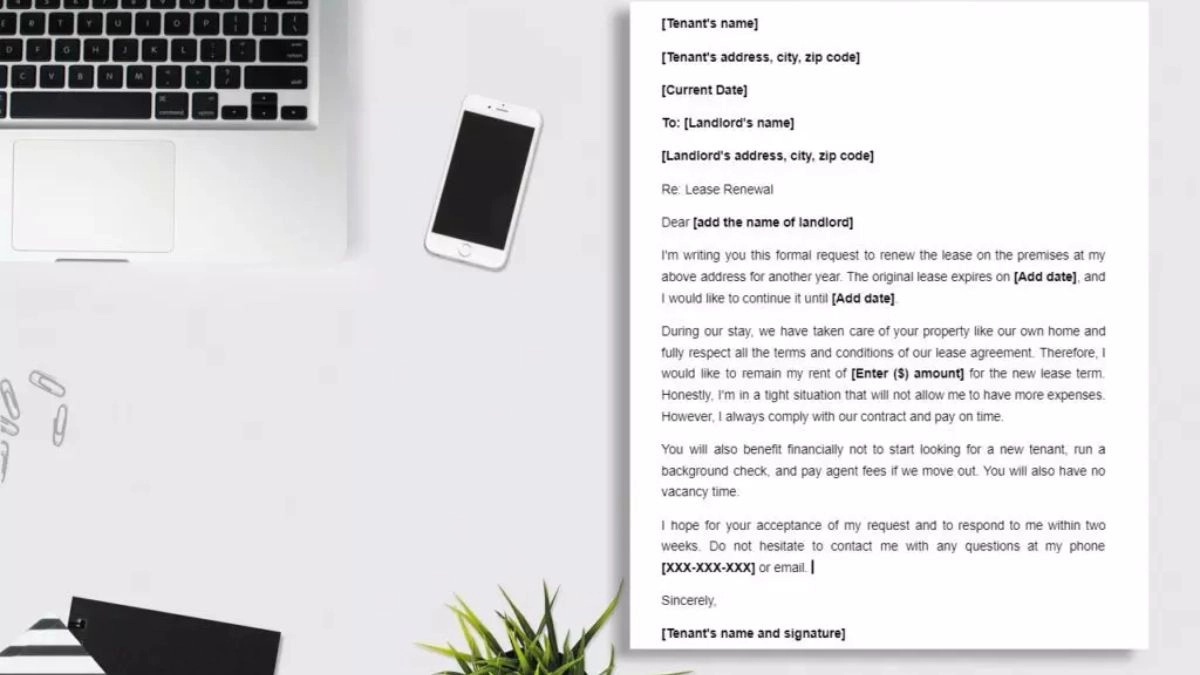
Unlike a new lease, a lease renewal typically retains the original terms, although landlords may propose adjustments such as a rent increase. The purpose of this letter is to ensure transparency and document the landlord’s intent to continue the rental relationship.
Common variations include:
- Renewal of lease agreement letter - emphasizes legal continuity.
- Lease renewal letter with rent increase - communicates proposed changes in rent.
- Letter to extend lease agreement - straightforward extension notice.
By sending a clear and professional lease renewal letter, landlords create a documented trail that helps avoid disputes and provides legal protection.
When Should Landlords Send a Lease Renewal Letter?

Timing is critical in the lease renewal process. Landlords must ensure tenants receive notice well in advance of the lease expiration. Local laws often dictate the minimum notice period, which can vary from 30 to 90 days depending on the jurisdiction.
Some important timelines to consider:
- When do landlords have to send lease renewal? Generally, most states require landlords to provide notice at least 30 days before the lease ends. Certain jurisdictions, such as California, mandate a 60-day notice for tenants with leases longer than one year. Other cities or rent-controlled areas may have their own specific requirements, so landlords should always check local regulations.
- When should you get a lease renewal? Landlords should aim to send letters early enough to allow tenants to respond or negotiate.
Failing to provide adequate notice can delay the renewal process, create confusion, or even violate local rental laws. It’s essential for landlords to check state-specific rules and apartment policies. For further guidance on timing, see lease extension vs. renewal.
How to Write a Lease Renewal Letter as a Landlord
Writing a clear, comprehensive, and legally sound lease renewal letter is essential for professional property management. The goal is to present a professional offer that is easy for the tenant to understand and execute.
Key Elements to Include in Your Lease Renewal Letter
A complete and effective lease renewal and rent increase letter must contain several specific components to be legally binding and clear.
- Date and Contact Information: The date the letter is sent, and the full names and contact details for both the landlord/property manager and the tenant.
- Property Address: Clear identification of the rental unit being discussed.
- Statement of Intent: A clear and direct statement that the letter is an offer to renew the current lease agreement.
- Current Lease Details: The expiration date of the current lease agreement.
- Proposed New Terms: The specifics of the new agreement, the precise new rental rate, and any other modifications to the original lease.
- Response Deadline: The date by which the tenant must notify the landlord of their decision. This deadline is often tied to the legal notice requirement.
- Consequence of Non-Response: A statement explaining that if the tenant does not respond by the deadline, the landlord will assume the tenant is vacating, or the tenancy will revert to a month-to-month agreement.
- Signature Lines: Space for the tenant to acknowledge receipt and agreement and the landlord’s signature.
Including these elements ensures clarity and legal enforceability.
Sample Lease Renewal Template
Here’s a practical sample lease renewal letter to landlord landlords can adapt:
[Landlord/Company Name] [Address] [City, State, Zip] [Date] [Tenant Name(s)] [Property Address] Subject: Offer to Renew Lease Agreement Dear [Tenant Name], This letter serves as a formal offer to renew the lease agreement for the property located at [Property Address]. Your current lease is set to expire on [Current Lease End Date]. We have enjoyed having you as a tenant and would like to offer you the opportunity to renew your lease for an additional [New Term Length, e.g., twelve (12) months]. The terms of the proposed new lease are as follows: All other terms and conditions of the original lease agreement shall remain in full effect. Please indicate your decision to accept or decline this offer by [Response Deadline Date]. You can accept by signing the enclosed new lease agreement form and returning it to this office. If we do not receive a written response by this date, we will assume you do not wish to renew, and we will begin preparations for your scheduled move-out. Sincerely, [Landlord Signature] [Landlord Printed Name]
This renew lease agreement form can be modified to include rent increases, additional terms, or incentives. For examples of including rent changes, see rent increase letter.
Best Practices For Landlords to Write a Lease Renewal Letter

A well-crafted lease renewal letter reflects professionalism and strengthens landlord-tenant relationships. Consider these best practices:
1. Be Professional and Polite
The tone of the lease renewal letter should always be professional, positive, and appreciative. A brief note acknowledging the tenant’s reliability (e.g., "We appreciate your timely rent payments and taking excellent care of the property") can significantly influence their decision.
Remember to avoid using the pronoun "you" in the direct sense, maintaining a tone that speaks about the tenant's actions or the agreement's terms (e.g., "Timely payments are valued," or "The tenant is offered...").
2. Provide Ample Notice
Providing adequate notice, usually 30–90 days, allows tenants to consider the offer. This also ensures compliance with state laws.
3. Review Local Laws
Landlord-tenant laws are state and locally specific. Before sending the lease renewal letter with rent increase, landlords must confirm:
- Notice Period: The minimum required notice for non-renewal or rent increases.
- Rent Control/Stabilization: If the property falls under any local ordinances that limit the percentage or frequency of rent increases.
- Just Cause Eviction: In areas with "just cause" ordinances, a non-renewal must often be based on one of the legally defined reasons.
For example:
- New York: Rent-stabilized apartments have strict renewal and rent increase rules.
- California: 60-day notice required for tenants with leases longer than one year.
Failure to comply can result in legal disputes.
4. Keep Records
Every communication regarding the renewal must be documented. Landlords should:
- Send the lease renewal letter via certified mail, or a trackable email system to prove the date of delivery.
- Keep a copy of the final, signed new lease agreement or extension of lease agreement template.
- Maintain records of previous sample lease renewal letter to landlord correspondence if a tenant initiated the request.
5. Attach Necessary Documents
Always enclose the renew lease agreement form or a full draft of the new lease agreement. Tenants need to see the full document to understand any clause changes.
If the new term is a lease extension, attach the specific lease addendum that outlines the extension period and rent. More information on what is a lease addendum is helpful here.
6. Consider Incentives
If a landlord has a high-quality tenant who pays on time and maintains the property, offering a small incentive can be a powerful retention tool, especially if the offer includes a rent increase. Incentives could include:
- A slight reduction in the proposed rent increase.
- A cosmetic upgrade (e.g., new carpet or fresh paint upon signing).
- A small reduction in the security deposit (if local laws permit).
Key Considerations When Asking a Tenant to Renew
Before the landlord even drafts the letter to extend lease agreement or renewal offer, several key analyses must be performed. The decision to ask a tenant to renew is a strategic one.

Tenant Evaluation
Assess tenant behavior, payment history, and property upkeep. Reliable tenants often justify retention despite potential rent increases:
- Payment History: Has the tenant consistently paid rent on time?
- Property Care: Have there been any reported maintenance issues due to neglect? Conduct a mid-term inspection if necessary.
- Complaints: Has the landlord received any complaints from neighbors (noise, parking violations, etc.)?
If a landlord has a poor tenant, the strategy shifts to drafting a how to write a non-renewal of lease letter instead of a renewal offer.
Market and Financial Analysis
Before sending a lease renewal letter, landlords should conduct a rental market assessment to determine whether rent adjustments are needed. Market shifts can significantly impact profitability, and renewal rates should align with current rental demand.
Areas to review include:
- Comparable unit pricing (comps) within the same neighborhood
- Vacancy rates in surrounding properties
- Local economic trends, such as employment growth or new developments
- Property expenses, including taxes, insurance, and maintenance
When determining increases, landlords must also comply with local limits. For example:
- Oregon limits annual rent increases to a statewide cap.
- California restricts increases limited to no more than 5% plus + CPI under AB 1482 for many units.
A careful market and financial analysis ensures that proposed renewal terms remain competitive, fair, and legally compliant.
Logistics and Timing
Proper timing makes lease renewals smoother and reduces administrative complications. Renewal discussions should begin early enough to give tenants plenty of time to prepare while ensuring landlords have sufficient time to plan for potential turnovers.
Key factors to consider:
- Lease expiration date: Most landlords initiate renewal discussions 60–90 days in advance.
- Property maintenance schedules: If major repairs are planned, the renewal letter might need to be adjusted dates or temporary arrangements.
- Seasonality: Rental demand may vary. For example, leases ending in winter often have longer vacancies.
- Turnover time: If a tenant declines renewal, starting early gives landlords time to list and prepare the unit.
Legal and Documentation
Every lease renewal must comply with federal, state, and local laws. Landlords should ensure that the lease renewal letter and updated agreement meet all legal requirements before offering it to a tenant.
Key legal factors include:
- Notice period requirements: Some states require 30 days; others require 60–90 days.
- Rent increase caps: Rent-controlled jurisdictions limit how much rent can rise annually.
- Disclosures: States like California require mold, pest, and utility disclosures even for renewals.
- Fair housing compliance: Renewal decisions must not discriminate based on protected characteristics.
- Form requirements: Some states require renewal addendums to be in writing and signed.
What Happens After Sending a Lease Renewal Letter?
Once the lease renewal letter is sent, landlords may encounter several outcomes:
1. The Tenant Accepts the Offer
When a tenant agrees to renew, the process becomes straightforward. The landlord should provide the updated lease agreement or the renewal of lease agreement letter, including any revised terms such as rental adjustments, updated policies, or a new lease term start date.
What landlords typically do next:
- Prepare the new lease agreement or lease extension addendum.
- Send digital or physical copies for the tenant’s signature.
- Collect any applicable fees such as security deposit adjustments (in states where allowed).
- Confirm the start date of the renewed term and file the signed documents.
It is essential to confirm the tenant’s income again, especially if the lease is being renewed with a significant increase; information on how to verify tenant income can be helpful here.
2. The Tenant Declines the Offer
Some tenants may choose not to renew, even when offered favorable terms. Reasons may include relocating for work, seeking more space, downsizing, or purchasing a home.
When a tenant declines, landlords should follow the proper steps to prepare for vacancy:
Next actions:
- Send a written acknowledgment of the tenant’s intention to vacate.
- Provide move-out instructions, including cleaning requirements, key return procedures, and inspection scheduling.
- Begin marketing the property early to reduce vacancy time.
- Schedule necessary repairs or upgrades before the next tenant moves in.
3. The Tenant Requests Negotiation
Not all tenants immediately accept or decline. Some may request changes to the terms offered, such as the rental amount, lease length, or included services.
Common negotiation requests include:
- Reducing the proposed rent increase
- Extending the lease for 6 months instead of 12
- Adding or removing services such as parking or storage
- Adjusting pet policies or maintenance responsibilities
Landlords can evaluate whether the proposed changes align with financial goals, market demand, and property constraints.
4. No Response by the Deadline
If the response deadline passes and the landlord has heard nothing:
- Check the Lease: The original lease dictates what happens. It usually stipulates that the tenancy will end, or it converts to a month-to-month tenancy at a potentially higher rate.
- Send a Follow-Up: A final letter should be sent confirming the assumption of non-renewal and reminding the tenant of their move-out date.
- Prepare for Eviction: If the tenant remains past the expiration date, the landlord must consult local counsel regarding how to get out of lease early for the tenant, or the proper legal process for holdover tenants.
Legal Considerations for Lease Renewal
Landlords must navigate legal requirements when renewing leases. Key points include:
1. Legal Notice Requirements
Vary by state; failure can result in automatic lease renewal or tenant claims.
Common state timelines include:
- 30 days: Texas, Florida, Georgia, Arizona (for most lease changes)
- 45 days: Virginia (rent changes)
- 60 days: California (for significant rent increases and term changes)
- 75–90 days: New Jersey and Washington, D.C. under certain rent-controlled conditions
Some cities have their own local regulations that override state laws—especially in rent-stabilized or high-regulation markets.
2. Rent Increase Caps and Limitations
Many states and municipalities impose limits on how much landlords can raise rent during a lease renewal. These caps aim to protect tenants from sudden, unaffordable increases.
In states without rent caps, like Texas, Alabama, or Colorado, landlords have more flexibility but must still comply with proper notice requirements.
4. Required Disclosures and Documentation
Even for renewals, many states require landlords to provide updated disclosures or attach new documents to the lease.
Common disclosure requirements include:
- Lead-based paint disclosures (federally required for pre-1978 housing)
- Mold, asbestos, and radon disclosures (California, Colorado, Maine)
- Flood risk disclosures (Texas, Louisiana)
- Bed bug disclosures (Arizona, Massachusetts)
- Utility billing or ratio utility billing statements (RUBS)
In some states, even a renewal letter must include certain information, especially for rent increases.
4. Fair Housing and Anti-Discrimination Rules
Lease renewals must comply with the Fair Housing Act (FHA) and applicable state anti-discrimination laws. A landlord cannot decline a renewal or offer different terms based on protected characteristics, including:
- Race, color, national origin
- Religion
- Sex, gender identity, or sexual orientation
- Familial status
- Disability
- Age (in many states)
If a tenant is denied renewal for legitimate reasons, such as repeated nonpayment or property damage - the landlord must maintain documentation proving the decision was based on performance and not a protected status.
5. Local Housing Ordinances
Beyond state and federal laws, many cities implement additional requirements on lease renewals. These can apply to:
- Mandatory renewal rights
- Good-cause eviction requirements
- Justification for non-renewal
- Limits on deposit increases
- Tenant relocation assistance
6. Documentation and Recordkeeping Requirements
Accurate documentation ensures the renewal process is legally defensible.
Recommended records include:
- Copies of the lease renewal letter
- Proof of delivery (email timestamp, certified mail receipt, electronic signature log)
- Rent increase calculations
- Tenant communication records
- Updated lease forms and addendums
- Notes on negotiations or tenant requests
7. Compliance When Not Renewing the Lease
Sometimes landlords choose not to offer renewal. In this case, strict compliance is necessary to avoid wrongful non-renewal claims.
Processes typically include:
- Providing written notice within the required state timeline
- Issuing a formal non-renewal letter
- Documenting the reason (if required under local “just cause” laws)
- Following rules under city-level tenant protection ordinances
Landlords can refer to resources such as how to write a non-renewal of lease letter or lease termination letter template to ensure the non-renewal is fully compliant.
Conclusion
Lease renewals don’t have to be stressful or time-consuming. When landlords approach renewals with clear communication, accurate documentation, and a solid understanding of tenant needs, they can protect their investment while keeping great renters longer.
If you want a smoother, faster, and fully compliant renewal workflow, LeaseRunner is here to help. From digital lease creation to secure e-signatures and built-in tenant screening tools, LeaseRunner lets you manage every step online—no paperwork, no delays.
FAQs
How Much Notice Should Be Given for Lease Renewal?
Notice periods vary by jurisdiction, typically ranging from 30 to 90 days. Local rental laws determine the minimum timeframe.
Can You Increase Rent During a Lease Renewal?
Yes, landlords may propose rent adjustments during lease renewal. In rent-controlled areas, increases must comply with local limits.
When Do Apartments Typically Send Lease Renewals?
Apartments usually send lease renewal letters 60–90 days before lease expiration to give tenants sufficient time to respond or negotiate.
Disclaimer: The information provided in this post is intended for general informational and educational purposes only. It should not be construed as legal, accounting, or tax advice. For guidance specific to your situation, we recommend consulting with a qualified professional in the relevant field before taking any action based on the content provided.