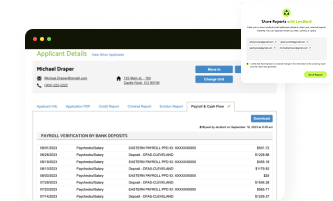
‘Comprehensive tenant screening’ means carefully checking a rental applicant's criminal record, legal history, and financial stability to see if they can be trusted as a renter. A regular credit check shows that someone can pay their bills, but it doesn't show if they have been sued for property damage, had problems with their behavior, or been evicted without telling anyone.
Your property is a big financial investment as a landlord. If you only look at your credit score, you could end up in costly legal battles and have to pay for property turnover. The best way to save thousands of dollars in legal fees and protect your rental income is to do a full background check and look for red flags early on.
Here is everything you need to know about screening tenants for past legal issues, staying compliant with federal laws, and building a standardized application process.
What Is Comprehensive Tenant Screening?
Comprehensive tenant screening goes beyond verifying an applicant's self-reported income. It is an objective, data-driven look at how an applicant has acted as a renter and a citizen in the past. In today's rental market, it's not enough to just trust your gut or call your last landlord.
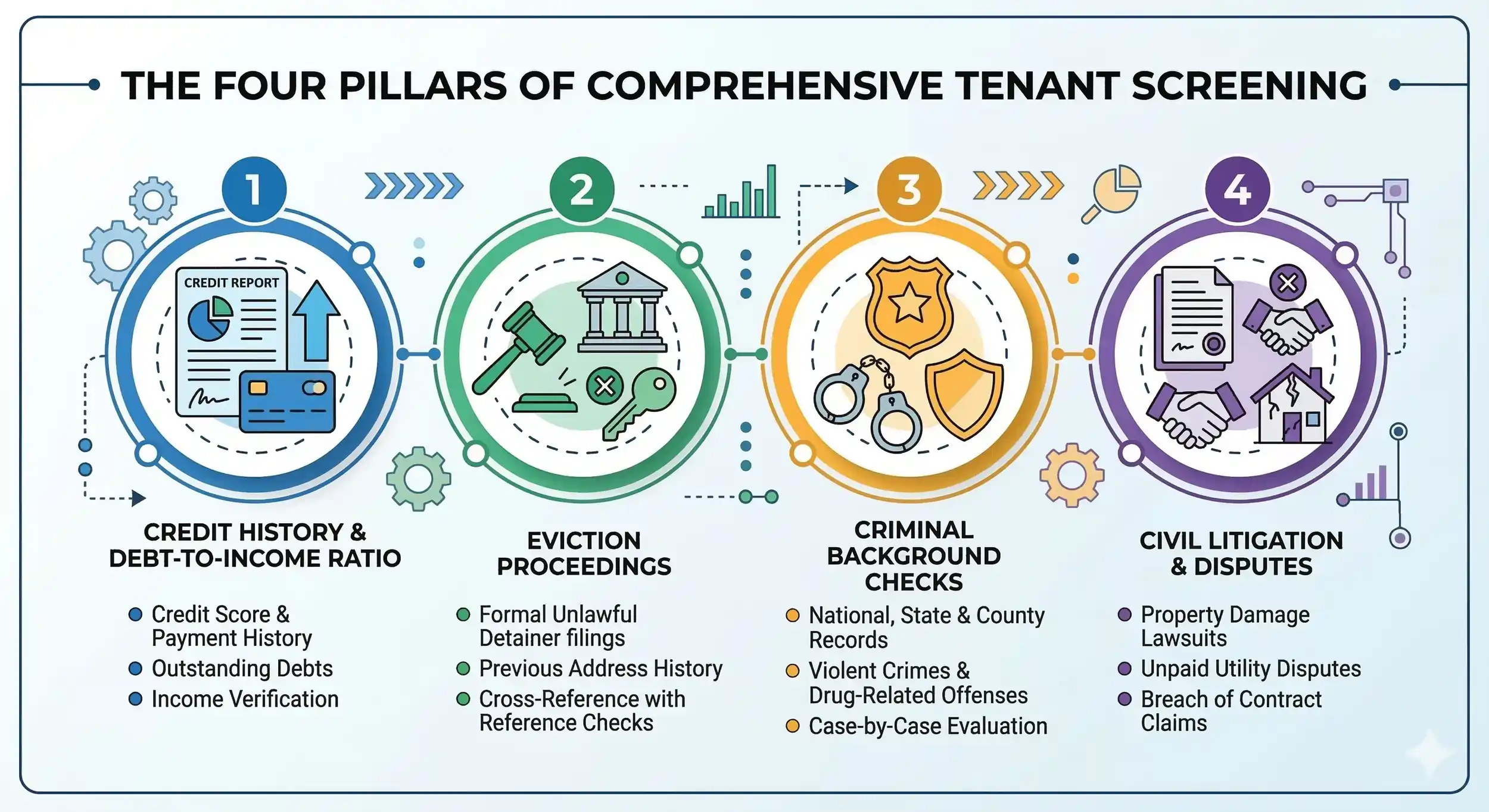
There are four main parts to a strong screening process:
-
Credit History & Debt-to-Income Ratio: Looks at how financially responsible you are, how much debt you have, and how consistently you make payments.
-
Eviction Proceedings: Lists the official legal steps that previous property owners took to get rid of the tenant.
-
Criminal background checks find convictions that could be dangerous for the property, the neighborhood, or other tenants.
-
Civil Litigation & Disputes: Shows lawsuits about damage to property, unpaid utility bills, or breaking a contract.
Landlords can make confident, low-risk leasing decisions when they combine these four things.
Why Should Landlords Look at More Than Just Credit Scores?
A credit score is a number that tells you how well someone manages structured debt, like credit cards and car loans. However, a high credit score does not guarantee a good tenant.
Consider this scenario: An applicant might have a pristine 750 credit score because they always pay their credit card bills on time. However, that same applicant might have a history of initiating frivolous lawsuits against property managers over minor maintenance disputes, or they might have left their previous apartment with severe, undocumented pet damage.
Furthermore, standard credit bureaus do not include eviction data or civil judgments on credit reports. If you only pull a credit profile, you are only seeing half the story.
The True Cost of a Bad Tenant: According to industry data, the average cost of a formalized eviction ranges from $3,500 to $10,000. This includes costs for filing in court, hiring a lawyer, losing rent during the case, and turning over the property.
To lessen these risks, property owners need to use tenant background screening services that combine information from many public records. This makes sure that no behavioral red flags go unnoticed.
How to Check a Tenant’s Legal and Eviction History?
Understanding how to navigate public records is critical for modern property management. Here is how different legal issues present themselves during the screening process.
How do evictions show up on a record?
A formalized eviction, legally known as an Unlawful Detainer, appears on a specialized eviction report pulled from county court data. However, it is vital to understand the difference between a formal eviction and a "cash for keys" settlement.
If a previous landlord paid a problematic tenant to leave voluntarily (cash for keys), no formal eviction was filed, and the event will not appear on a standard background check. This is why cross-referencing eviction data with landlord reference checks is mandatory. To ensure you are capturing formal filings, always run dedicated eviction checks alongside your standard application.
How to uncover civil disputes and lawsuits?
Not all landlord-tenant conflicts end in an eviction. Many disputes end up in small claims or civil court. A tenant might have been sued for thousands of dollars in property damage, unpaid independent contractors, or broken lease agreements. These civil judgments do not appear on standard criminal background checks because they are not criminal offenses.
To verify if an applicant has a history of civil litigation or hidden disputes with previous property managers, landlords can perform a comprehensive court records search to uncover relevant county or state filings. Discovering a pattern of civil litigation can save you from entering a binding contract with a highly litigious individual.
What about criminal background checks?
Criminal checks pull from national, state, and county databases to identify misdemeanors and felonies. As a landlord, your primary concern should be offenses that threaten the safety of your property or neighboring residents, such as violent crimes, arson, or the manufacturing and distribution of illegal substances.
What Are the Legal Boundaries When Screening Tenants?
Gathering background data is only half the battle; using that data legally is equally important. Landlords must strictly adhere to federal and state regulations to avoid discrimination lawsuits and penalties.
The Fair Credit Reporting Act (FCRA)
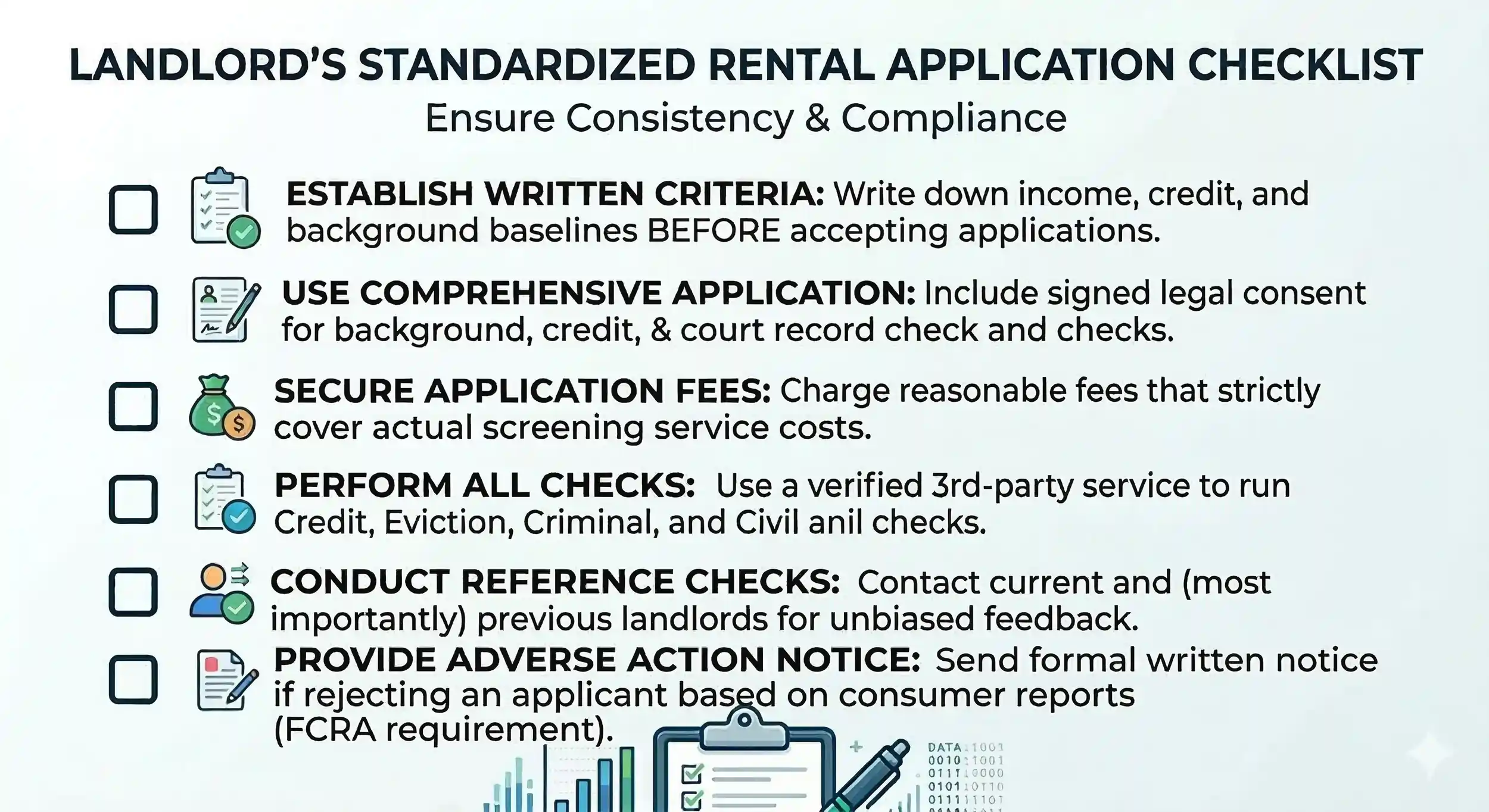
If you reject an applicant or charge them a higher security deposit based on information found in a background, credit, or eviction report, the FCRA requires you to provide an "Adverse Action Notice." This written notice informs the applicant of why they were denied and gives them the contact information of the screening agency used, allowing them to dispute any inaccurate data.
The FHA (Fair Housing Act)
The FHA says that it is illegal to discriminate against someone because of their race, color, national origin, religion, sex, family status, or disability. The Department of Housing and Urban Development (HUD) has also warned against banning all applicants with criminal records in recent years. Instead, landlords should look at each person's criminal record one at a time, taking into account the type of crime, how serious it was, and how old the person is.
How to Create a Standardized Screening Process?
The best defense against a bad tenant—and against a discrimination claim—is a standardized, repeatable screening process. Every applicant must jump through the exact same hoops.
Follow this step-by-step guide to protect your rental business:
-
Set Clear Written Criteria: Before listing your property, document your minimum requirements. This should include minimum credit scores, income-to-rent ratios, and your policies on past evictions or civil judgments. Include this criteria in your property listing to weed out unqualified applicants early.
-
Full Application Required: Your rental application should clearly ask about your criminal record, any past evictions, and any lawsuits. The most important thing is that the application must include a signed legal consent form that gives you permission to look at their credit, criminal, and court records.
-
Use a third-party service that is verified: Don't try to put together a background check by calling county courthouses and searching for applicants on Google (better use a single platform that meets the FCRA's requirements to quickly and accurately process credit, criminal, and eviction data).
-
Conduct Thorough Reference Checks: Call past landlords (not just the current one). A current landlord might give a glowing review simply to get rid of a bad tenant. Ask specific questions: Did they pay rent on time? Did they leave the property damaged? Would you rent to them again?
Final Thoughts
Protecting your real estate investment requires diligence, consistency, and a willingness to look beneath the surface of a standard credit report.
-
Credit is not enough: A high credit score does not protect you from tenants with a history of property damage or frivolous civil lawsuits.
-
Search for legal history: Formal evictions and civil judgments for unpaid damages are massive red flags. Utilize comprehensive screening tools and dedicated court record searches to find hidden disputes.
-
Stay compliant: Always follow the FCRA by providing Adverse Action Notices when necessary, and ensure your screening criteria do not violate Fair Housing guidelines.
-
Standardize your workflow: Apply the exact same written criteria and screening steps to every applicant to avoid bias and streamline your leasing process.
By implementing a rigorous, legally compliant screening strategy today, you ensure a profitable, stress-free rental experience tomorrow.
Disclaimer: The information provided in this post is intended for general informational and educational purposes only. It should not be construed as legal, accounting, or tax advice. For guidance specific to your situation, we recommend consulting with a qualified professional in the relevant field before taking any action based on the content provided.