How do you calculate depreciation on a rental property? Take the cost basis, subtract the land value, and divide what remains by 27.5 years. For a $400,000 property with $60,000 of land, that's $340,000 ÷ 27.5 = about $12,364 a year. That single non-cash deduction can lower taxable rental income by thousands of dollars every year, but only if the basis, land value, and first-year proration are right. This guide walks through each step, what can and can't be depreciated, and the mistakes that cost landlords money. It's general information, not tax advice, so confirm your numbers with a CPA before filing.
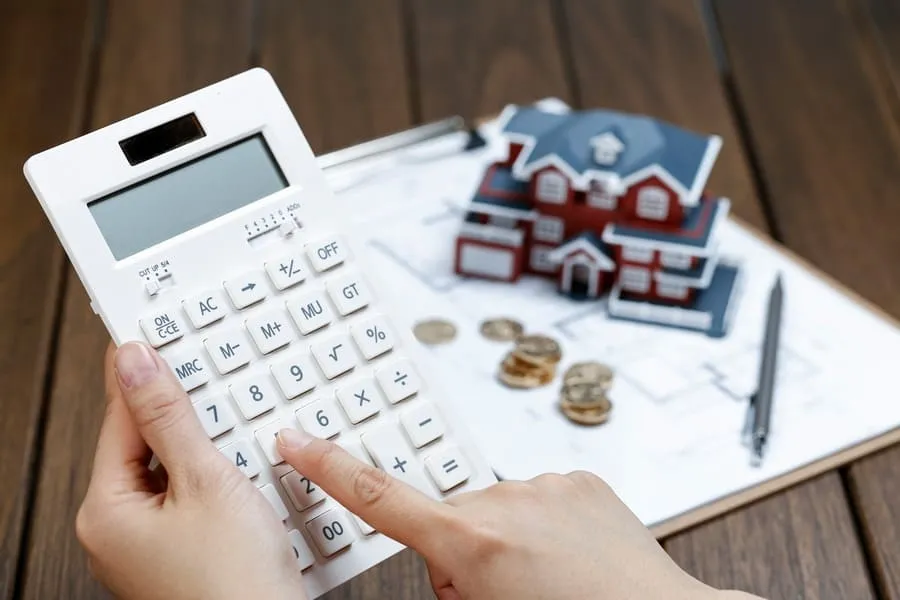
Rental Property Depreciation Formula
Depreciation lets a landlord recover the cost of a building over its useful life instead of in one year. For residential rental property, the IRS uses straight-line depreciation over 27.5 years under the General Depreciation System (GDS), part of MACRS (Source: IRS Publication 527).
| Step | Calculation | Example ($400,000 property, $60,000 land) |
| Purchase price + qualifying closing costs + capital improvements | = Cost basis | $400,000 |
| Cost basis − land value | = Depreciable basis | $340,000 |
| Depreciable basis ÷ 27.5 years | = Annual depreciation | $12,364 per year |
Step-by-Step: How Do You Calculate Depreciation on a Rental Property?

Step 1: Calculate your property's cost basis
Start with the purchase price on the closing statement, then add settlement costs tied to acquiring the property, such as legal fees, recording fees, title insurance, and surveys. Loan costs like points and origination fees are not added to the basis; they are amortized over the life of the loan. The cost basis is not the appraised value or the number on a property tax bill.
Step 2: Add capital improvements
Add improvements that add value or extend the building's life, such as a new roof, new plumbing, or a full kitchen remodel. Routine repairs like repainting or patching a leak are deducted in the year they are paid instead. LeaseRunner's guide on deducting remodeling expenses for rental property explains where that line falls. Each improvement is generally depreciated as its own asset, starting the month it is placed in service.
Step 3: Remove land value
Land doesn't wear out, so it is never depreciated. The county assessor's record usually lists separate land and improvement values. Many landlords apply the assessor's land-to-total ratio to their purchase price, which helps when assessed values lag market prices. For unusual properties, an appraisal gives a stronger number.
Step 4: Divide the depreciable basis by 27.5 years
Divide what remains by 27.5 to get the annual deduction: $340,000 ÷ 27.5 = $12,364. The amount stays the same each year, whether the unit is rented or briefly vacant. Report it on Form 4562 in the year the property is placed in service, then on Schedule E, line 18, every year after. Because no cash leaves your account, depreciation directly improves your rental cash flow after taxes.
How Do You Calculate First-Year Rental Property Depreciation?
The first year almost never gets the full deduction. The IRS uses the mid-month convention: the property is treated as placed in service in the middle of the month it became available to rent, whether or not a tenant moved in. Multiply the depreciable basis by the percentage for that month in Table 2-2d of Publication 527.
For a property placed in service in July, the first-year rate is 1.667%. Using the same $340,000 basis, that's about $5,668 for year one, which equals 5.5 months of the full $12,364. The same proration applies in the year you sell the property or stop renting it.
What Property Can Be Depreciated?
A rental qualifies when you own it, use it to produce income, and it has a measurable useful life longer than one year. The building and its structural parts (roof, wiring, plumbing) follow the 27.5-year schedule. Items inside the unit often depreciate faster:
| Property type | Common recovery period |
| Land | Not depreciable |
| Residential building and structural improvements (roof, HVAC) | 27.5 years, straight-line |
| Appliances, furniture, and carpeting | Often 5 years |
| Land improvements (fencing, driveways) | Often 15 years |
Shorter-life assets may also qualify for 100% bonus depreciation under Section 168(k), restored for qualifying property by the 2025 tax law (Source: Congress.gov, H.R. 1). A few landlords must use the Alternative Depreciation System instead, which runs 30 years for residential rental property placed in service after 2017. Confirm each asset's class in IRS Publication 946 before filing.
What Is Included in a Rental Property's Depreciable Basis?

The depreciable basis is the cost basis plus capital improvements, minus land value, excluding anything already deducted as a repair. Property you didn't buy follows different rules:
- Inherited property: generally uses the fair market value at the date of death.
- Gifted property: generally carries over the donor's adjusted basis.
- Former home converted to a rental: uses the lower of your adjusted basis or fair market value on the conversion date.
Every dollar of depreciation reduces taxable rental income, but losses may be limited by passive activity rules. See LeaseRunner's guides to passive rental income and rental property tax deductions for how depreciation fits with mortgage interest, repairs, and other Schedule E items.
What Happens to Depreciation When You Sell a Rental Property?
When you sell, the depreciation you claimed, or could have claimed, is "recaptured" as unrecaptured Section 1250 gain, taxed at a maximum 25% rate (Source: 26 U.S.C. § 1250; IRS Publication 544). The IRS assumes you took the deduction even if you didn't, so skipping it doesn't avoid recapture.
For example, after six years of about $74,000 in depreciation, the $400,000 property's adjusted basis falls to roughly $326,000. Selling for $500,000 creates $174,000 of gain: about $74,000 is recapture, and the remaining $100,000 is taxed at capital gains rates. A 1031 exchange can defer that tax, as covered in LeaseRunner's guide on how to pay less tax on rental income.
Common Mistakes When Calculating Rental Property Depreciation

Mistake 1: Depreciating the entire purchase price
Dividing the full price by 27.5 without removing land inflates the deduction and creates a mismatch with your records. Land's share varies widely by market, so pull the actual figure from the assessor or an appraisal.
Mistake 2: Including repairs as improvements
Repairs are deducted the year you pay for them. Bundling them with improvements, often after a renovation billed on one invoice, delays deductions you could take now. LeaseRunner's rental property renovation guide shows how to separate the two.
Mistake 3: Using the wrong recovery period
Residential rental property uses 27.5 years; commercial property uses 39. Mixed-use buildings, such as a storefront with apartments above, need to be split between the two schedules.
Mistake 4: Forgetting first-year proration
Claiming a full year in the purchase year overstates the deduction and throws off every later year. Small errors can be fixed with an amended return; longer-running errors may need an accounting method change on Form 3115 (Source: IRS Instructions for Form 3115).
Conclusion
So, how do you calculate depreciation on a rental property? Find the cost basis, add capital improvements, subtract land value, divide by 27.5 years, and prorate the first year by the month the property was placed in service. Getting those numbers right in year one protects every return that follows, and keeping clean records makes recapture easier to handle when you eventually sell.
FAQs
Can you depreciate land with a rental property?
No. Land doesn't wear out, so the IRS excludes it. Only the building and its improvements can be depreciated.
How many years do you depreciate residential rental property?
27.5 years under GDS, the standard method in IRS Publication 527. Landlords required to use ADS use 30 years for property placed in service after 2017.
Is depreciation based on purchase price?
Partly. It starts with the purchase price, adds qualifying closing costs and capital improvements, and subtracts land value, so it rarely matches the price on the closing statement.
Can you depreciate rental property improvements?
Yes. Each capital improvement is depreciated as a separate asset from the month it is placed in service. Structural improvements usually follow 27.5 years, while appliances or land improvements may use shorter classes.
Disclaimer: The information provided in this post is intended for general informational and educational purposes only. It should not be construed as legal, accounting, or tax advice. For guidance specific to your situation, we recommend consulting with a qualified professional in the relevant field before taking any action based on the content provided.