Figuring out how to rent out your house doesn't have to be overwhelming if you follow a clear plan. A first-time landlord should focus on understanding landlord-tenant laws, setting a competitive price based on Fair Market Rent (FMR), and choosing the right residents through a thorough tenant screening process.
Preparing your rental property correctly and signing a residential lease are the best ways to protect your asset from the start.
Is Renting Out Your House the Right Move?

Renting out a home is the right move when rental income exceeds ownership costs and when the landlord is prepared to manage legal and operational responsibilities.
From a financial perspective, renting out home creates recurring income and long-term appreciation. From a legal perspective, renting transforms a homeowner into a regulated housing provider subject to landlord-tenant law.
Several factors determine whether renting out a house makes sense:
- Local rental demand and vacancy rates
- Mortgage terms and lender restrictions
- Ongoing maintenance capacity
- Familiarity with landlord tenant laws
- Willingness to handle tenant disputes and compliance
Prospective investors should evaluate the process of renting a house by looking at their debt-to-income ratio. If the monthly rental property income exceeds the mortgage, insurance, and maintenance costs by at least 10–20%, the venture is likely viable. Landlords unsure about first-time risks should review LeaseRunner’s guide on renting out a house for the first time.
Pros & Cons Of Renting Out a House
The best ways to rent your house involve weighing the benefits of steady cash flow against the risks of property damage or non-payment.
- Pros: Continuous mortgage pay-down, tax deductions for rental property expenses, and long-term capital appreciation.
- Cons: Potential for difficult evictions, unexpected repair costs, and the time-intensive nature of landlord responsibilities.
For those wondering how hard is it to rent out a house, the difficulty often depends on whether the landlord manages the property personally or seeks how to rent out your house with property management services to mitigate daily stress. Before deciding, it is helpful to compare the differences between renting a home vs apartment to understand market expectations.
Step-by-Step Checklist: How to Rent Out Your House
The process of renting a house follows a structured 11-step operational sequence. Each step manages a specific legal, financial, or operational risk. Landlords who follow this checklist reduce exposure and set up a rental property for stable income:
- Check mortgage terms and lender requirements
- Verify federal, state, and local housing laws
- Secure landlord insurance coverage
- Determine the appropriate business structure
- Prepare the property to meet habitability standards
- Set rent based on market data and Fair Market Rent
- Create a compliant rental listing
- Screen and select qualified tenants
- Draft and execute a residential lease
- Collect rent and security deposit correctly
- Document the property condition before move-in
1. Check Your Mortgage
Before renting out a house, a landlord must review mortgage terms carefully. Most primary residence loans—including Federal Housing Administration (FHA), Department of Veterans Affairs (VA), and United States Department of Agriculture (USDA) loans-require the borrower to occupy the property as a primary residence shortly after closing, typically within 60 days.
In most cases, these loans also impose a minimum owner-occupancy period, commonly 12 months, during which renting out the property is restricted. Leasing the home during this period without approval may violate loan terms.
Key mortgage items a landlord should verify include:
- Occupancy clauses defining primary residence requirements
- Consent-to-rent or consent-to-let provisions, if available
- Due-on-sale clauses that may be triggered by unauthorized rental use
- Notification requirements before converting the home into a rental property
Failing to comply with mortgage terms can result in serious financial consequences, including loan acceleration, forced refinancing, or default enforcement. Reviewing mortgage restrictions is a critical first step in how to rent out your house legally and protect long-term rental income.
2. Verify Local Laws
Rent out your home legally by confirming compliance with state housing laws and municipal ordinances that vary significantly by zip code. Many cities now require landlords to obtain a business license or a specific “Rental Certificate of Occupancy" before they can legally execute a call for a residential lease.
Local housing authorities typically enforce:
- Rental Registration: Mandatory registration of the rental property with the city clerk or housing department.
- Mandatory Safety Inspections: Passing a lead-paint inspection (common for pre-1978 homes) or a structural safety audit.
- Occupancy Limits: Zoning laws that restrict how many unrelated adults can inhabit a single dwelling.
- Zoning Covenants: Ensuring the neighborhood allows for non-owner-occupied rentals (common in HOA communities).
3. Secure Landlord Insurance
Homeowner insurance does not cover tenant-related liability. Landlord insurance is mandatory when renting out a home.
Coverage should include:
- Property damage
- Liability protection
- Loss of rental income
Insurance requirements vary by state.
4. Business Structure
Many owners choose to how to become a landlord by forming an LLC. This structure separates personal assets from the rental property business, providing a layer of legal protection.
5. Prepare the Property
A rental must meet habitability standards before listing.
Preparation includes:
- Functional plumbing and electrical systems
- Secure doors and windows
- Safe heating and ventilation
Landlords renting part of a residence may reference how to rent out a room in your house.
6. Set the Rent
To determine how much rent should charge, landlords compare their property to similar local listings and Fair Market Rent (FMR) data. Establishing a competitive price is one of the best ways to rent your house quickly.
Overpricing leads to long vacancies, while underpricing leaves money on the table. How to price rental property accurately involves analyzing square footage, amenities, and school districts.
7. Create a Listing
To put your house up for rent, the landlord must create a compelling listing with high-quality photos. Highlighting proximity to schools and transit helps the rental property stand out on major listing platforms.
8. Screen and Select Tenants
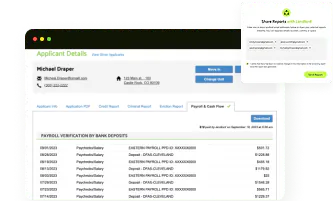
The tenant screening process is the most critical step in how to put your house up for rent. Landlords should use tenant background screening to verify applicant history. This includes:
- Credit check tenants to ensure financial responsibility.
- Background check renters for relevant criminal history.
- Eviction history check to avoid high-risk applicants.
- Income verification tenants to confirm the ability to pay (typically 3x the monthly rent).
9. Draft a Lease
A written residential lease defines rights, responsibilities, and enforcement mechanisms.
Leases should specify:
- Rent amount and due date
- Lease duration
- Maintenance responsibilities
- Entry notice requirements
State-specific clauses may be required under landlord-tenant law.
10. Collect Funds
Before handing over keys, the landlord must collect the first month’s rent and the security deposit in cleared funds. Modern landlords often use digital platforms to automate this process of renting a house.
11. Document the Condition
Landlords should conduct a move-in inspection with the tenant to document the current state of the rental property. Taking photos and videos provides evidence if a landlord needs to withhold part of the security deposit later.
Understand Local Laws and Legal Requirements Before Renting
Landlords must adhere to the Fair Housing Act and state housing laws to ensure the rental property operates legally and ethically. Ignorance of landlord-tenant law is not a valid defense in court.
1. Habitability and Safety Standards
Every rental property must meet minimum habitability standards before occupancy. These standards are enforced through state housing laws and local building codes.
Common habitability requirements include:
- Working plumbing, electricity, and heating
- Structurally sound floors, walls, and stairs
- Weatherproof doors and windows
- Safe drinking water and proper sewage disposal
Local jurisdictions may also require:
- Smoke and carbon monoxide detectors
- Lead-based paint disclosures for older homes
- Periodic rental inspections
If a rental unit fails to meet habitability rules, tenants may withhold rent or terminate the lease under applicable landlord tenant laws.
2. Fair Housing and Anti-Discrimination
All landlords must comply with the Fair Housing Act, which governs how rental properties are advertised, shown, and leased.
The Fair Housing Act prohibits discrimination based on:
- Race or color
- Religion
- National origin
- Sex
- Disability
- Familial status
Discriminatory language in listings, selective screening practices, or unequal lease terms violate federal law. State and local governments may recognize additional protected classes, expanding landlord obligations beyond federal requirements.
Strict compliance with fair housing rules is mandatory when renting out home, regardless of property size or rental duration.
When asking questions to ask tenants, the landlord must avoid personal inquiries that violate these protected classes. Knowing what questions can you not ask a potential tenant is essential for legal compliance.
3. Rent Control and Security Deposits
Some states and cities regulate rent pricing and security deposits. These regulations directly affect how to rent out your house legally.
Local laws may control:
- Maximum allowable rent increases
- Required notice periods for rent changes
- Caps on security deposit amounts
- Deadlines for returning deposits after move-out
For example, rent-controlled jurisdictions often limit annual increases, while others require interest payments on held deposits. A landlord must verify rental property laws by state before setting rent or collecting upfront funds.
4. Privacy and Entry Rights
A landlord cannot enter a rental property without providing notice, typically 24 to 48 hours, except in emergencies.
Most states require:
- Advance written notice before entry
- Entry during reasonable hours
- Entry limited to repairs, inspections, or emergencies
Unauthorized entry may be treated as harassment or illegal access, even when the landlord owns the property.
5. Lease Terms and Eviction Procedures
A legally enforceable residential lease must comply with state-specific requirements. Certain clauses may be mandatory, while others are prohibited.
Lease-related legal rules often cover:
- Required disclosures rental property owners must provide
- Lease termination notice periods
- Late fee limitations
- Repair and maintenance responsibilities
Landlords must follow strict legal protocols to remove a tenant, as "self-help" evictions (like changing locks) are illegal. The residential lease must clearly define what constitutes a lease violation. Understanding landlord friendly states helps investors know how quickly an eviction can be processed.
Prepare Your House for Rent (What You Actually Need to Fix)
How to start renting your home begins with physical preparation to attract high-quality applicants. A well-maintained house commands higher rent and experiences shorter vacancy periods.
Essential repairs vs cosmetic upgrades
Landlords prioritize fixing leaky faucets, broken HVAC systems, and electrical hazards. While granite countertops are nice, they are not what do i need to rent my house out successfully compared to a functional water heater. Focus on high-return rental property preparation that reduces future maintenance calls.
Cleaning, paint, and appliance checks
Professional cleaning is a non-negotiable rental home requirement. Fresh paint in a neutral "greige" or off-white makes the rental property feel new. The landlord should also verify that all appliances included in the residential lease are in working order.
Rental home requirements checklist
Before listing, a rental property should meet the following rental home requirements:
- Smoke detectors installed and operational
- Carbon monoxide detectors where required
- Safe stair rails and handholds
- Proper lighting in common areas
- Weather-sealed windows and doors
- Hot and cold running water
- Functional heating system
Meeting these standards helps rent out a house legally and reduces post-move-in disputes.
Not every repair is required before renting out a house. The table below separates must-fix items from optional upgrades.
In short, must fix items are required to meet rental home requirements and comply with landlord-tenant law. Nice to have items improve marketing appeal but do not affect legal compliance when renting out home.
How to Set the Right Rent Price for Your House

The landlord must balance the need for profit with the reality of market demand. Learning how much rent should i charge involves both data analysis and local intuition.
1. Conduct a Comparative Market Analysis (CMA)
To price rental property accurately, the landlord should look at similar homes currently listed. Compare square footage, bedroom count, and amenities to find a realistic price range.
2. Factor in Your Financials
The landlord needs to ensure the rent covers the mortgage, taxes, and a 10% maintenance reserve. If the landlord is exploring how to rent out your house with property management, the 8% to 12% management fee must also be factored into the price. Check the property management cost to see if it fits the budget.
3. Understand Market Dynamics
Seasonality affects how long does it take to rent a house out. Demand typically peaks in late spring and summer. A landlord might set a slightly higher price in June than in December.
4. Check Legal Requirements
Ensure the chosen price does not exceed local rent control limits. Use the Fair Market Rent (FMR) data provided by HUD as a benchmark for what government agencies consider a reasonable price for the area.
5. Monitor and Adjust
If the rental property has no applications after two weeks, consider a price reduction. To prevent fraud during this stage, learn how to spot a fake pay stub during income verification for tenants.
Conclusion
How to rent out your house successfully depends on preparation, legal compliance, and consistent execution. A landlord who understands local housing laws, sets rent based on market data, and follows a structured tenant screening process reduces risk and protects rental income. When each step is handled correctly, renting out a house becomes a stable, long-term investment rather than a short-term gamble.
LeaseRunner supports landlords at every stage of renting out a house. From pricing guidance to compliant tenant screening, LeaseRunner helps streamline decisions and reduce uncertainty while keeping the rental process efficient and lawful.
FAQs
1. Is it hard to rent out a house?
The process of renting a house is not inherently difficult, but it is detail-oriented. A landlord who uses tools for a tenant screening checklist will find the management much easier than one who relies on gut feeling.
2. What insurance do I need before renting out my home?
A landlord must obtain a landlord-specific insurance policy (DP-3). This covers the structure, loss of rental income during repairs, and liability protection, which a standard homeowners' policy does not provide for a rental property.
3. How long does it take to rent a house out?
On average, it takes 20 to 45 days to find a tenant. The timeline depends on how the landlord implements tips on renting your house, such as professional photography and accurate market pricing.
4. What is the best way to rent out my house?
The best way to rent out my house is to use an all-in-one platform for listing and screening. Providing a portable tenant screening report to applicants can speed up the tenant screening process and help the landlord make a data-driven decision.
Disclaimer: The information provided in this post is intended for general informational and educational purposes only. It should not be construed as legal, accounting, or tax advice. For guidance specific to your situation, we recommend consulting with a qualified professional in the relevant field before taking any action based on the content provided.