Rental occupancy limits determine how many people can legally share a rental unit, and the rules go well beyond simply counting bedrooms. Federal guidelines from HUD and the IPMC set a general starting point, but state laws, local building codes, and square footage minimums all shape the final answer.
This guide covers the legal framework landlords must follow, tenant rights under fair housing law, how occupancy standards play out across 15 U.S. states, and how to handle the most common occupancy disputes between landlords and renters.
What Are Rental Occupancy Limits?
Rental occupancy limits define the maximum number of people legally allowed to reside in a specific rental unit, whether it's a single-family home, a duplex, or a multi-unit apartment building.
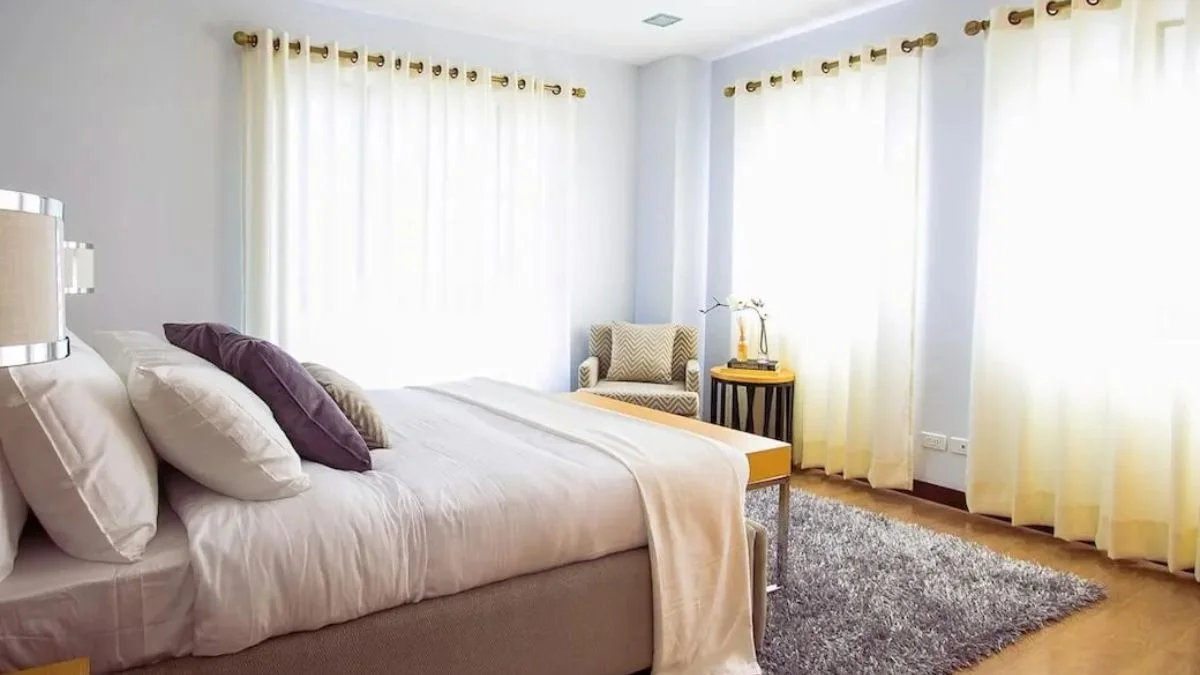
Most local housing authorities base these decisions on minimum square footage per person, typically requiring at least 70–100 square feet of bedroom space per occupant.
These limits are designed to prevent overcrowding and exceeding occupancy limits, which can lead to:
- Health and Safety Risks: Overburdened plumbing, electrical systems, and insufficient ventilation.
- Property Damage: Accelerated wear and tear on flooring, appliances, and common areas.
- Quality of Life Issues: Increased noise, excessive use of utilities, and parking disputes for other tenants.
- Zoning Violations: Breaching local codes intended to manage population density.
A common question for potential renters is: how many people can live in an apartment? The answer is rarely a simple one, as the limit is a blend of federal guidelines, specific state statutes, and local codes.
For instance, the number of people allowed in a 1 bedroom apartment will be significantly different from the limit on a four-bedroom house.
Legal Framework of Rental Occupancy Limits in the US
Rental occupancy rules in the U.S. are shaped by a combination of federal regulations and state or local ordinances. Understanding both levels of authority is essential for compliance.
1. HUD’s Two-Person-Per-Bedroom Guideline
The two-per-bedroom guideline comes from a 1991 HUD d The two-per-bedroom guideline traces back to a 1991 internal HUD memorandum written by then-General Counsel Frank Keating. That document, now widely referred to as the "Keating Memo", was originally internal guidance, not a formal regulation. HUD officially adopted its framework as policy in 1998, establishing the two-person-per-bedroom standard as a general starting point for evaluating whether an occupancy policy complies with the Fair Housing Act's protections for families with children.
The guidance was designed to prevent landlords from applying blanket policies that unfairly restrict families, for example, refusing to rent a two-bedroom unit to a family of four solely based on headcount, which would constitute discrimination under the Fair Housing Act.
Under this standard, the general baseline for maximum occupancy is:
- Studio apartment: 2 occupants
- 1-bedroom apartment: 2 occupants
- 2-bedroom apartment: 4 occupants
These figures are a starting point, not a hard ceiling. HUD recognizes that physical and structural factors may justify adjustments, and landlords are expected to evaluate each situation based on the unit's actual conditions.
On young children: the exclusion is not absolute and varies by jurisdiction. Under NYC Housing Maintenance Code § 27-2075, for every two persons who lawfully occupy an apartment, one child under the age of four may also reside there without being counted toward the maximum occupancy figure. That is a conditional exemption tied to the number of legal occupants already in the unit, not a blanket rule that excludes all infants from the count.
Beyond bedroom size, the unit's overall square footage, infrastructure capacity such as septic systems and water heater size, and applicable local building or safety codes all factor into what is considered reasonable. In practice, the maximum occupancy of a two-bedroom apartment may reasonably range from 4 to 5 individuals, depending on unit size and configuration. For more on landlord obligations, see what a landlord cannot do.
2. The International Property Maintenance Code (IPMC) Space Guidelines
Unlike HUD's bedroom-count approach, the International Property Maintenance Code (IPMC) sets occupancy limits based on square footage, a more measurable standard that many state and local building codes adopt directly.
The IPMC establishes three key space thresholds that determine how many people can legally occupy a unit:
The 120 sq ft living room threshold does not apply universally. Under IPMC 2024, it is specifically triggered when a unit houses three to five occupants. Units with six or more occupants face a higher standard, and the dining room requirement scales separately alongside it.
These thresholds apply independently of the bedroom count. A unit with technically enough bedrooms can still exceed its legal rental occupancy limits if the total habitable square footage cannot accommodate each occupant under the IPMC's per-person minimums.
How Many People Can Live in an Apartment or House?
So how many people can legally live in a house? The answer depends on both unit size and local law.
While it might seem logical that 8 people can live in a 4-bedroom apartment, the space must still meet local minimum space requirements and safety codes.
In short, never rely on the "two-per-bedroom" rule alone. Verify the most restrictive local fire and building code standards for minimum square footage per person living space.
Landlord’s Responsibilities and Limits in Rental Occupancy
Landlords have a right, and a responsibility, to set and enforce clear rental occupancy limits. Doing so protects the property and prevents fair housing complaints.

Landlord’s Responsibilities
Landlords must ensure their occupancy policy is reasonable, non-discriminatory, and legally sound.
1. Establish a reasonable policy
Landlords should draft clear, fair occupancy rules consistent with federal and local standards. This written policy must be included in the lease agreement to ensure both clarity and legal protection.
For example, a landlord might include a simple clause like: “This two-bedroom unit is suitable for up to four occupants. Any additional person staying for more than 14 consecutive days must have prior written approval from the landlord”.
A clear, documented policy ensures compliance with fair housing regulations and promotes a balanced tenant mix. For further guidance, reference multiple tenants on a lease for tips on managing shared tenancies.
2. Comply with fair housing laws
Policies must not discriminate against families with children or people with disabilities. The FHA protects tenants from unreasonable occupancy limits intended to exclude these groups.
Landlords must apply the policy consistently to everyone, regardless of their family structure or relationship status.
3. Adhere to health and safety codes
Occupancy limits are fundamentally safety rules. They ensure that in an emergency, the building can be evacuated safely and that vital systems (like fire exits and plumbing) are not overloaded.
4. Ensure habitability
How many tenants are allowed in one house is directly linked to habitability. Too many occupants can quickly lead to conditions that violate a landlord’s duty to provide a livable, sanitary, and safe home.
5. Consider reasonable accommodations
If a tenant requests an exception as a reasonable accommodation under the FHA or ADA (e.g., a live-in aide for a disabled person), a landlord must consider the request on a case-by-case basis. The focus must remain on the physical capacity of the unit, not just the number of bedrooms.
Landlord’s Limits
While landlords can and should limit occupancy, there are strict restrictions on how those limits can be enforced.
1. No discriminatory policies
A landlord cannot implement a policy that limits the number of children but not the number of adults. The limit must apply to the total number of people. Furthermore, a landlord cannot limit the number of occupants in a rental based on age or gender (beyond local fire/safety codes).
For example, a landlord cannot require a boy and a girl of a certain age to have separate bedrooms. That decision is up to the family.
2. Restrictions on guests
Can a landlord restrict guests? Yes, but within strict limits. A landlord can set a limit on how long a guest can stay before they are considered an unauthorized occupant.
Most leases set this limit between 7 and 14 consecutive days or a maximum number of days per year.
For example, a landlord in Minnesota can restrict a guest to 10 consecutive days. If the guest exceeds this, the landlord is within their rights to enforce the lease violation, provided the restriction is written into the lease.
3. Eviction process
If occupancy violations persist, landlords must follow proper legal eviction procedures, as outlined in how many lease violations before eviction. This includes proper written notice (such as a Notice to Cure or Quit) before initiating a formal eviction.
4. Balance with local ordinances
In some areas, local laws may allow for more people than the two-per-bedroom guideline. A landlord who sets a stricter limit than what is legally required by state and local law may face a discrimination complaint if they cannot justify the stricter limit with clear, objective physical reasons (e.g., an outdated septic system).
Tenant Rights and Considerations in Rental Occupancy
Tenants have strong legal protections when it comes to the size of their household, largely due to the Fair Housing Act's protection of familial status.
Tenant Rights Under Fair Housing Laws
Understanding how fair housing law intersects with occupancy limits helps renters recognize when a landlord's policy crosses the line from a legitimate space restriction into unlawful discrimination.
1. Protection for families
The FHA prevents landlords from imposing overly strict occupancy rules that would unfairly exclude families with children, such as blanket "no children" policies that are not grounded in the unit's actual physical limitations or local safety codes.
2. No "two-per-bedroom" rule is absolute
Tenants should know that the federal "two-per-bedroom" rule is a guideline, not a maximum law. For example, if a family of five is applying for a two-bedroom apartment and the unit is large (e.g., 1,500 sq. ft.) with generously sized bedrooms, they have a strong case against a landlord who denies them solely on the basis of a rigid four-person limit.
When in doubt, tenants should ask to see the unit's square footage and the local code minimums that apply to their specific building.
3. Case-by-case evaluation
Fair housing law requires landlords to evaluate occupancy on a case-by-case basis, considering the unit's actual size and configuration rather than applying a fixed formula regardless of circumstances.
4. Challenge unreasonable rules
Tenants who believe an occupancy limit is overly restrictive or discriminatory can file a complaint with HUD or a state or local fair housing agency.
Considerations for Tenants
Knowledge is the tenant's best tool when navigating occupancy issues.
1. Read your lease carefully
Always check the "Occupancy" or "Guests" clause in your lease. This is where your landlord will state the maximum number of people allowed and the specific rules for long-term visitors.
If you're a landlord drafting a new lease, our lease agreement templates include state-specific occupancy provisions to keep you compliant.
2. Understand local laws
Research your city's local housing codes. Knowing your local government’s minimum square footage requirement can help you determine if the landlord’s limit is genuinely based on safety or if it is an arbitrary, overly-strict rule.
3. Communicate with your landlord
If tenants anticipate an increase in occupants (e.g., a new baby, a long-term visit from a family member), communicate proactively with your landlord. Many conflicts over is there a limit to the number of people that can live in an apartment are resolved with open communication.
4. Know your options for recourse
If tenants believe they have been denied housing or face eviction due to a discriminatory occupancy limit, tenants have the right to seek help from a Fair housing non-profit or legal aid.
State-by-State Rental Occupancy Limits
No single federal formula dictates how many people can live in a rental unit across every U.S. state. The HUD two-per-bedroom guideline and the IPMC space thresholds set the floor, but states and localities often build on top of them. The sections below outline what each state typically follows, using safe language where specific figures have not been verified by official state or local sources. Always confirm with your local housing or building department before concluding.
Summary Table: Occupancy Standards by State
1. New York
New York is among the more regulated states on occupancy. New York City operates under the NYC Housing Maintenance Code (Section 27-2075), which sets a specific formula: the maximum number of occupants is determined by dividing the apartment's livable floor area by 80 square feet. When calculating that floor area, kitchen and kitchenette space counts toward the total. Private hallways, foyers, and bathrooms do not.
That distinction matters in practice — a unit that looks spacious on a floor plan may have a lower legal occupancy limit once non-qualifying areas are excluded from the calculation. This applies to most residential buildings across the five boroughs.
Outside New York City, the New York State Multiple Dwelling Law may apply to buildings with three or more units, along with any applicable local municipal codes. Because city and state rules can overlap, renters in New York should verify which regulatory layer governs their specific unit.
2. Illinois
Illinois does not have a single statewide occupancy formula beyond the HUD guideline, but Chicago is a notable exception. The Chicago Residential Landlord and Tenant Ordinance (RLTO) contains its own habitability and occupancy-related provisions that apply within city limits. One important caveat: the RLTO does not apply to owner-occupied buildings with six or fewer units, a significant exemption that affects many small landlords in the city.
Outside of Chicago, occupancy limits in Illinois are typically governed by local building codes, which vary from municipality to municipality. Checking with the relevant local housing authority is the recommended first step for both landlords and renters.
3. Pennsylvania
Pennsylvania's Landlord and Tenant Act addresses habitability standards at the state level, but specific occupancy limits are often determined locally. Philadelphia has its own housing code that sets standards for rental properties, including space-related requirements that may differ from the rest of the state.
In other parts of Pennsylvania, municipal codes govern what constitutes an appropriate occupancy level. There is no single statewide number that applies universally, so verifying with local authorities is strongly recommended.
4. Ohio
Ohio's Landlord-Tenant Act establishes minimum habitability standards, but specific occupancy limits are largely left to local jurisdictions. Cities such as Columbus, Cleveland, and Cincinnati have their own housing codes that may set space requirements beyond the HUD baseline.
Outside of major urban centers, the applicable standard often defaults to the HUD two-per-bedroom guideline or the local building code, whichever is more specific to the situation.
5. Georgia
Georgia does not have a state-level occupancy formula that goes beyond HUD's guidance. Local jurisdictions are responsible for setting any additional requirements, and the standards can vary considerably between counties.
Atlanta and other urban areas may have municipal codes that address occupancy more specifically than the state baseline. Renters and landlords in Georgia should check with their county or city housing department to confirm what applies to their specific situation.
6. North Carolina
North Carolina's Residential Rental Agreements Act requires landlords to maintain properties in a habitable condition, but it does not specify a statewide occupancy formula. Local building codes fill that gap, and they vary by county and municipality.
Some jurisdictions in North Carolina follow the IPMC's space guidelines, while others apply different standards. Verifying with the local building or housing inspection office is the recommended starting point for anyone navigating rental occupancy limits in this state.
7. Michigan
Michigan addresses landlord habitability obligations through state law, but specific occupancy limits for residential rentals are commonly set at the local level. Detroit, Grand Rapids, and other cities may have their own housing codes that specify minimum space requirements.
Where no local standard exists, the HUD two-per-bedroom guideline often serves as the default baseline. Renters and landlords in Michigan should contact their local housing or building inspection office to understand which standard applies to their unit.
8. New Jersey
New Jersey has relatively strong statewide habitability standards, and some municipalities have adopted the IPMC or similar model codes on top of them. However, specific occupancy limits still vary by local jurisdiction.
Renters in New Jersey can contact their local rent control board or housing authority for jurisdiction-specific guidance, as the applicable standard often depends on whether the property is located in a municipality with its own housing code or one that defaults to state-level rules.
9. Washington
Washington State's Residential Landlord-Tenant Act sets baseline habitability requirements, but occupancy limits are generally governed by local building codes. Seattle is one of the more regulated cities in the state, with the Seattle Housing Code addressing minimum space and habitability standards for rental properties in some detail.
In other parts of Washington, the applicable occupancy standard often depends on whether the local jurisdiction has adopted the IPMC or a comparable model code. Checking with the local building department is the most reliable approach.
10. Arizona
Arizona's Residential Landlord and Tenant Act addresses habitability but does not set a specific statewide occupancy formula beyond the HUD standard. Local jurisdictions, including Phoenix and Tucson, may have additional requirements through their respective municipal codes.
Because Arizona's rental market is concentrated heavily in a few large cities, and because those cities can have meaningfully different local code enforcement approaches, landlords and renters are advised to verify the applicable standard through their city or county housing office.
11. Massachusetts
Massachusetts is one of the few states with a statewide housing code that goes beyond HUD guidelines. The Massachusetts State Sanitary Code (105 CMR 410) sets specific habitability requirements for rental housing, including minimum-square-footage standards.
For general habitable space, the unit must provide at least 150 square feet for the first occupant, plus 100 square feet for each additional occupant.
Sleeping rooms follow a separate calculation. A room occupied by one person requires at least 70 square feet. A room shared by two people requires at least 100 square feet total, not 50 square feet per person, and each additional occupant beyond two adds another 50 square feet to that requirement. A three-person sleeping room, therefore, needs at least 150 square feet, and a four-person room at least 200 square feet.
Specific occupancy limits can still vary depending on local enforcement practices and unit configuration. Renters and landlords should treat 105 CMR 410 as the primary reference and confirm the details with their local board of health or housing inspection office..
Specific occupancy limits can still vary depending on local enforcement practices and unit configuration, so renters and landlords should review 105 CMR 410 as the primary reference and confirm details with their local board of health or housing inspection office.
12. Minnesota
Minnesota's landlord-tenant law addresses habitability obligations at the state level, but occupancy limits are often shaped by local housing codes. Minneapolis and Saint Paul have their own rental housing ordinances that go beyond the state baseline and may include more specific space-related requirements.
Outside of those two cities, occupancy limits in Minnesota commonly default to the HUD two-per-bedroom guideline or the local building code. Checking with the local housing inspection office is the most reliable way to confirm what applies to a specific rental unit.
Common Issues & How to Resolve in Rental Occupancy
Occupancy issues are one of the most common sources of conflict between landlords and tenants. Here is how to approach the most frequent issues.
1. Overcrowding and Exceeding Occupancy Limits
A landlord discovers that the number of residents exceeds the maximum limit specified in the lease and/or local code (e.g., 5 people living in an apartment with a 4-person limit).
Resolution:
- Landlord: Issue a notice of the lease violation by following our guide on how to write an eviction notice of the lease violation. The notice should clearly state which clause was violated and select from the appropriate types of eviction notices (per state law) to give the tenant time to remedy the breach. Failure to remedy results in unlawful detainer filing, see how long an eviction takes to plan your timeline.
- Tenant: Immediately reduce the number of occupants to comply with the lease.
2. Unauthorized Occupants
A "guest" stays well beyond the period defined in the lease (e.g., 30 days) and refuses to leave, effectively becoming an unauthorized occupant (squatter). They are not on the lease, but they live there full-time.
Resolution:
- Landlord: The landlord must immediately serve the named tenants with a lease violation notice. Attempting to lock out or use "self-help" eviction against the unauthorized occupant is illegal. In many states, you will still need to follow a formal eviction process.
Read more can you evict a tenant without a lease and the risks involved for verification procedures.
3. Discrimination Based on Familial Status
A family is denied a rental unit solely because of the number or ages of their children, even though the unit's physical size meets all local square footage and safety codes for their family size.
Resolution:
- Tenant: File a fair housing complaint with HUD or the local fair housing enforcement agency. Collect evidence, such as the landlord's written.
- Landlord: To defend against a complaint, you must show that your occupancy limit is based on a legitimate, non-discriminatory governmental interest and not simply a rigid adherence to the two-per-bedroom guideline.
4. Roommate Disputes Over Occupancy
When multiple tenants share a lease, conflicts over added roommates or space can arise.
Resolution:
- Landlord: The lease requires the explicit permission of the landlord to add a tenant. All parties on the lease must sign an addendum, and the new occupant must pass the standard tenant screening (credit check, background check, etc.).
If you're considering taking on a roommate as part of a room-rental arrangement, see our guide on how to rent out a room in your house for the legal and screening considerations.
Conclusion
Rental occupancy limits are more than numbers, they’re about ensuring fairness, safety, and compliance for all residents. Both landlords and tenants should familiarize themselves with local and federal standards, communicate openly, and document all policies clearly in the lease.
For landlords, adopting transparent, non-discriminatory rules helps protect property value and avoid costly legal disputes. Tenants, on the other hand, gain peace of mind knowing their living situation meets all legal and safety requirements.
To simplify compliance, use LeaseRunner’s tenant background screening, credit check, and income verification tools to ensure qualified occupants and stable tenancies.
FAQs
Q1: What Happens if a Tenant Violates the Occupancy Limit?
Violation of a clearly stated, legally compliant rental occupancy limit in the lease is a material breach of the contract. The landlord must issue the tenant a formal written notice giving them a set time to remedy the violation by reducing the number of residents.
Q2: Can a Landlord Restrict Guests (Minnesota or any State)?
Yes. While a landlord cannot generally restrict short-term social guests, they can and should include a clause in the lease. A common and reasonable limit is restricting any guest from staying for more than 7 to 14 consecutive nights or for more than 30 total nights in a 12-month period.
Q3: Is There a Limit to the Number of People That Can Live in an Apartment?
Yes, most areas adopt the two-per-bedroom guideline, but factors like room size, layout, and local laws can modify this standard.
Q4. Can 3 adults live in a 2-bedroom apartment?
Yes, three adults can legally live in a 2-bedroom apartment in most U.S. jurisdictions. The HUD two-per-bedroom guideline is a starting point, not a hard legal ceiling. As long as the unit meets local square footage minimums and the lease does not specify otherwise, three adult occupants is generally permissible.
Disclaimer: The information provided in this post is intended for general informational and educational purposes only. It should not be construed as legal, accounting, or tax advice. For guidance specific to your situation, we recommend consulting with a qualified professional in the relevant field before taking any action based on the content provided.