How to Read Your Result
The calculator sorts every result into one of four bands. Here's what each one tells you and what to do next.
These bands are screening guidelines, not legal thresholds. No federal law sets a maximum rent-to-income ratio for private rentals, the bands exist to keep your decisions consistent from one applicant to the next.
What Counts as Gross Monthly Income
Enter income before taxes and deductions. Using take-home pay is the most common mistake landlords make with this ratio, it understates affordability and can disqualify applicants who actually meet your standard.
Include:
- Base salary or hourly wages (pre-tax)
- Regular, documented bonuses or commissions
- Self-employment and 1099 income the applicant can verify
- Court-ordered support payments the applicant chooses to disclose
- Housing voucher assistance — in Section 8 mode, the calculator handles this by measuring the ratio against the tenant's portion only
Leave out:
- One-time payments (tax refunds, gifts, asset sales)
- Income the applicant can't document
- A co-signer's income, unless you add it as a separate row and treat the co-signer as party to the lease
If several people will share the lease, add each person's verified income as its own row. The calculator totals screening roommates individually against the full rent rejects applications that are perfectly sound as a household.
What to Do When the Ratio Is Too High
A high ratio isn't an automatic no. It's a signal to look closer before you commit. Four moves that keep the decision fair and defensible:
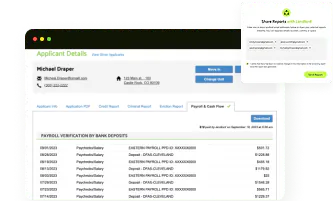
- Request additional proof of income. Recent pay stubs, bank statements, or an employer letter can confirm whether the number the applicant reported holds up or skip the paperwork and pull an income verification and cash flow report built from verified bank data.
- Consider a co-signer or guarantor. A qualified guarantor with substantial income reduces your risk while giving a borderline applicant a path to qualify.
- Weigh other financial strengths. Strong credit, minimal debt, and a clean rent payment history can offset a ratio that's a few points above your target, run a full tenant background screening to see the complete picture.
- Adjust your criteria deliberately, not case by case. If your market consistently produces good applicants at 35%, change your written threshold, don't make one-off exceptions, which is where inconsistency claims start.
Before You Deny an Application
Apply the same ratio threshold to every applicant, every time. Several states and cities have source-of-income protection laws, which can restrict how landlords treat applicants who rely on vouchers or assistance — and in some jurisdictions, denying an applicant solely for missing an income multiplier can create legal exposure. Before you set or enforce a ratio requirement, review the rent-to-income ratio screening rules and fair housing limits that apply where your property sits.
FAQs
Q1. Should I enter gross or net income?
Gross income is the amount before taxes and deductions. Every standard benchmark, including the 30% guideline and the 3x rule, is built on gross figures. Entering net income makes applicants look less qualified than they are and produces ratios you can't compare against industry standards.
Q2. Can I combine income from roommates or a co-signer?
Yes. Use the "Add another income source" button to enter each person's verified income as a separate row. The calculator totals all rows before computing the ratio. For co-signers, only include their income if they'll be contractually responsible on the lease.
Q3. How does Section 8 mode change the result?
Section 8 mode calculates the ratio against the tenant's portion of rent rather than the full contract rent. Because the voucher covers part of the payment directly, measuring against full rent would overstate the tenant's actual obligation and understate their real ability to pay.
Q4. Should I select a 2.5x or 3x multiplier?
3x is the industry standard and the safer default. Some landlords in high-cost markets drop to 2.5x because requiring 3x would exclude most of the local applicant pool. Whichever you choose, write it into your listing criteria and apply it to every applicant.
Q5. Does this calculator store the numbers I enter?
No. Every calculation runs in your browser, and nothing you type is saved, transmitted, or attached to any applicant record.
Disclaimer: The information provided in this post is intended for general informational and educational purposes only. It should not be construed as legal, accounting, or tax advice. For guidance specific to your situation, we recommend consulting with a qualified professional in the relevant field before taking any action based on the content provided.