In the rental housing market, financial assurance plays a major role in protecting both landlords and tenants. When applicants have limited credit history or insufficient income, landlords often request a cosigner or guarantor to strengthen the lease application.
Although these roles may appear similar, there are clear distinctions in responsibility, liability, and involvement. Understanding the difference between cosigner and guarantor helps prevent confusion, ensures legal compliance, and creates a more secure rental relationship.
Key takeaways:
What Is a Cosigner?
A cosigner is a person who signs a lease or loan agreement along with the tenant, sharing full legal responsibility for the contract’s obligations. In housing, this means the cosigner becomes a co-applicant on the lease. Both parties are equally responsible for paying rent and following lease terms.

Cosigners are commonly parents, relatives, or close friends who wish to help an applicant qualify for an apartment when their income or credit score does not meet the landlord’s requirements.
For example, a college student with limited income may need a parent to cosign the lease. In this scenario, both the student and parent appear on the rental agreement.
According to LeaseRunner’s guide to apartment cosigners, landlords often require a cosigner when the applicant’s credit score or income-to-rent ratio falls below acceptable thresholds. This shared obligation can reduce financial risk while allowing tenants with weaker profiles to secure housing.
What Is a Guarantor?
A guarantor is someone who promises to pay rent or cover damages if the tenant defaults, but does not hold tenancy rights or appear as a co-applicant. Essentially, a guarantor acts as a financial backup - guaranteeing the tenant’s obligations but not participating in the lease itself.

This distinction answers the common question: “Is a cosigner the same as a guarantor?” The answer is no. A guarantor agrees to cover missed payments or losses only after the tenant fails to meet obligations, while a cosigner shares those responsibilities from the start.
In most states, guarantors are subject to legal contracts separate from the lease, known as guaranty agreements. These documents clearly define the guarantor’s liability and the conditions that trigger payment responsibility. Landlords typically request guarantors when an applicant has strong rental history but inconsistent income, or when company policies prohibit additional tenants on the lease.
To learn more about guarantors in apartment applications, read what is a guarantor for an apartment? provides in-depth guidance.
Difference Between Cosigner and Guarantor
Although both roles aim to reduce a landlord’s financial risk, several practical differences define how each functions.

The difference between a cosigner and a guarantor can be analyzed through five main aspects:
- Responsibility
- Liability
- Involvement
- Credit impact
- Role in a rental agreement.
1. Responsibility
A cosigner shares primary responsibility for lease performance. This means both the tenant and cosigner are immediately liable for rent, damages, and all terms of the agreement.
A guarantor, on the other hand, carries secondary responsibility. The guarantor’s obligation begins only after the tenant defaults. This distinction means landlords must first attempt to collect payment from the tenant before pursuing the guarantor.
2. Liability
Liability is a major differentiator. A cosigner assumes joint and several liability, which allows the landlord to pursue either the tenant or the cosigner for the full amount owed. In contrast, a guarantor’s liability is typically limited to unpaid rent or specific losses defined in the guaranty contract.
For example, if a tenant abandons the property and owes three months’ rent, a cosigner can be immediately billed for the full balance. A guarantor may only be responsible once the landlord demonstrates the tenant’s failure to pay and follows any required notice procedures outlined in the contract.
3. Involvement
A cosigner’s name appears on the lease as a co-applicant, and their credit and income undergo full screening - often including a tenant background check and credit check.
A guarantor, however, remains outside the lease. They do not gain occupancy rights, and their role exists solely through the guarantee agreement. This limits direct communication between the guarantor and landlord except when payments become due.
4. Credit Impact
Credit implications also differ. For cosigners, the lease may appear on their credit report, impacting credit utilization and future borrowing capacity. Late rent payments or lease violations can damage the cosigner’s credit profile. Learn more about this in LeaseRunner’s articles on credit score vs. credit report and how to pass a rental credit check.
For guarantors, the lease generally does not appear on the credit report unless default occurs. However, unpaid rent or legal judgments from enforcement actions can negatively affect credit history. Hence, being a guarantor for an apartment does affect credit if the tenant fails to meet obligations.
5. Role in a Rental Agreement
In legal terms, a cosigner becomes part of the rental agreement, while a guarantor operates through a separate guaranty contract. A cosigner can be sued directly for rent or damages, whereas a guarantor can only be held accountable under the conditions of their guarantee.
This structural difference underscores the importance of clear documentation. Landlords should ensure the lease and guaranty agreement clearly distinguish each role to prevent disputes over liability.
Let’s take a look on this table:
What Tenants Should Know Before Agreeing to a Cosigner or Guarantor
Tenants should understand that involving another party in a lease can influence both financial and legal outcomes. While a cosigner can improve the chance of approval, it also places a shared burden on both parties.
- Does a cosigner guarantee approval? Not always. Landlords still evaluate the applicant’s income, credit, and rental history.
- Can a cosigner have bad credit? Some landlords allow it, but a cosigner with stronger credit typically provides greater assurance.
- Does a co-applicant need good credit? Yes. Cosigners undergo the same screening standards as tenants.
- Can a person be their own guarantor? No, a guarantor must be a separate individual or entity with proven financial strength.
Tenants seeking housing with limited credit can benefit from understanding what credit score is needed to rent an apartment. This information helps determine whether a cosigner or guarantor might be necessary.
When evaluating options, tenants may also consider financial relationships carefully. A cosigner’s close involvement means potential strain if payments are missed, while a guarantor arrangement can preserve privacy but still create long-term financial exposure.
When Should Landlords Require a Cosigner or Guarantor?

Landlords should consider these arrangements in specific situations, such as:
- Low credit score applicants – When the credit score falls below the standard requirement (often 600–650), adding a cosigner or guarantor mitigates risk.
- Insufficient income – Applicants earning less than 2.5–3 times monthly rent may need additional assurance.
- Students or first-time renters – Young tenants with minimal credit history often require a parental cosigner.
- Out-of-state or international applicants – A guarantor within the same jurisdiction can simplify enforcement if payment issues arise.
Before requiring either option, landlords should review local housing laws. Some states, like New York and California, have strict rules governing lease guarantee agreements and notice requirements.
For landlords in markets with strong tenant protections, referring to landlord-friendly states may help inform policy decisions.
Best Practices for Landlords When Accepting a Cosigner or Guarantor
Screening and documentation are vital when involving third-party financial supporters. The following best practices help landlords minimize risk and maintain compliance.
1. Verify Financial Stability

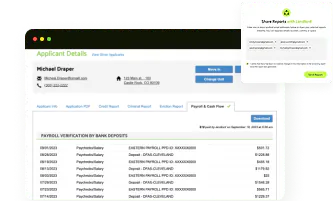
Before accepting a cosigner or guarantor, landlords should verify income, employment, and creditworthiness. Proof of steady income or savings ensures that the party can meet obligations if necessary. Using services such as income verification and cash flow reports streamlines this process.
2. Use a Clear Guaranty Agreement
A written agreement should specify the guarantor’s responsibilities, duration of liability, and payment limits.
- If using a Guarantor, a separate, clearly defined Guaranty Agreement must be signed. This document must explicitly state that the guarantor's liability is conditional upon the tenant's default and outline the specific financial obligations covered (rent, damages, late fees).
- If using a Cosigner, the individual signs the main lease itself, making them a legal co-tenant, though this should be explicitly noted in the agreement, especially if they are non-occupant.
Legal experts recommend keeping the document separate from the lease to avoid confusion over tenant rights. The agreement should outline exactly what does guarantor mean within the context of the contract.
3. Define Liability Clearly
Landlords should define whether the guarantor or cosigner is responsible for all lease terms or only unpaid rent. Clear language prevents disputes if eviction or collection actions occur later.
Consulting a real estate attorney ensures compliance with local laws such as the Uniform Residential Landlord and Tenant Act (URLTA), adopted in many U.S. jurisdictions.
4. Keep Communication Transparent
Open communication prevents misunderstandings. Both the tenant and cosigner or guarantor should receive copies of all signed documents and payment records. If rent becomes overdue, landlords should notify both parties promptly. Maintaining transparency supports stronger business relationships and reduces potential litigation.
For additional guidance, LeaseRunner’s questions to ask tenants helps landlords conduct thorough screenings before accepting applications involving cosigners or guarantors.
Conclusion
The difference between cosigner and guarantor lies in timing, liability, and level of involvement. A cosigner shares full lease responsibility from the start, appearing as a co-applicant and subject to immediate collection if payments lapse. A guarantor, meanwhile, steps in only when the tenant defaults and typically signs a separate agreement.
To ensure accuracy and compliance, landlords should partner with reliable tenant screening solutions that streamline the entire process from application to decision-making.
LeaseRunner simplifies tenant screening with secure, FCRA-compliant reports that cover credit, criminal background check, eviction check, and income verification—all online. Property managers and landlords can confidently make data-driven rental decisions while maintaining privacy and efficiency.
FAQs
1. Does signing as a guarantor hurt credit?
Yes, if the tenant defaults and the guarantor fails to cover unpaid rent, negative reports may appear on the guarantor’s credit file. However, as long as the tenant pays on time, no credit impact typically occurs.
2. Is a guarantor a co-applicant?
No. A guarantor is not a co-applicant and does not gain tenancy rights. The guarantor only ensures financial responsibility under the guaranty agreement.
3. Is it better to have a cosigner or guarantor?
It depends on the situation. Cosigners are preferred when shared responsibility and transparency are desired, such as between family members. Guarantors suit cases where the supporting party prefers limited involvement. Both options can help tenants qualify for housing.
Disclaimer: The information provided in this post is intended for general informational and educational purposes only. It should not be construed as legal, accounting, or tax advice. For guidance specific to your situation, we recommend consulting with a qualified professional in the relevant field before taking any action based on the content provided.