How much is a background check for an apartment going to cost you this year? Finding a reliable tenant takes more than just a gut feeling, because you need solid data to protect your investment. However, accessing this detailed information always comes with a price tag, typically ranging from $30 to $50 per applicant in 2025.
Whether you manage a single unit or a large complex, understanding the financial breakdown is essential for your bottom line. In this guide, we will examine every fee and explain the value behind credit scores and criminal records. We want to help you get the best screening data without incurring high costs. At LeaseRunner, we believe in complete transparency so you can navigate the rental process with confidence.
How Much Is a Background Check for an Apartment?
Many landlords ask how much a background check costs for an apartment. Typically, the price falls between $30 and $50 per applicant. Yet, this cost varies based on the depth of the data you choose. A simple report with just a credit score is inexpensive and may cost as little as $15, but be cautious. Steer clear of any service costing under $15, as these are often 'novelty' sites that lack the necessary FCRA compliance for legal screening. On the other hand, a full package costs more. If you add nationwide criminal searches and manual income verification, the average cost of a background check can easily climb over $70.
Your location also plays a major role in the final price. For example, New York state law strictly caps the background check fee for renters at $20. This limit applies even if the report incurs extra costs for you to run. In other areas, the rental screening fee is unregulated, allowing you to charge an extra fee for your time.
The provider you choose also affects the cost of a background check. Some services charge monthly fees even if you have no vacancies. We do not work that way. LeaseRunner uses a pay-per-report model. You only pay when you need us. This allows you to control the amount for background check expenses and set fair fees for your applicants.
Breakdown of All Rental Screening Fees

To understand the cost of a background check for an apartment, we must examine the individual components that comprise it. A "background check" is rarely a single database search; it is a bundle of distinct reports, each carrying its own cost and value. When you see a price tag, it usually reflects a combination of data fees, court access charges, and administrative labour.
Credit Check
The cost to run a credit check typically ranges from $9 to $40, making it a foundational component of the rental screening fee. This payment secures authorised access to data from major credit bureaus, such as TransUnion.
While a summary might show a decent score, a deeper dive is needed to uncover potential red flags, such as late payments. This detailed insight helps you assess financial responsibility and understand what landlords look for in a credit check to ensure rent is paid on time, rather than relying on a surface-level number.
Criminal History
The criminal background component is vital for safety, although it varies significantly in terms of price and scope. Checking history involves searching records for convictions, where state access fees often cause the cost of background check packages to spike.
The search level chosen, such as accurate but more expensive county-level searches, directly impacts the background check fee for renters. This depth ensures you catch convictions that basic reports might miss, allowing you to identify red flags in background checks that could pose a liability.
Eviction History
An eviction check is the best predictor of future performance, as it involves scanning court records for filings, judgments, and dismissals. Even with a high credit score, an applicant might have a past non-payment issue. This step helps you check eviction history to avoid tenants with a proven track record of violating agreements.
Since these records are often omitted from credit reports, purchasing a separate report is crucial. This generally adds $10 to $20 to the total rental screening fee, providing a more complete picture of the applicant's background.
Employment/Income Verification

Verifying affordability involves confirming an applicant's job status and salary. This ensures they meet requirements and helps you learn how to verify tenant income effectively. The method you choose impacts how much a background check costs for an apartment:
- Manual Verification: You collect pay stubs or call HR yourself. This method is cheaper but prone to document fraud.
- Automated Verification: Tools link to the tenant's bank account to analyze real-time deposits, offering a more secure but distinct cost structures.
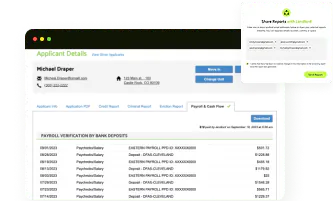
For instance, an applicant might claim to earn $5,000 a month. Yet, automated income verification and cash flow report tools might reveal that their actual regular deposits are only $3,000 per month. These tools typically cost between $17 and $64.
Rental History Verification
Beyond the major databases, checking past behaviour is essential. Contacting previous landlords involves asking specific questions to ask tenants regarding their tenancy. This step usually focuses on qualitative data:
- Cleanliness: Did they maintain the unit?
- Noise Complaints: Were they a disturbance to neighbours?
- Timely Payments: Did they pay rent on time every month?
For example, a former landlord might reveal that the tenant often paid rent two weeks late. This qualitative data fills the gaps that quantitative reports often overlook. While doing this yourself is "free," professional services may charge $10 to $15 to make these calls for you, adding to how much to run a background check.
Identity Verification
Fraud is on the rise, making identity verification a non-negotiable requirement. This step confirms the applicant is the person they claim to be by matching a government ID to the credit report data. The main goal is to prevent identity theft and "ghost" applicants:
- SSN Validation: Ensuring the Social Security Number matches the name.
- ID Matching: Comparing a photo ID to the person applying.
For example, it stops an applicant from using a stolen SSN to hide a bad credit score. This is typically included in the main report price, but it contributes to the overall average cost of a background check ($10 to $200, depending on the packages). It is a standard part of a tenant screening checklist.
Administrative Costs
Finally, there are the costs of doing business. How expensive is a background check in total? It often includes a markup to cover these administrative efforts.
The fee covers the landlord's time and resources:
- Showing the Unit: Time spent touring the property.
- Reviewing Documents: Analyzing the reports mentioned above.
- Communication: Coordinating with the applicant.
This ensures you are not paying out of pocket to find a qualified tenant. A flat application fee for rental usually encompasses all these variables to cover the cost of a background check entirely.
What Background Check Do Most Landlords Use?
When you ask what background check most landlords use, the answer is clear. Most landlords now utilise comprehensive tenant screening services that bundle multiple reports, including credit, criminal, and eviction history, into a single digital package. This shift eliminates the need for old-school methods like fax machines or hiring private investigators. Platforms like LeaseRunner streamline this process even further by combining the rental application and screening into a single, seamless workflow. Here is why the "tenant-initiated" process is the new standard:
- Better Security: The tenant enters their own private data. You never have to handle sensitive Social Security numbers. This keeps you safe and reduces your liability.
- Complete Bundles: The typical price for a background check buys a full package. This typically includes a credit score, a nationwide criminal search, and an eviction history.
- Direct Payment: The tenant typically pays the fee directly to the service provider. This removes the hassle of collecting checks from them.
These comprehensive bundles usually cost between $40 and $60. We also see a rise in portable tenant screening reports. This tool allows a tenant to pay once and share the file with many landlords. This innovation ensures that the cost of a background check for an apartment stays affordable for active house hunters.
What Determines the Cost of a Background Check?
The final price tag on a screening report is never random. Several specific factors influence the cost of a background check. Understanding these variables is key to your business. It helps you explain the fee to your applicants. It also helps you justify your own operational costs. Below are the four main factors that dictate the final price.
Depth and Type of Information
The biggest cost driver is the amount of data you request. A basic report is cheap. It might only give a credit score or a simple pass/fail result. This requires very little processing power. Yet, comprehensive reports cost more.
These include detailed credit lines and manual employment verification. How far back do background checks go for apartment matters here as well. Searching records back ten years takes more effort than a two-year lookback. More granular data always increases the total cost of background check packages.
Location-Specific Fees and Laws
Your geographic location affects the cost of a background check. Some county courts charge "access fees" to view criminal records. These are unavoidable costs. We often have to pass these fees on to you. Additionally, local landlord-tenant laws play a huge role.
Some states strictly cap the background check fee for renters. For example, if your state law limits the fee to $20, you cannot charge more than $20. You must absorb the difference.
Service Provider
The vendor you choose affects the cost of background check services. Large, generic data sites might offer low prices. But they often lack support. If a report is incorrect, you need a human to assist you in correcting it.
Specialised services like ours are focused on the rental industry. We ensure the data is relevant to landlords. Be careful with "free" sites. They often sell tenant data to third parties. Reliable data comes at a fair price.
Processing and Volume
Ultimately, the number of reports is significant. Big management companies screen thousands of people. They negotiate bulk rates. Independent landlords usually pay the standard retail price. However, running a background check can still be an affordable option. You should use pay-as-you-go services. Avoid expensive monthly subscriptions that you might not use. This keeps your costs down.
How to Save Money on Rental Background Checks?

Whether you are a landlord trying to lower overhead or a tenant tired of paying application fees, there are strategies to reduce the cost of a background check for an apartment. Here are several practical ways to minimize these screening costs without compromising on the quality or safety of the data.
Use a Portable Tenant Screening Report (PTSR)
One of the most effective ways to save is to accept or request a portable tenant screening report. This reusable report enables tenants to pay the background check fee for renters once and share the results with an unlimited number of landlords for a set period, typically 30 days. This creates a win-win: the tenant saves money on multiple applications, and you get a comprehensive report instantly without managing the payment process.
Research Local and State Laws
Knowledge is power, and savings. By understanding your local laws, you avoid potential fines for overcharging. If you know that your state limits how much to run a background check to the actual cost of the report, you can ensure your application fee is perfectly compliant. This prevents costly legal disputes later.
Negotiate the Fee
While the third-party screening cost is fixed, the administrative portion of the application fee is often at your discretion. If you are struggling to find tenants, consider waiving your admin fee and only charging the direct cost of the background check. This lowers the barrier to entry for applicants and can increase your pool of potential tenants.
Improve Your Application
You can save money by not running a background check on unqualified leads. Use a detailed initial application or a pre-screening phone call to ask about income and credit, as well as provide rough estimates. If an applicant admits they do not meet your criteria, you save the time and money of running a formal report. Knowing how to check tenant screening report processes ensures you only spend money on serious candidates.
Be Selective and Pre-screen
Similarly, be transparent about your criteria upfront in your listing. If you state "Minimum Credit Score 650" clearly, tenants with lower scores will likely self-select out. This reduces the number of reports you need to run and review, effectively lowering your total spend on screening efforts.
Seek Out No-Fee Rentals
For tenants, looking for "no-fee" rentals often means the landlord absorbs the screening cost. As a landlord, if you choose to pay for the screening yourself, you can market your property as "No Application Fee," a powerful marketing tool that can reduce vacancy time and save you money in the long run.
Conclusion
Determining the cost of a background check for an apartment is a critical step in establishing a profitable and safe rental business. We have explored the fact that while the average cost of a background check generally ranges between $30 and $50, the value it provides in protecting your property is priceless.
From understanding the nuances of a cost to run a credit check to navigating the complexities of criminal history and what a tenant screening report is in its entirety, you are now equipped with the knowledge to manage these expenses effectively.
By utilising tools like portable reports and selecting transparent partners like LeaseRunner, you can ensure that the background check fee for renters is fair and that you receive a comprehensive view of who is moving into your property. Ultimately, a small upfront cost for a thorough check prevents the massive future costs of eviction and property damage.
FAQs
Are Rental Background Check Fees Refundable?
Generally, no. Once the landlord or property manager has run the report, the background check fee for renters is non-refundable. This policy exists for a few key reasons:
- Third-Party Costs: The money is immediately paid to credit bureaus and data providers to generate the data.
- Service Completion: The service (the screening) has technically been performed, even if the application is denied.
- Administrative Time: The fee often covers the time spent reviewing the results.
However, there is an exception. If a landlord collects a fee but never actually performs the screening (for example, if they rent to an earlier applicant), that money should typically be returned. Always check your local laws, as some states have specific rules about the refund of unused portions of the rental screening fee.
Do All Apartments Run Background Checks?
Yes, nearly all. Do all apartments do background checks? While it is not a federal legal requirement, the vast majority of professional landlords and apartment communities consider it mandatory due diligence. Landlords rely on this process to verify two main things:
- Income Stability: Ensuring you earn enough to pay rent.
- Community Safety: Checking for violent criminal history that could endanger neighbours.
If you encounter a landlord who does not ask for one, proceed with caution. This often indicates a lack of proper management or a potential scam. A legitimate property manager will always incur the cost to run a credit check to protect their investment.
Are the Background Check and Credit Check Fees the Same?
Often, yes. Most modern services bundle these into a single rental screening fee for simplicity. However, it is helpful to understand how they differ:
- Bundled Reports: This is the most common and cheapest method. It includes criminal, eviction, and credit history in one price.
- Separate Checks: Some services allow you to run them individually. For instance, running a background check alone might be less expensive than a full bundle, but it provides less comprehensive data.
If you are unsure of the cost difference between a background check and a credit report, request a detailed breakdown. Always verify that the fee covers both the criminal background check and the credit report to avoid unexpected charges later.
Does Everyone on the Lease Pay for a Separate Background Check?
Yes, typically. Landlords must screen every adult (usually 18 years or older) who will live in the property. This standard practice ensures total safety and financial responsibility:
- Individual Liability: Each adult is responsible for understanding and adhering to the lease terms.
- Hidden Risks: A high-risk individual cannot "hide" behind a qualified roommate's good record.
- Total Cost: The total average cost of a background check for a household is calculated by multiplying the per-person fee by the number of individuals being checked.
For example, if the fee is $40, a couple would pay a total of $80. This ensures that no matter how expensive a background check is, the landlord has a complete picture of everyone residing in the unit.
Disclaimer: The information provided in this post is intended for general informational and educational purposes only. It should not be construed as legal, accounting, or tax advice. For guidance specific to your situation, we recommend consulting with a qualified professional in the relevant field before taking any action based on the content provided.