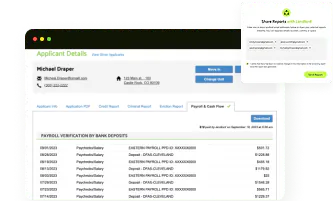
The debt-to-income ratio used in the apartment application process is a snapshot of financial stability. It tells landlords if a tenant can handle life’s curveballs. If tenants ignore this number, tenants might face rejection letters without knowing why. If landlords ignore it, they might end up with reliable people on paper who cannot actually afford the rent.
At LeaseRunner, we want to help you avoid those pitfalls. By mastering this metric, tenants can apply with confidence, and landlords can select the best residents. We will break down exactly how this ratio works, why it matters, and how to calculate it accurately right below.
What Is Debt-to-Income Ratio (DTI) When Renting an Apartment?
The Debt-to-Income (DTI) ratio is a percentage that compares a person's total monthly debt payments to their gross monthly income. While often associated with buying a home, landlords use this formula to determine if a potential tenant can actually afford the monthly rent on top of their existing financial obligations.
This ratio consists of two main parts. The numerator is the sum of all monthly debt obligations. This includes credit card minimums, student loans, car loans, and personal loans. The denominator is the gross monthly income, which represents the total amount earned before taxes and other deductions are applied.
Unlike mortgage lenders who analyze complex "front-end" and "back-end" ratios, landlords focus on a simpler calculation: the Total Debt-to-Income ratio. They want to see the full financial picture. This means they look at the combined cost of the specific unit's rent plus the applicant’s current recurring debts.
Imagine a tenant earns $5,000 a month (gross). If this tenant pays $500 for a car, $200 for student loans, and $300 for credit cards, their total debt is $1,000. If the apartment rent is $1,500, the landlord calculates the total monthly obligation as $2,500 ($1,000 existing debt + $1,500 rent). Divided by the $5,000 income, this results in a 50% DTI.
This percentage shows how much of a tenant's pay is already "spoken for" before they even buy groceries. For a landlord, a lower percentage implies the tenant has enough "breathing room" to pay rent consistently, whereas a high percentage signals a risk of late payments or eviction.
Landlords prioritize immediate cash flow over long-term equity metrics. That is why we offer an income verification and cash flow report to make this data clear and help both parties make informed leasing decisions.
Why Landlords Use DTI to Screen Tenants?
Landlords have a business to run. We know that placing the wrong tenant can result in months of lost income and high legal fees. Therefore, looking at the debt-to-income ratio of apartment applicants is a standard risk management tool. It goes beyond a simple credit check. A credit score informs landlords about the tenant's past history. The DTI informs landlords about the tenant's current financial situation.
Predicts Payment Reliability
Relying solely on a credit score can be misleading; a tenant may have excellent credit but still be struggling with monthly obligations, such as a new auto loan. The debt-to-income (DTI) ratio allows landlords to look beyond the score and assess actual affordability.
Generally, a lower DTI is viewed favourably, indicating that the applicant has sufficient cash flow to comfortably cover rent. Conversely, a high DTI serves as a warning sign that the tenant is overleveraged. By analysing these numbers, landlords can distinguish between financially stable tenants and those living paycheck to paycheck, helping to predict long-term payment reliability.
Do apartments consider debt-to-income ratio results during the screening process? Absolutely. Landlords need to know if the tenant relies on credit cards to cover their expenses. High debt often leads to late rent payments when an emergency arises. By conducting thorough tenant background screenings, landlords can gain a comprehensive view.
Assesses Overall Debt Burden

Income is only half the story. A tenant earning $10,000 a month sounds great. But if that tenant pays $8,000 in alimony and loan debts, they are "house poor." Rental property managers look for accounts that account for these hidden costs. We encourage landlords to consider the entire financial picture. If the debt burden is too heavy, the rent becomes the first payment the tenant skips.
Determines Affordability
Can the tenant actually afford to live there? This is the core question, and the answer is “The debt-to-income ratio provides the objective answer”. Landlords have valid reasons to deny rental application forms if the applicant's finances do not align with the requirements. If the DTI is too high, the apartment is technically unaffordable, even if the tenant claims they can afford it. Affordability protects the tenant from eviction and the landlord from turnover.
Reduces Risk and Cost
Every eviction costs thousands of dollars. Landlords use the debt-to-income ratio for rental property screening to minimise this risk. A low DTI suggests the tenant has a financial buffer. If their car breaks down, they can still pay for repairs and cover their rent. A high DTI means one flat tyre could lead to a missed rent check.
Standardizes Screening
Using math helps landlords stay fair. It removes gut feelings and biases. By setting a standard debt-to-income ratio apartment limit, landlords treat every applicant equally. This is vital for Fair Housing compliance. A comprehensive approach to tenant screening reports ensures that every applicant undergoes the same financial scrutiny, providing a consistent process.
What DTI Do You Need to Get Approved for an Apartment?
Tenants often ask us about the magic number. While every landlord is different, there are industry standards for the debt-to-income ratio that apartment seekers should aim for. Knowing these benchmarks helps tenants manage their expectations and enables landlords to set realistic criteria.
Ideal DTI Ratio
The "gold standard" for lenders and many landlords is a debt-to-income ratio of 36% or lower. This means that 36% of the tenant's gross income covers both the rent and all other debts. If tenants maintain this level, tenants are seen as very low risk.
Do leases affect the debt-to-income ratio significantly? Yes, because the rent is a large chunk of that 36%. For the best chance of approval, tenants should pay down debts before applying. Landlords often use rent-to-income ratios to quickly gauge if an applicant falls into this safe zone.
Maximum Acceptable DTI
How high is too high? Generally, once a DTI crosses 43%, approval becomes difficult. This is similar to mortgage standards. In fact, when people ask what the maximum DTI for an FHA loan is, the answer is often around 43% to 50% depending on compensating factors.
For rentals, landlords may be lenient by up to 45% if the tenant has excellent credit or significant savings. However, anything above 50% is a red flag. At that point, half of the income is gone before the tenant pays for food or utilities.
The 3x Rule
This is the most common rule of thumb in the rental industry. It states that a tenant's gross monthly income should be three times the monthly rent. While this is simple, it is not a full DTI calculation because it ignores other debts.
Does DTI include rent in this specific 3x calculation? No, the 3x rule only looks at income versus rent. Yet, smart landlords combine the 3x rule with a full debt review. If a tenant meets the 3x rule but has $2,000 in credit card payments, they still might not qualify. To confirm these numbers, landlords must know how to accurately verify tenant income.
How to Calculate Your Debt-to-Income Ratio for Renting?

We believe in transparency. Tenants should know their numbers before they pay an application fee. Here is how to calculate the debt-to-income ratio that apartment managers will see.
Step-by-step calculation
We believe in transparency. Tenants should know their numbers before they pay an application fee. Below is the standard method used to calculate the debt-to-income (DTI) ratio that apartment managers review during the screening process.
The Formula:
- List Monthly Debts: Tenants must list all recurring minimum payments. This includes car payments, student loans, personal loans, credit card minimums, and child support. Are utilities included in debt-to-income ratio calculations? Generally, no. Variable costs, such as electricity, groceries, and gas, are not included in the strict DTI definition, although they affect the budget.
- Determine Gross Income: This is the pre-tax salary. If tenants are hourly, calculate the monthly average.
Landlord Tip: Tenants must provide proof of this income. Landlords should be vigilant and learn how to spot a fake pay stub to ensure the denominator in this equation is accurate.
- Add Proposed Rent: Add the cost of the apartment being applied for to the debt list. Tenants often ask, Is rent included in debt-to-income ratio calculations for applications? Yes, the landlord adds the new rent to the existing debt to see the final picture.
- The Formula: (Total Monthly Debt + New Rent) ÷ Gross Monthly Income = DTI.
- Convert to Percentage: Multiply the result by 100.
Tenants must provide proof of this income. Landlords should be vigilant and learn how to spot a fake pay stub to ensure the denominator in this equation is real.
Example Calculations (Low DTI vs. High DTI)
Let’s examine two scenarios to determine if rent counts towards the DTI impact.
Scenario A (Low DTI):
- Income: $6,000
- Debts: $300 (Car) + $100 (Cards) = $400.
- New Rent: $1,500.
- Total Obligation: $1,900.
- Calculation: 1,900 ÷ 6,000 = 0.31 or 31%.
- Result: This tenant is in a great position.
Scenario B (High DTI):
- Income: $6,000
- Debts: $800 (Car) + $600 (Student Loans) + $500 (Cards) = $1,900.
- New Rent: $1,500.
- Total Obligation: $3,400.
- Calculation: 3,400 ÷ 6,000 = 0.56 or 56%.
- Result: This is risky. Does a lease affect your debt-to-income ratio here? Yes, adding the lease pushes them well over the 50% danger line. Even though they earn the same as the tenant in Scenario A, they are less likely to be approved.
Sometimes, tenants with high DTI might need a guarantor. A landlord might accept an apartment rental cosigner to mitigate the risk shown in Scenario B.
What is Ideal DTI for Renters?

While 36% is the industry standard, the truly ideal debt-to-income ratio for apartment living requires a lower figure to ensure a comfortable lifestyle. Here are the key factors to consider regarding DTI targets:
- The Suggested Target: We recommend tenants aim for a ratio of 30% or lower if possible. This buffer allows for essential financial health, including savings, travel, and emergency funds.
- Landlord Flexibility: A mortgage is a strict 30-year commitment, whereas a lease is typically only one year. Therefore, landlords often have more flexibility than banks and may accept a slightly higher ratio, perhaps up to 40%.
However, pushing beyond these limitations limits the tenant's ability to save for their own future home. When a tenant asks if rent is considered a debt when applying for a mortgage later in life, the answer is no; it is an expense. However, high rent prevents saving for a down payment.
The ideal ratio also depends on the local market. In expensive cities like New York, ratios are naturally higher. However, sticking to the lower end ensures financial peace of mind. Tenants should check their own credit reports using a soft and hard credit check to understand what debts are visible to landlords.
Conclusion
Mastering the debt-to-income ratio apartment requirement is the best move for both parties involved in the leasing process. For tenants, it is about realistic budgeting and avoiding rejection. For landlords, it is about securing reliable income and protecting property. We have explored how to calculate it, why it matters, and what numbers to aim for. Whether you are wondering if rent is included in DTI or how to screen effectively, the math does not lie.
Tenants, take control of your debts before you hunt for housing. Landlords use these metrics to build a stable rental business. If you are ready to streamline this process, we are here to assist. Our tools for credit check and screening make verifying these ratios simple and secure.
FAQs
Do Apartments Consider DTI?
Yes, most professional property management companies and private landlords consider DTI. It is a standard part of the tenant screening checklist. While they prioritise the credit score and income-to-rent ratio (the 3x rule), the DTI provides the context needed to make a final decision.
Can a High Credit Score Offset a High DTI?
Sometimes. A high credit score indicates a history of timely payments, which is valuable. If a tenant has a 750 score but a 45% DTI, a landlord might still approve them, perhaps with a higher deposit.
Yet, a high score cannot fix a lack of cash flow. If the math indicates that the tenant cannot physically afford the unit, the score becomes less important. Tenants should know how to check their tenant screening report to see if their credit history is strong enough to possibly outweigh a borderline DTI.
What Is the DTI Required for Rent?
There is no single law setting a number, but most landlords prefer a DTI under 36-40%. If a tenant inquires about whether rent is included in the debt-to-income ratio for mortgage lenders versus landlords, the standards are generally similar. Mortgage lenders are stricter, often capping at 43%. Landlords might go up to 45% or 50% in high-cost areas, but this increases the risk of late payments.
Does DTI include credit cards, loans, and other types of debt?
Yes. The calculation includes all revolving and installment debts. This includes credit cards, auto loans, student loans, and court-ordered payments, such as alimony. It typically does not include utilities, phone bills, or insurance premiums.
Does a rental property count against the debt-to-income ratio?
It depends. If the tenant owns a separate property that incurs a loss, that debt counts. If a tenant is applying for a mortgage later, lenders might ask if rent is included in DTI calculations. For a mortgage application, current rent is a liability that disappears when you buy, but for a rental application, the new rent is the focal point.
Does a rental property count against the debt-to-income ratio?
Yes, in the specific context of a rental application. When screening tenants, landlords add the proposed monthly rent to your existing debts to ensure the total does not exceed their affordability threshold (usually 30-40%). However, it is essential to note that credit bureaus and mortgage lenders typically classify rent as a living expense, rather than a recurring debt liability, unless the account is in collections.
What is the ideal debt to income ratio for buying a home?
Mortgage lenders are stricter than landlords because the commitment is longer. The "gold standard" is the 28/36 rule: no more than 28% of gross income goes to housing, and no more than 36% goes to total debt. While some loan programs allow a debt to income ratio for buying a home as high as 43%, staying under 36% typically guarantees better interest rates and easier approval.
Disclaimer: The information provided in this post is intended for general informational and educational purposes only. It should not be construed as legal, accounting, or tax advice. For guidance specific to your situation, we recommend consulting with a qualified professional in the relevant field before taking any action based on the content provided.