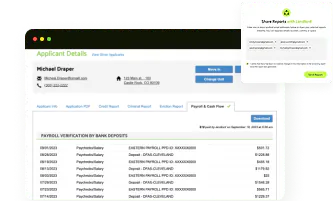
For landlords, securing the right tenant is the foundation of a successful rental business. A thorough tenant background screening process is not just recommended; it is essential. The most crucial part of this process is knowing how to run a credit report on a tenant.
This comprehensive guide details the necessary steps, legal considerations, and best practices for landlords to efficiently and legally do a credit check for potential tenant applicants.
Why Landlords Run Credit Reports on Tenants?
A credit report remains one of the most reliable indicators of a prospective renter’s financial responsibility. While income verification confirms current earning ability, credit history reflects long-term payment behavior.

Landlords run credit checks to:
- Predicting Payment Reliability: The credit score and payment history show how the applicant manages their existing debts. Late payments on credit cards or loans often translate into late rent payments.
- Revealing Financial Stability: Reports detail total debt load, which helps landlords determine if the applicant’s income is stretched too thin. (Landlords should also verify tenant income.
- Identifying Collections and Bankruptcies: Major financial distress signals, such as accounts in collection or recent bankruptcies, are red flags that necessitate further investigation.
- Verifying Identity and Residence History: The credit report helps confirm the applicant’s personal information and may list previous addresses, which is crucial for reference checks.
- Determining the appropriate credit score is needed to rent an apartment for a property.
In many markets, properties attract a large number of applicants. Credit screening helps landlords comply with fair, consistent, and lawful tenant selection standards.
Landlords must be discerning about what landlords look for in a credit check, understanding that a credit report is one piece of the puzzle, alongside criminal background checks and reference checks.
Can Landlords Run Credit Checks on Tenants?
Yes. Private landlords can do credit checks on rental applicants as long as they follow federal and state regulations. Landlords are permitted to run a credit check on someone who is applying to rent a property.
However, this authority is governed by the Fair Credit Reporting Act (FCRA). The FCRA is federal law that regulates who can access a consumer's credit information and under what circumstances.
- Permissible Purpose: The FCRA requires a "permissible purpose" to obtain a consumer report. Renting a property falls under this category as a "business transaction."
- Written Consent is Mandatory: A landlord cannot legally pull a credit report without the applicant's explicit, written consent.
- FCRA Compliance: Landlords must comply with all FCRA requirements, including providing proper notification if they take an "adverse action" (like denying an application) based on the credit report.
Landlords must ensure their screening methods are fair and non-discriminatory, avoiding practices that violate the Fair Housing Act.
What You Need Before Running a Tenant Credit Check
Preparation is key to a smooth and legally compliant screening process. Before a landlord asks, "how can I do a credit check on a tenant," they must have two critical components in place: the necessary information from the applicant and the required legal groundwork.

Information Needed from the Tenant
Landlords need specific, accurate information to properly identify the applicant and retrieve the correct credit file. This is what you need for a credit check.
- Full legal name
- Date of birth
- Social Security Number (SSN) or Individual Taxpayer Identification Number (ITIN)
- Current and previous addresses
- Employment information
- Signed authorization form permitting the credit check
- Completed rental application
A detailed rental application serves as supporting documentation to confirm identity and verify that the applicant understands the screening process.
Legal and Procedural Requirements
Before conducting any screening, landlords must understand the type of check being run. Reputable screening services, like LeaseRunner, typically facilitate a soft and hard credit check.
Key legal obligations include:
- Written Consent: The rental application must include a clear, unambiguous clause where the applicant grants permission for a credit and background check.
- FCRA Compliance: The landlord must understand their obligations regarding data privacy and adverse action notices.
- Choosing the Right Service: The landlord must partner with a credible service that has direct access to consumer credit reporting agencies (Equifax, Experian, TransUnion). This answers the question of what credit check do landlords use.
Some states, including California and Washington, cap application and screening fees. Others require landlords to provide an itemized receipt for screening costs.
How to Run a Credit Report on a Tenant (Step-by-Step)
This is the core process landlords follow when determining how to do credit check for potential tenant applicants.
1. Pre-Screen the Applicant (Optional but Recommended)
Pre-screening saves time and reduces unnecessary screenings. This usually includes:
- Stating income requirements (example: 2.5–3x monthly rent; many Class B and Class C markets commonly require 3x).
- Confirming pet policies (breeds, weight limits, deposits).
- Sharing basic lease terms (lease length, rent amount, security deposit).
- Asking about intended move-in date to ensure readiness.
- Asking high-level qualification questions, such as: has the applicant ever been evicted, does the applicant have a recent bankruptcy,...
This is a great time to also ask questions to a previous landlord.
2. Collect a Completed Rental Application
A rental application supplies the core data needed to run a credit check for potential tenants. Without a completed application, a screening service cannot legally or accurately match identity records.
Typical required information includes:
- Personal identifiers
- Employment details
- Income sources
- Prior rental history
For cross-checking income, landlords frequently review how to show proof of income or ask for bank statements?
3. Obtain Written Consent
Before running a credit check, FCRA requires clear written authorization from the applicant. This is non-negotiable. Without it, a landlord cannot legally access any credit information.
A compliant rental application should include:
- A standalone authorization clause
- A statement outlining the purpose of the credit inquiry
- An acknowledgment that the check may include criminal, eviction, and identity verification
- A signature line granting permission
4. Choose a Reputable Tenant Screening Service
Experian, TransUnion, and Equifax are the three major credit bureaus that supply most consumer credit data in the United States. However, a landlord cannot access a renter’s credit file directly from these bureaus. Access must go through an FCRA-approved third-party provider to ensure legal compliance and secure handling of consumer information.
A trusted option is LeaseRunner, which delivers a complete tenant credit report using Experian credit check data and the VantageScore 3.0 model. The report provides detailed insights into payment history, open accounts, debt levels, credit check, and other risk indicators. LeaseRunner also allows landlords to bundle background checks for a more comprehensive screening process.
Key features of a reliable tenant screening service include:
- Soft or hard credit pull options
- Criminal and eviction reports
- Identity verification
- FCRA-compliant disclosures
5. Verify Your Identity as a Landlord
To protect sensitive consumer data, most screening companies require the landlord to verify identity and prove legitimate rental use. This protects against:
- Identity theft
- Unauthorized credit pulls
- Fraudulent access to consumer credit files
Verification methods may include:
- Uploading a valid government-issued ID
- Verifying phone number and email
- Providing proof of property ownership (deed, insurance policy, lease agreement)
- Submitting bank or tax documentation
- Passing an online identity verification quiz
The Federal Trade Commission (FTC) reports that identity theft cases rose 17% in 2023, prompting screening companies to strengthen identity verification processes.
6. Initiate the Credit Check
Once identity is verified, the landlord can initiate the credit check through the screening platform.
The process usually works as follows:
- The landlord enters the applicant’s name, email, and sometimes date of birth.
- The tenant receives a secure link to verify identity directly with the screening service.
- The applicant authenticates using personal information, often including SSN verification questions (knowledge-based authentication).
- If identity is confirmed, the credit report is released to the landlord.
This ensures sensitive information is handled securely and legally.
Landlords often wonder: “How can I check my tenant credit report directly?” For privacy reasons, only a screening service can deliver the final report.
Turnaround time is usually fast. Most services deliver results within minutes, though identity verification failures may extend this to 24–48 hours. Additional timelines can be found under: how long does tenant screening take.
7. Review the Report and Make a Decision
The service will return a comprehensive report, usually including a credit score, payment history, public records, and accounts in collections.
Key things to review:
- Credit Score: Compare it against your minimum acceptable score (credit score vs credit report)
- Debt-to-Income Ratio: Assess if the rent is affordable relative to their total debt.
- Payment History: Look for patterns of late payments, especially related to previous housing expenses.
- Past-due accounts: Accounts sent to collections signal a higher risk profile.
- Bankruptcies: A recent bankruptcy may reflect financial instability, while older bankruptcies might carry less weight depending on the applicant’s subsequent financial behavior.
- Identity checks: Modern screening reports typically verify identity using Social Security number validation, address history, and public records matching.
- Fraud flags: Some reports include fraud indicators, such as suspicious synthetic identity signals, inconsistent address histories, or discrepancies between provided information and third-party data.
8. Comply with Adverse Action Requirements
If the application is denied—or approved only with a higher deposit or extra conditions—the landlord must issue an Adverse Action Notice. This FCRA requirement ensures transparency.
The notice must include:
- The screening service used
- The fact that the service did not make the decision
- The applicant’s right to obtain a free copy of the report
- The right to dispute inaccurate information
What to Do After Running the Credit Report?
Credit checks are only one part of the selection process. After reviewing the report, a landlord must complete several follow-up steps.
1. Review the Full Report and Verify Information
A responsible landlord doesn't just look at the score. They examine the entire picture. The report may reveal unexpected issues, such as a high volume of inquiries or several accounts in collections.
Look for:
- Consistency between the application and report
- Discrepancies in names or addresses
- Identity red flags
- Past housing-related debts
Consider a Resident Score vs Credit Score to get a view specific to renting.
2. Make a Decision: Approve, Deny, or Conditionally Approve
The data from the credit report, combined with income verification and cash flow report, should lead to one of three outcomes:
- Approve: The applicant meets all established criteria.
- Deny: The applicant fails to meet minimum standards (e.g., extremely low credit score, history of evictions). The Adverse Action Notice is required.
- Conditionally Approve: The applicant is accepted but with an increased financial buffer, such as an extra month’s security deposit or a co-signer, due to minor credit issues. This may also require an Adverse Action Notice. (Renting to Tenants with Bad Credit)
3. Communicate the Decision
Timely and professional communication is essential. If denying, provide the Adverse Action Notice immediately. If approving, move quickly to secure the lease. If dealing with possible rental scams, be extra cautious with your communication.
4. Finalize the Process
Once approved:
- Complete the lease agreement
- Schedule move-in
- Collect deposits and first month’s rent
- Provide disclosures required by state law
For applicants demonstrating concerning financial behavior, landlords later may reference: How to Report Bad Tenant to Credit Bureau
Conclusion
Mastering how to run a credit report on a tenant is a fundamental skill for any successful landlord. It is the best defense against financial loss and the most effective way to secure reliable, long-term residents. By adhering strictly to the FCRA, obtaining proper consent, and utilizing a professional, compliant service, landlords can confidently and legally vet applicants.
The investment in a thorough tenant background screening process is not an expense; it is a direct investment in the long-term profitability and stability of a rental property. Trusting the screening process to an industry expert like LeaseRunner ensures that every decision is based on accurate data and sound legal footing, safeguarding the landlord's assets and peace of mind.
FAQs
Do All Apartments Run Credit Checks?
Most professionally managed apartments conduct credit checks as part of standard screening. However, smaller landlords or shared-housing arrangements may use alternative screening methods. Credit checks remain the most reliable tool for assessing financial behavior.
Can a Credit Check Be Run on Someone Who Is Not a Tenant Yet?
Yes. As long as the person is actively applying for a rental and has provided written consent, the credit check is permissible under the FCRA. Landlords frequently ask this when determining how to do credit check on tenants who are still early in the process.
Is a Credit Check Required for All Rentals?
No. There is no federal law mandating a credit check for a rental property. However, it is an essential part of a best-practice screening process.
For landlords who opt not to use a credit check, alternative methods, such as requiring significant credit references on rental application or asking for bank statements, may be used, though these have their own compliance considerations.
How Much Does a Tenant Credit Check Cost?
Tenant credit checks typically cost between $25 and $55, depending on the service provider and the level of detail included. Some states cap screening fees; California, for example, limits fees annually based on consumer price index adjustments.
Disclaimer: The information provided in this post is intended for general informational and educational purposes only. It should not be construed as legal, accounting, or tax advice. For guidance specific to your situation, we recommend consulting with a qualified professional in the relevant field before taking any action based on the content provided.