How to list your house for rent is the first question every new landlord faces after deciding to rent it out. An empty unit costs money every day. Each week without a tenant means lost income, ongoing mortgage payments, and maintenance expenses that produce zero return. The key to filling a vacancy fast is a clear, repeatable process.
The guide below walks landlords through every step, from preparing a house for rent to signing a lease. Each section covers pricing, photos, listing a property for rent online, tenant screening, and legal compliance. Landlords who follow each step gain a reliable system to attract quality tenants quickly.
Step-by-Step Overview: How to List Your House for Rent
The best way to list a rental property starts with a structured plan. Here is a quick overview landlords can bookmark:
- Prepare the property. Complete repairs, deep clean, and handle a property inspection before any renter sees the unit.
- Set the right rental price. Run a rental market analysis and study comparable rent (comps) in the neighborhood.
- Create a high-converting rental listing. Write a strong listing description, capture professional rental property photos, and post on platforms like Zillow, Apartments.com, and Facebook Marketplace.
- Screen tenants. Run a background check on every applicant before handing over the keys.
- Sign a lease and finalize. Lock in a lease agreement that protects both the landlord and the tenant.
Each step below breaks down the process in full detail. Landlords who want a broader view of the entire rental journey can start with our guide to renting out a house. Now, the process begins with the property itself.
Step 1: Prepare the Property for Rent
A move-in-ready property attracts more applicants and higher offers. Landlords should treat preparing a house for rent as the foundation of the entire listing strategy.
- Start with repairs. Walk through every room. Check plumbing, electrical outlets, HVAC systems, smoke detectors, and door locks. Fix anything broken. A leaky faucet or a cracked window signals neglect and drives good renters away. Landlords renting out a house for the first time often underestimate the impact of small defects. For a complete walkthrough of preparation, our first-time rental guide covers every detail new landlords need.
- Deep clean the entire unit. Hire a professional cleaning crew if the budget allows. Pay special attention to kitchens, bathrooms, carpets, and windows. Spotless home photos look better and create stronger first impressions during showings.
- Stage the space. Staging a rental property does not require expensive furniture. Simple touches work. Fresh paint in neutral colors, clean countertops, and trimmed landscaping outside go a long way. According to the National Multifamily Housing Council, property appearance ranks second among renters' most important factors, right after price (NMHC, 2024).
- Handle the property inspection. Many cities require a rental certificate of occupancy before a landlord can legally lease a unit. Check local requirements and schedule any needed inspections early. Landlords can review whether a rental certificate of occupancy applies to their area before listing.
Once the property is clean, repaired, and inspection-ready, the next step is setting a price that fills the unit without leaving money on the table.
Step 2: Set the Right Rental Price
Pricing a rental property correctly is one of the most critical decisions a landlord makes. Set the number too high, and the unit sits vacant. Set the number too low and the landlord loses income every single month.
Research Market Rent in the Area
A solid rental market analysis starts with studying comparable rent (comps), meaning the monthly rates for similar properties nearby. Landlords should compare units with the same number of bedrooms, square footage, condition, and location. Here is a quick process:
- Search Zillow, Apartments.com, and local rental listings for active properties within a one-mile radius.
- Note the rent prices for three to five units similar in size and condition.
- Check fair market rent data published by the U.S. Department of Housing and Urban Development (HUD FMR). HUD updates fair market rent figures annually and breaks data down by county.
- Average the results to find a competitive range.
Landlords who want a deeper breakdown of rent-setting strategy can explore our full guide on how much rent to charge.
Factors That Affect Rental Pricing
Beyond comps, several variables push rent higher or lower:
- Location and neighborhood. Proximity to schools, transit, and shopping adds value.
- Property condition and upgrades. Updated kitchens, new appliances, and modern finishes justify higher rent.
- Seasonality. Summer months typically see stronger demand and allow higher pricing. In the winter months, slight discounts may be needed to attract applicants.
- Local vacancy rates. In markets with low vacancy rates, landlords have greater pricing power. In high-vacancy areas, competitive pricing fills units faster.
- Pet policies. Allowing pets opens the door to a larger renter pool and often supports a monthly pet premium.
Getting the price right sets the stage. The next step is building a rental listing that convinces the right tenant to apply.
Step 3: Create a High-Converting Rental Listing

A high-converting listing combines a sharp rental listing description with professional property photos to grab attention fast. Listings on platforms like Zillow, Apartments.com, and Facebook Marketplace compete against dozens of other properties. Standing out requires effort.
Write a Compelling Listing Description
The rental listing description does the heavy lifting. A strong listing description follows a simple formula: lead with the best feature, cover the essentials, and close with a call to action.
Start the headline right. Include the rent price, the number of bedrooms and bathrooms, and one standout feature. Example: "$1,800/mo | 3BR/2BA House with Fenced Yard Near Downtown."
In the body, cover these details:
- Monthly rent and lease term
- Security deposit amount
- Number of bedrooms, bathrooms, and total square footage
- Key amenities: in-unit laundry, parking, storage, outdoor space
- Pet policy (allowed breeds, deposit, monthly fee)
- Move-in date and application instructions
Use keywords for the rental listing that renters actually search. Terms like "pet-friendly," "updated kitchen," "near transit," and "move-in ready" drive clicks. Avoid vague language like "charming" or "cozy" without backing the claim with a specific detail. Strong rental description examples always pair an adjective with a fact: "Bright, south-facing living room with oversized windows" beats "nice living room" every time.
Taking Professional Rental Photos
Rental property photos rank as the single biggest factor in whether a renter clicks on a listing or scrolls past. According to Zillow survey data, 84% of renters use online resources during their search.
Here are quick tips for better photos:
- Shoot in natural light. Open all blinds and curtains. Photograph rooms during the brightest part of the day.
- Declutter every surface. Remove personal items, excess furniture, and anything that shrinks the visual space.
- Capture every room. Include the kitchen, bathrooms, bedrooms, living areas, laundry, and outdoor space. Most top-performing listings feature at least 10 photos.
- Show the exterior. Photograph the front of the property, the yard, the parking area, and the street view.
Once the listing is live on Zillow, Apartments.com, and Facebook Marketplace, landlords will begin receiving inquiries. The next critical step separates good landlords from great ones: screening.
Step 4: Screen Tenants Before Renting the House
Tenant screening is the single most important step in the entire rental process. A beautiful listing and perfect price mean nothing if the wrong renter moves in. Landlords must verify every applicant before signing a lease.
The rental application process should collect the following from every applicant:
- Full legal name, date of birth, and Social Security number
- Current and previous addresses with landlord contact information
- Employment details and proof of income (pay stubs or bank statements)
- Consent to run a background check and credit pull
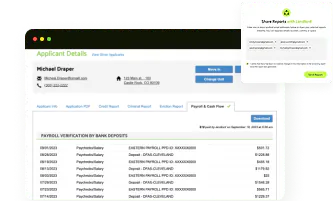
After collecting applications, landlords run a full screening. A proper background check on tenants includes a credit report, criminal history search, eviction records, and income verification. Our complete tenant screening checklist walks landlords through every data point to review.
Landlords should also ask the right questions during showings and follow-ups. Asking about move-in timelines, reasons for leaving the current home, and pet ownership helps gauge fit.
Where to screen: We offer tenant background screening that bundles credit, criminal, eviction, and income data into a single report. Understanding what a rental background check shows helps landlords interpret results and make confident decisions. Screening protects the investment. The next step is to lock the tenant in with a legal agreement.
Step 5: Sign a Lease Agreement and Finalize the Rental
A signed lease agreement protects both the landlord and the tenant. Every rental should have a written contract that spells out the rules, responsibilities, and financial terms in plain language.
Key elements every lease must include:
- Monthly rent amount and due date
- Lease start and end dates
- Late payment fees and grace period
- Security deposit amount and return conditions
- Maintenance responsibilities for each party
- Pet policy and any associated fees
- Entry notice requirements (typically 24 to 48 hours)
- Termination and renewal terms
Collect move-in funds before handing over keys. The first month's rent and the security deposit should be paid in advance before the tenant takes possession. Verify funds rather than accepting personal checks that might bounce.
Document the property condition. Complete a move-in inspection with the tenant present. Photograph every room and note any existing damage. Both parties should sign the inspection report. A thorough move-in record prevents disputes when the tenant moves out.
Landlords who want to turn a home into a rental need a reliable system from listing through lease signing. We offer lease templates, screening tools, and rent collection features built for independent landlords at LeaseRunner.
With the lease signed, landlords have a tenant and a revenue stream. The sections below cover common mistakes, attraction strategies, and legal requirements that protect the entire operation.
Biggest Mistakes New Landlords Make When Listing a Rental
New landlords often rush through the process and pay for the mistakes later. Two errors stand out above all others.
Focusing on Listing Before Screening Tenants
Many first-time landlords spend hours perfecting the rental advertisement but skip the screening plan entirely. The listing generates leads, but without a clear tenant screening process, a landlord has no filter. The result is a signed lease with a renter who pays late, damages the property, or breaks the agreement.
Landlords should build the screening process before publishing the listing. Decide on minimum credit scores, income requirements, and acceptable rental history in advance. Our guide on how to screen a tenant lays out a repeatable system.
Accepting the First Applicant Too Quickly
Vacancy anxiety pushes new landlords to accept the first renter who shows interest. Fast decisions feel productive, but often backfire. A rushed approval skips reference checks, income verification, and criminal history review. The smarter approach is to set a deadline for accepting applications, screen every applicant equally, and compare results side by side.
Patience at the screening stage saves thousands in potential eviction costs, property damage, and lost rent down the road. The average eviction costs between $2,000 and $5,000, including legal fees, court costs, and lost income.
Both mistakes stem from the same root: skipping preparation. The next section covers how smart landlords attract better tenants from the start.
How to Attract High-Quality Tenants From the Start?

Filling a vacancy is easy. Filling a vacancy with a reliable, long-term renter takes strategy. Landlords who invest upfront in quality attract fewer headaches over the life of the lease.
- Price competitively, not cheaply. Underpriced units attract more applicants, but many will be of lower quality. A unit priced at fair market rent draws tenants who can afford the payment and take the property seriously.
- Write the ideal renter listing. Include specific details that appeal to the target audience. A family wants to hear about nearby schools and a fenced yard. A young professional cares about transit access and modern finishes. Match the listing description to the renter profile.
- Respond to inquiries within hours. Fast response times signal professionalism. Renters who get quick answers are more likely to schedule a showing and follow through with an application. Slow replies push serious applicants to the next listing.
- Show the property at its best. Clean, well-lit, and staged. Every showing is a sales pitch. Landlords wondering how to show a rental property effectively should treat each visit like an open house. Unlock every door, turn on every light, and point out features that photos cannot capture.
- Set clear expectations in the listing. State income requirements, credit score minimums, and the rental application process are upfront.
Transparent listings attract qualified applicants and discourage renters who do not meet the criteria. Landlords who want to understand the full cost of professional help can review property management cost breakdowns to decide if self-management makes sense.
Attracting the right tenant is only half the equation. Landlords also need to follow the law throughout the process.
Legal Requirements Landlords Must Know Before Listing a House
Listing a property for rent comes with legal obligations that landlords cannot afford to ignore. Violations lead to fines, lawsuits, and voided leases.
Fair Housing Laws Explained
The Federal Fair Housing Act prohibits discrimination based on race, color, national origin, religion, sex, familial status, and disability. Every part of the listing and screening process must comply.
- In the listing: Avoid language that expresses a preference for or against any protected class. Phrases like "perfect for young professionals" or "ideal for couples" may violate Fair Housing rules. Stick to describing the property itself.
- In screening: Apply the same criteria to every applicant. Use the same income threshold, credit score minimum, and background check standards across the board. Inconsistent screening creates legal exposure.
- In showings: Offer the same information and access to every prospective renter. Do not ask about marital status, children, religion, or disability.
Local Regulations and HOA Rules
Beyond federal law, local rules add another layer:
- Zoning laws. Some areas restrict short-term or even long-term rentals. Confirm the property is zoned for the intended rental type before listing.
- Rental licenses and inspections. Many cities require a rental permit or license. Some mandates periodic safety inspections before a landlord can lease a unit.
- HOA restrictions. Homeowners' association rules may cap the number of tenants, restrict pet types, or require approval before renting. Read the CC&Rs (covenants, conditions, and restrictions) in full before listing.
- Rent control. In some cities and states, rent control laws cap how much a landlord can charge and how much rent can increase each year.
Following the law protects the landlord and the tenant. A quick checklist below consolidates all requirements into one place.
Checklist: Everything Landlords Need Before Listing a House for Rent
Use the table below to confirm every task is complete before publishing the rental listing.
Print or save the checklist. Check every box before the listing goes live.
Conclusion
There are five clear steps to listing your house for rent: get the property ready, set the right price, make a listing with good photos and a detailed description, check the background of every applicant, and sign a lease that protects both the landlord and the tenant.
Landlords who follow the steps avoid making expensive mistakes and get tenants who pay their rent on time and take care of the property. If you skip a step, the chances of ending up with an empty apartment, getting into legal trouble, or having a bad tenant go up quickly. The system works best when everything is connected, from a clean, staged rental property to a rental application process that doesn't cut corners.
FAQs
1. How do landlords determine the right rent price?
Landlords determine the right rent price by running a rental market analysis. The process starts with checking comparable rent (comps) for similar properties within a one-mile radius. Landlords should compare the number of bedrooms, square footage, condition, and amenities.
Next, review HUD fair market rent data for the county. Online tools on Zillow and Apartments.com also show the prices of active listings in the area. Factor in property condition, location advantages, and seasonal demand. The final number should sit within the range of local comps while reflecting any upgrades or unique features the property offers.
2. How do landlords screen tenants effectively?
Effective tenant screening follows a consistent, documented process. Every applicant completes a rental application that collects personal details, employment and income info, and rental history. The landlord then runs a background check covering credit history, criminal records, eviction filings, and income verification.
Contact previous landlords to confirm payment habits and lease compliance. Apply the same standards to every applicant to stay compliant with Fair Housing laws. Using a professional screening service ensures data accuracy and legal compliance under the Fair Credit Reporting Act.
3. What is the biggest risk when renting out a house?
The biggest risk is placing a bad tenant. A problem renter can cause months of unpaid rent, thousands in property damage, and expensive eviction proceedings. The average eviction costs between $2,000 and $5,000, including legal fees, court costs, and lost rent.
Thorough tenant screening and a solid lease agreement dramatically reduce risk. Landlords who skip screening to fill a vacancy faster often spend far more on repairs and legal fees than they lose in rent from a few extra weeks of vacancy.
Disclaimer: The information provided in this post is intended for general informational and educational purposes only. It should not be construed as legal, accounting, or tax advice. For guidance specific to your situation, we recommend consulting with a qualified professional in the relevant field before taking any action based on the content provided.