Finding a reliable tenant for a rental property is the single most critical task for any property investor. Learning how to screen a tenant effectively protects the asset, ensures consistent cash flow, and maintains peace within the neighborhood. Many landlords rush this process, only to face late payments or property damage months later. We believe that a rigorous screening process is the only barrier between a profitable investment and a legal nightmare.
By utilizing a structured approach, the landlord can separate high-risk applicants from responsible renters who will treat the home with respect. Our comprehensive guide below outlines the exact steps to thoroughly evaluate applicants. We will explore the best tenant screening strategy, how to analyze reports, and the specific red flags that should stop an application in its tracks.

Why is Tenant Screening Important? Watch the Red Flags
Before diving into the mechanics of screening a tenant, the landlord must understand the stakes involved in the rental business. Tenant screening is the process of evaluating a prospective renter’s background to determine the likelihood that they will fulfill the terms of the lease. This evaluation protects the landlord from financial loss and legal liabilities.
A thorough investigation reveals the applicant's financial stability, past rental behavior, and criminal history. Without this due diligence, the property owner risks accepting an individual with a history of evictions or violent behavior. We emphasize that screening is not just about income; it is a holistic view of the applicant's reliability.
Why is Tenant Screening Important?
Learning how to screen a tenant is vital because an eviction can cost thousands of dollars and take months to finalize. A bad tenant causes stress, property damage, and lost rent that can bankrupt a small business. Tenant screening serves as a risk-management tool that verifies the information provided on the application. We know that verifying data helps the landlord predict future behavior based on past actions.
When landlords understand how to screen potential tenants, they effectively reduce turnover. Stable renters stay longer, pay on time, and communicate issues promptly. Furthermore, consistent screening processes help the landlord comply with Fair Housing laws by applying the same standards to every person. Ignoring this step is a gamble that no serious investor should take. Ideally, the landlord transitions from understanding the 'why' to mastering the 'how' in the next section.
9 Comprehensive Steps to Screen a Tenant

A documented, repeatable procedure is the foundation of effective property management. We've divided the tenant screening process into nine concrete steps. This order guarantees that no detail is overlooked and that legal compliance is upheld.
Step 1 - Set Written Criteria (Before Advertising)
The landlord must set explicit tenant screening standards before listing a unit. This document serves as both a guide for choosing the ideal resident and a legal shield. The minimum requirements an applicant must meet to be granted a housing unit are outlined below. A minimum credit score, a clean eviction record, and an income-to-rent ratio (typically 3x) are standard requirements.
For instance, a landlord might require that you have no felonies in the past 7 years and a credit score of 650. This creates impartial justifications for acceptance or rejection.
Having written criteria prevents accusations of discrimination. If an applicant asks how to select a tenant, the landlord can point to these pre-set rules. We recommend sharing this list with prospective renters upfront. This saves time for both parties. Qualified people will apply, while those who do not meet the tenant screening criteria will likely self-select out.
Step 2 - Pre-Screen in Your Listing and First Contact
The second step in learning how to screen a tenant begins the moment the advertisement goes live. The rental listing should clearly state the requirements established in step one. This acts as a passive filter. When inquiries start coming in, the landlord should conduct a phone or email pre-screening. Asking simple questions early can reveal if the person is a serious candidate.
Useful questions include "When are you looking to move?" and "Do you have pets?" We suggest using a tenant screening checklist during this conversation. If the caller argues about the rent price or refuses to answer basic questions, the landlord can save time by not scheduling a viewing. This stage is about efficiency. We find that screening applicants for rental properties effectively involves listening for inconsistencies in their stories before they ever walk through the door.
Step 3 - Use a Complete Rental Application

Once a prospect shows interest, they must fill out a comprehensive rental application. This document collects the raw data needed for tenant screening for property management. The application should request full names, date of birth, Social Security number, rental history over the past 5 years, and current employer details.
The rental application must clearly outline the terms so the applicant understands the scope of the investigation. It must include a clause giving the landlord permission to run background and credit checks. Without this signature, the landlord cannot legally proceed with how to conduct a credit check on tenants. Effective rental application screening begins with ensuring the document collects all necessary legal consents for data verification.
We speak out against accepting incomplete forms. A blank space often hides a negative fact. The application is the foundation of the entire investigation. If the data here is false, the rest of the process fails.
Step 4 - Verify Identity, Income, and Employment
Identity fraud is on the rise, so verifying the applicant's identity is crucial. The landlord should request a government-issued ID and verify that it matches the applicant's face. Next, income verification ensures the tenant can afford the rent. The industry standard is that monthly income should be three times the rent amount.
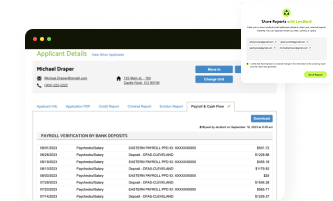
Rigorous income verification and employment verification are the only ways to confirm that the applicant's financial reality matches their claims. To confirm this, the landlord requests pay stubs, W-2 forms, or bank statements. We understand how landlords verify employment best: by calling the employer directly.
A quick call can confirm if the applicant is a current employee and if their income is stable. Self-employed applicants may need to show tax returns. We suggest looking for consistent deposits rather than one large lump sum. This step answers the financial question of how to screen a tenant.
Step 5 - Run Credit, Eviction, and Background Reports
This step provides the hard data. The landlord must order a tenant background screening report from a reputable service, such as LeaseRunner. This report usually includes a credit score, nationwide criminal search, and eviction history. Performing a credit check and background check simultaneously provides a holistic view of the applicant's financial and behavioral past.
How to do a credit check on tenants involves looking beyond the score. The landlord should examine the report for high debt loads, late payments, or accounts in collections. When running a credit check for tenant approval, it is vital to look beyond the score to the debt-to-income ratio.
A low score due to medical debt is different from one due to unpaid rent. Concurrently, the criminal check reveals safety risks. We advise the landlord to understand HUD criminal background check requirements to avoid discrimination.
A comprehensive background check for tenant safety should always include a review of multi-state criminal databases. What is a screening for an apartment without checking for evictions? It is incomplete. An eviction report is the single best predictor of future rental issues.
Reviewing the applicant's eviction history protects you from inheriting a habit of non-payment. For specific details on interpreting these documents, the landlord can review what a tenant screening report is to ensure they are reading the data correctly.
Step 6 - Check Rental History and References
Paperwork tells one side of the story; past landlords tell the rest. Contacting previous landlords is the best way to screen tenants for behavioral issues. The current landlord might lie to get rid of a bad tenant, so we recommend reaching out to the previous landlord. Verifying the previous rental history often reveals behavioral red flags that financial reports miss.
The landlord should ask: "Did they pay on time?" "Was the unit damaged?" and "Would you rent to them again?" These questions to ask tenants' references reveal patterns. If an applicant has no rental history, personal references may suffice, though they are less reliable. We verify these references are genuine owners, not friends posing as landlords. This step validates the "good behavior" aspect of tenant screening.
Step 7 - Interview the Applicant
The interview often happens during the property tour. This is a chance for the landlord to observe behavior. Is the applicant on time? Are they respectful? We suggest asking open-ended questions to gauge their lifestyle compatibility with the property.
However, the landlord must be careful. We know what questions you cannot ask a potential tenant to avoid fair housing violations. Avoid questions about race, religion, family status, or disability. Focus the conversation on the lease terms. Mastering how to screen potential tenants requires balancing friendliness with professional detachment. The goal is to assess reliability, not to make a friend.
Step 8 - Apply Your Criteria and Decide
Now the landlord compares the findings against the tenant screening criteria set in step one. This removes emotion from the decision. If the applicant meets the income, credit, and history requirements, they are approved. If they fall short, they are denied. While evaluating applicants, you must remain mindful of tenant rights regarding privacy and the disclosure of why an application was denied.
Sometimes, an applicant is borderline. Renting to tenants with bad credit might be an option if they have a high income and a co-signer. If the landlord denies the applicant based on the credit report, the law requires that an adverse action letter be sent. We provide guidance on what to include in an adverse action letter to ensure compliance. This decisive moment marks the culmination of the tenant screening process.
Step 9 - Condition, Then Finalize Approval
The final step in screening a tenant is lease signing and move-in collection. Even after approval, the landlord should not stop the process until the money is in the bank. We recommend collecting the first month's rent and security deposit in certified funds.
The landlord reviews the lease terms with the tenant to ensure mutual understanding. This prevents "I didn't know" excuses later. We suggest doing a move-in inspection with the tenant to document the property's condition. This protects the security deposit. Once the lease is signed and funds clear, the screening process is officially complete.
Red Flags to Look Out for When Screening Tenants

Even when following every step of the screening process, professional landlords must remain vigilant for subtle warning signs that data alone might not fully explain. These anomalies often appear during the background check or initial conversation, signaling potential future liabilities that a standard report might not fully contextualize. We have identified several red flags in background checks that indicate high risk and require immediate attention to avoid placing a problematic resident in your property.
- Unexplained Gaps in Rental History: One of the most glaring issues is an inability to verify past addresses. If the applicant cannot account for their whereabouts for six months, they may be trying to hide a negative experience. This gap often conceals an off-record eviction, a period of incarceration, or a destroyed relationship with a previous landlord that they do not want you to discover.
- Pressure for Immediate Move-in: A prospect who needs to move in "tomorrow" is rarely a good sign. Most responsible renters start looking 30 to 60 days before their lease ends to ensure a smooth transition. Desperation often signals poor planning, a sudden eviction occurring at their current residence, or a domestic dispute they are fleeing without resolving legal ties.
- Large Cash Offers: We strongly caution against applicants who try to pay six months or a year in advance in cash. While this seems financially secure, it is a classic tactic used to bypass income verification protocols. This approach often masks illegal income sources or a lack of long-term financial stability, leaving the landlord with no recourse once the prepaid period expires.
- Data Inconsistencies: How to screen tenants for rental property safety means never ignoring a gut feeling supported by data. If the employer listed on the application does not match the pay stubs, or if the addresses on the credit report differ significantly from their stated history, this dishonesty is a non-negotiable deal-breaker.
- Disrespectful Behavior: Pay attention to how the applicant treats you during the showing. If they are late, argumentative, or overly critical of the property, this behavior will likely escalate once they move in.
Awareness of these risks leads to better daily habits and safer investments.
Best Practices for Tenant Screening

Consistency and legality are the pillars of the best tenant screening strategy. We advocate for a methodical approach that treats every applicant equally. This protects the landlord from lawsuits and ensures the highest quality placement.
Be Consistent with All Applicants
The landlord must apply the same workflow to every person. If one applicant is required to show three months of pay stubs, all applicants must do the same. Deviating from the process creates vulnerability. We suggest using a checklist for every interaction. When the landlord asks how to screen tenants for rental property, the answer is always "consistently." This eliminates bias and focuses purely on the data. Whether it is a family member or a stranger, the screening steps remain the rigid standard.
Comply with Fair Housing Laws
The Fair Housing Act prohibits discrimination based on race, color, national origin, religion, sex, familial status, or disability. The landlord must know these laws inside and out. Violating the Fair Housing Act by asking discriminatory questions can lead to severe legal penalties for the landlord. Legally screening a tenant means evaluating financial and behavioral risks, not personal characteristics.
For example, when screening Section 8 tenants, the landlord should focus on screening criteria for criminal history and rental references, rather than on the source of income. We remind landlords that some states also protect the source of income as a class. Ignorance of the law is not a defense. Smart landlords educate themselves to ensure their criteria are compliant.
Conclusion
Mastering how to screen a tenant is the most effective way for a landlord to secure their investment and ensure peace of mind. By following the nine steps outlined above (from setting criteria to finalizing the lease), the landlord builds a defense against lost income and property damage. We have explored how to screen potential tenants by verifying income, running credit reports, and checking references. We also highlighted the importance of spotting red flags and adhering to Fair Housing Laws. Ensuring you respect tenant rights throughout this procedure fosters a professional relationship from day one.
The process may seem lengthy, but the cost of a bad tenant far outweighs the effort of screening. A professional landlord uses tools like LeaseRunner to streamline this workflow. Remember, the goal is not just to fill a vacancy, but to find a partner who values the property as much as the owner does. Start implementing these tactics today to build a profitable and stress-free rental portfolio.
FAQs
1. How Do I Do a Tenant Screening?
To conduct a screening, the landlord must first obtain the applicant's written consent. Then, use a service like LeaseRunner to generate credit, criminal, and eviction reports. Combine this data with employment verification and reference checks to make an informed decision on how to screen a tenant.
2. Can I Check My Own Tenant Screening?
Yes, an individual can check their own background. We recommend that renters review their own credit and rental reports before applying. This allows them to correct errors. However, for a landlord, how to screen applicants for rental units requires ordering an official third-party report to ensure the data is current and unaltered.
3. What is the 5-Rule Rent?
The "5-Rule" is less common but often refers to rent affordability or occupancy standards. However, in screening, landlords typically focus on the 3x rule (rent is 3 times income). If referring to occupancy, the HUD guideline is typically two people per bedroom plus one. Clarifying these rules is part of the process of fairly selecting a tenant.
4. How long does the tenant screening process take?
The timeline varies, but digital tools have sped it up. Typically, reports are instant, but verifying references takes time. We estimate the process takes 24 to 72 hours. For a deeper dive into timelines, landlords can read about how long tenant screening takes to set realistic expectations for applicants.
Disclaimer: The information provided in this post is intended for general informational and educational purposes only. It should not be construed as legal, accounting, or tax advice. For guidance specific to your situation, we recommend consulting with a qualified professional in the relevant field before taking any action based on the content provided.