Property management software organizes rent collection, tenant screening, lease signing, maintenance, and accounting into one platform instead of scattered spreadsheets and paper files. Many landlords start by searching for the best free property management software, but the right pick depends almost entirely on portfolio size: a landlord with two units needs something different from a firm managing 500. This guide ranks 15 platforms, free and paid, by who they serve, with 2026 pricing for each.
Key takeaways:
- Small landlords can compare LeaseRunner, TurboTenant, Innago, Avail, RentRedi, Baselane, and Landlord Studio based on units and required features.
- Growing portfolios may need stronger maintenance tracking, automation, and reporting from TenantCloud, Hemlane, DoorLoop, or Rentec Direct.
- Professional managers should prioritize trust accounting, owner statements, and owner portals in Buildium, Yardi Breeze, AppFolio, or Rent Manager.
- Compare total annual cost, not just the subscription price, because screening, payment processing, e-signatures, and extra users add to the bill.
What Does Property Management Software Actually Do?
Property management software replaces manual spreadsheets, paper leases, and separate payment apps with automated workflows. At its core, it covers listing syndication, tenant screening, lease management and e-signatures, online rent collection, maintenance tracking, accounting, and tenant and owner portals.
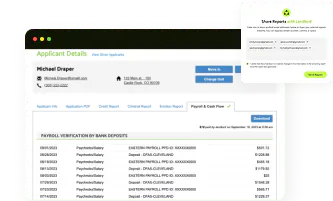
Screening inside these platforms is also moving past a single credit check. LeaseRunner's RS³ (Rental Screening Science Score) layers verified bank income, cash flow, and rent-relative affordability on top of credit and background data, on the familiar 300–850 scale.
Quick Comparison: Top 15 Best Property Management Software
| # | Software | Best for | Starting price (2026) |
| 1 | LeaseRunner | Independent and DIY landlords | No subscription; about $20–$25 per screening report |
| 2 | TurboTenant | Landlords wanting free tools | Free; Premium from about $12.42/mo |
| 3 | Innago | Budget-conscious small landlords | Free |
| 4 | Avail | Small portfolios | Free; Unlimited Plus $9/unit/mo |
| 5 | RentRedi | Mobile-first owners | $5/mo (Start); $12/mo (Grow, annual) |
| 6 | Baselane | Finance-first landlords | Free; Smart $20/mo |
| 7 | Landlord Studio | 3–9 units | Free; Pro $12/mo (annual) |
| 8 | TenantCloud | Growing portfolios | $15–$100/mo |
| 9 | Hemlane | Landlords wanting outsourced help | Free lease-only tier; about $36–$40/mo |
| 10 | DoorLoop | Growing portfolios and small teams | About $59–$69/mo (annual) |
| 11 | Rentec Direct | Small-to-mid managers | About $50–$65/mo |
| 12 | Buildium | Managers with outside owners | $62, $192, or $400/mo |
| 13 | Yardi Breeze | Mixed portfolios | $1/unit/mo ($100 minimum) |
| 14 | AppFolio | Large portfolios | Quote-only; about $1.40–$5/unit/mo reported |
| 15 | Rent Manager | Mixed-use operations | Quote-only; about $1/unit/mo ($200 minimum) reported |
Pricing reflects publicly listed rates in 2026 and can change, so confirm current figures on each vendor's site before budgeting.
Best Property Management Software for Independent and DIY Landlords
Landlords managing 1 to 50 doors usually prioritize low fixed overhead, state-specific compliance, screening, and easy rent collection over enterprise customization.
1. LeaseRunner
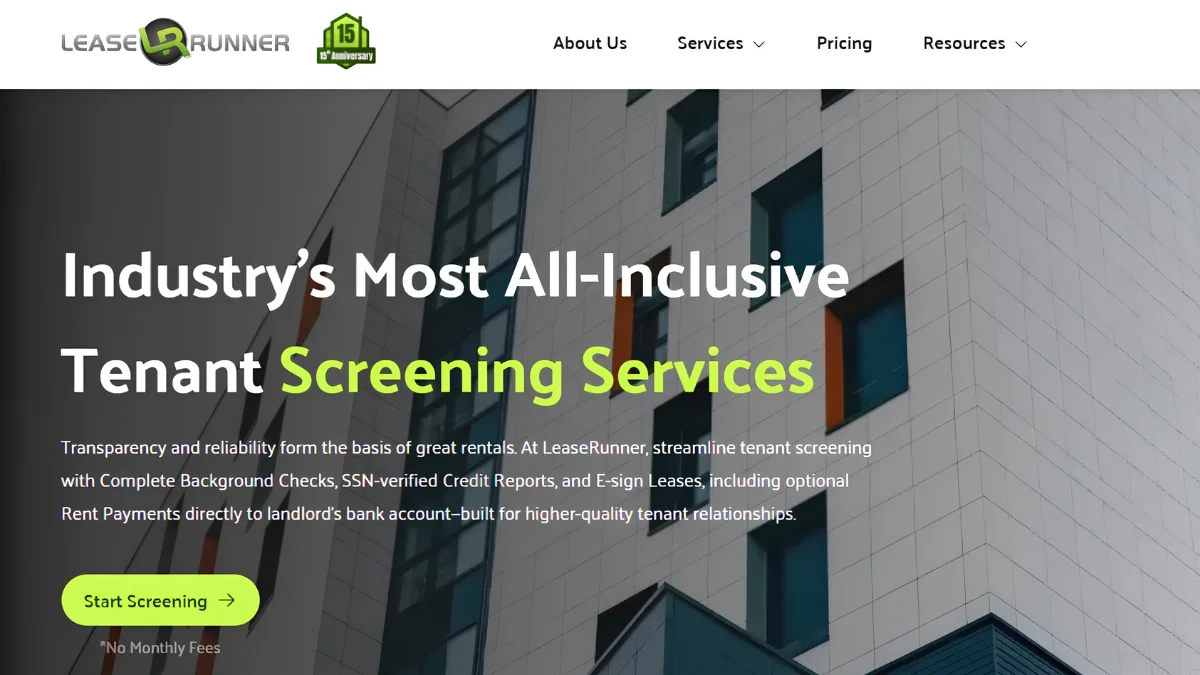
LeaseRunner runs on a pay-per-report model with no subscription. Listing a property costs nothing, while screening is billed per transaction: a Portable Tenant Screening Report (PTSR) costs roughly $20 to $25 in most states and up to $41 where state fee caps run higher, and many landlords pass that cost to the applicant. The rental application feeds into tenant screening with credit, criminal, and eviction data plus RS³, and a tenant can reuse one PTSR across applications for 30 days. It also offers state-specific lease templates with e-signature and online rent collection through ACH. A landlord who screens dozens of applicants a year may pay more than on a flat plan, but one filling a vacancy or two annually avoids a subscription used a few weeks a year.
2. TurboTenant
TurboTenant keeps core features free: unlimited units, listing syndication, applications, basic leases, and online rent collection. Premium runs about $12.42 to $16.58 a month on annual billing. Card payments carry a 3.49% fee, and a free pre-screener filters leads by income, move-in date, and pets.
3. Innago
Innago is completely free for landlords, with online lease signing, rent processing, maintenance requests, and built-in screening. The trade-off is depth, but it is hard to beat on price for a few single-family rentals.
4. Avail
Avail splits between a free "Unlimited" tier (listings, applications, leases, rent collection) and "Unlimited Plus" at $9 per unit per month. Plus adds a rent analysis report with local comps, which most free-tier competitors lack.
5. RentRedi
RentRedi charges a flat rate regardless of unit count: Start at $5 a month and Grow at $12 on annual billing ($29.95 monthly), each with unlimited units and a tenant portal. On-time payments are reported to all three bureaus, and tenants can pay cash at more than 90,000 retail locations.
6. Baselane
Baselane is a banking-and-bookkeeping platform first. The free Core plan bundles FDIC-insured landlord banking, rent collection, expense tracking, and Schedule E reports; Smart, at $20 a month, adds two-day deposits and multi-user access. It suits landlords whose main pain point is disorganized finances, not leasing.
7. Landlord Studio
Landlord Studio targets roughly three to nine units with rental accounting. The free plan covers three units with manual income tracking and rent collection; Pro, at $12 a month billed annually, adds bank feeds, receipt storage, and Xero integration.
Best Property Management Software for Growing Portfolios and Small Teams

Once a landlord reaches double-digit units or hires an assistant, free tiers run out of room. These four add structure without enterprise pricing.
8. TenantCloud
TenantCloud is a mid-priced all-in-one covering rent payments, maintenance tracking, and screening. It phased out its free plan on January 1, 2024, and plans now run $15 to $100 a month by unit count.
9. Hemlane
Hemlane layers vendor management and 24/7 maintenance coordination on top of leasing and accounting tools. Pricing runs from a free lease-only tier to about $36–$40 a month with outsourced coordination, sitting between DIY software and a full property manager. Pair it with a maintenance checklist for rental property.
10. DoorLoop
DoorLoop markets an AI-native platform, with Starter at about $59 to $69 a month billed annually for up to 20 units. The AI assistant sits on the Pro plan, from roughly $119–$149 a month. Starter covers rent collection, a tenant portal, work orders, and accounting.
11. Rentec Direct
Rentec splits into Rentec Pro for landlords (about $50 a month) and Rentec PM for professional managers (about $65). Both include automated late fees, rent increases, 1099 e-filing, and Schedule E reports.
Best Property Management Software for Professional Managers and Enterprises
Managing property for outside owners makes trust accounting and per-owner statements requirements, not extras.
12. Buildium
Buildium has three flat tiers: Essential at $62, Growth at $192, and Premium at $400 a month, all with owner and tenant portals and trust accounting built for firms managing client property.
13. Yardi Breeze
Yardi Breeze charges $1 per unit per month for residential portfolios with a $100 monthly minimum, and $2 for commercial with a $200 minimum. Breeze Premier starts at a $400 monthly minimum billed annually.
14. AppFolio
AppFolio uses per-unit pricing across Core, Plus, and Max, with reported rates of roughly $1.40, $3, and $5 per unit per month, though it moved to quote-only pricing in 2026. Core has a 50-unit minimum and a reported minimum spend near $298, so the effective cost for 50 units is closer to $6 per unit.
15. Rent Manager
Rent Manager handles residential, commercial, association, and self-storage properties in one system. Pricing is not published; third-party trackers report roughly $1 per unit per month with a $200 minimum.
How to Choose the Right Property Management Software

Choosing without a framework often means overpaying for unused features. Use five steps:
- Audit portfolio size and property types. LeaseRunner and TurboTenant fit single-family workflows, while Yardi Breeze and Rent Manager handle commercial common area maintenance charges.
- Map your essential workflows. If screening and leases take most of your time, pick built-in background checks and state-tailored leases; if reconciliation is the pain point, look at Baselane or Buildium.
- Analyze total cost of ownership. Add ACH fees, expedited payouts, setup fees, and applicant-paid screening charges to the base price. For 1 to 20 doors, pay-as-you-go can eliminate recurring overhead.
- Verify legal compliance. Make sure leases follow your state's law, and that screening flows meet Fair Credit Reporting Act disclosure rules. See the best tenant screening services.
- Test the portals on a phone. Over 60% of prospective renters apply and authorize screening on smartphones, so a clunky mobile portal costs you applicants.
In short: for 1–4 units and one or two applicants a year, LeaseRunner's pay-as-you-go pricing avoids an idle subscription; for a fully free platform, choose TurboTenant or Innago; for outside owners, Buildium or Yardi Breeze; for 100+ units or mixed use, AppFolio or Rent Manager.
FAQs
What is the best property management software in 2026?
There is no single best option. Independent landlords are usually well served by LeaseRunner, Innago, or TurboTenant, firms managing for outside owners need Buildium- or Yardi Breeze-level trust accounting, and large portfolios typically move to AppFolio or Rent Manager.
Does tenant screening hurt the applicant's credit score?
No. Tenant screening credit checks run as soft inquiries, which do not affect a credit score. Equifax introduced soft-pull screening inquiries in December 2018, and TransUnion moved all tenant-screening inquiries to soft pulls on July 8, 2020. For managing what comes next, see this guide to the best way to collect rent.
Conclusion
The best property management software is the one that fits your portfolio size, workflows, and total annual cost, not the longest feature list. Independent landlords can start free or pay as they go, growing portfolios should add maintenance and reporting tools, and professional managers need trust accounting. Use the five-step framework above, compare total cost, and test the tenant portal before committing.
Disclaimer: The information provided in this post is intended for general informational and educational purposes only. It should not be construed as legal, accounting, or tax advice. For guidance specific to your situation, we recommend consulting with a qualified professional in the relevant field before taking any action based on the content provided.