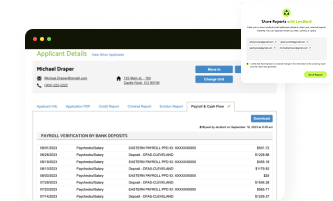
What is on a rental history report is the most vital piece of data for a modern landlord or property manager. Choosing a tenant can feel like a gamble, but a rental history check removes the mystery. At LeaseRunner, we help you find a qualified tenant by looking at facts, not just guesses.
A tenant rental record shows if a person pays on time and follows the lease agreement. By using consistent screening, you protect your rental income and your property. This report complies with the Fair Credit Reporting Act (FCRA) to ensure fairness. It is the best tool for determining whether an applicant will be a good fit for your home. Using a rental application without this data is a big risk for any landlord.
What Is a Rental History Report?
A rental history report is a screening document that tracks a person’s past rental history. The main components are past addresses, eviction records, and debt reports. There are several variations of this report, ranging from simple local searches to deep national background checks.
For example, a landlord might see that a tenant lived in three different states over five years. This information has a clear meaning: it shows the tenant's stability and reliability. If the report is clean, it suggests the tenant is qualified and will follow the Fair Housing Act (FHA) rules.
This document is the heart of a rental background check on myself or an applicant. It is different from a basic credit check. While credit shows how you handle debt, a rental history check shows how you treat a home.
Landlords use this to see if the tenant has caused damage or skipped out on rent. It helps a property manager decide who gets the keys. Without it, you might miss a history of rental arrears. Using a professional service like LeaseRunner makes this step easy and fast. It provides the full story of the tenant's rental record.
Why Landlords Use Rental History Reports?

A landlord or property manager utilizes these detailed records to build a shield against the high costs of tenant turnover and legal disputes. By performing a rental history check, a landlord can predict future behavior based on past actions. Consistent screening through a reliable platform like LeaseRunner ensures you find a long-term partner for your property. This process is vital for maintaining the standards required by the Fair Housing Act (FHA).
The primary motivation for running these reports is to prevent financial loss. A professional screening process enables a property manager to accurately define rental arrears and identify whether a candidate has a history of failing to meet their monthly obligations.
When landlords ask, "How do landlords check rental history?" they are usually looking for a "safety net." A single eviction can cost a property manager thousands of dollars in legal fees and lost rent. Furthermore, a thorough tenant rental record helps with income verification. It shows whether the tenant has consistently been able to afford their previous homes.
What Information Is Included in a Rental History Report?

A rental history report includes a tenant's past addresses, court-ordered eviction filings, and verified records of lease agreement violations. This multi-layered file pulls data from national databases and local courthouses to build a clear tenant rental record.
It is designed to give a property manager a 360-degree view of an applicant's residential past while staying within the limits of the Fair Credit Reporting Act (FCRA). Each section of the report provides a different piece of the puzzle, helping you determine if the applicant meets your specific screening criteria.
1. Residence History
The residence history section is a chronological list of every place the tenant has lived, often spanning 7 to 10 years. A landlord uses this to verify the addresses listed on the rental application.
A landlord must understand the differing risks associated with renting a home vs an apartment because a tenant accustomed to full-service amenities may not be prepared for the yard work and maintenance duties required by a standalone house. If a tenant omits a previous address where they were evicted, this section will often flag the discrepancy.
2. Payment Track Record
This is the financial heart of the tenant rental record, detailing whether rent was paid on time, every time. It lists any instances of rental arrears, late fees, or balances that were eventually sent to a collection agency.
For a landlord, a clean payment record is the most important factor in approving a lease agreement. If the report shows "paid as agreed" for several years, it indicates a qualified tenant with strong financial discipline.
3. Legal & Eviction Records
This critical section contains any public records related to the housing court, specifically eviction filings. Even if a case was settled out of court, the initial filing often appears on a rental history report. A property manager must review these records to determine whether the tenant was officially removed or the case was dismissed.
Understanding exactly how long an eviction stays on record allows a property manager to decide if a past mistake should still disqualify a current candidate. Avoiding applicants with recent evictions is a primary goal of consistent screening.
4. Lease Compliance
Beyond money, landlords need to know if a tenant follows the rules of a lease agreement. This section may include notes on lease violations, such as unauthorized occupants, noise complaints, or pet policy infractions.
These details are often gathered through automated outreach to previous landlords. A qualified tenant will have a history of respecting the property and the neighbors, which is essential for community harmony.
5. Landlord References
Many comprehensive reports include a summary of comments from previous owners. These references provide qualitative data that a computer cannot, such as how the tenant handled maintenance requests or if they left the unit clean.
LeaseRunner simplifies this process by automating reference checks, providing landlords with a clear picture of a tenant's day-to-day behavior. This adds a layer of human insight to the technical data.
6. Public Records
Public records go beyond housing court to include civil judgments, tax liens, or other legal issues that might affect a tenant's finances. These records are vital for a landlord to assess the applicant's overall stability. All data in this section must be handled in accordance with HUD guidelines to ensure fairness. By reviewing these records, a property manager can determine whether the tenant is currently experiencing significant legal or financial stress.
What Does Not Usually Appear on a Rental History Report?

A landlord must understand the limits of a rental history check to comply with the law. Federal privacy rules under the Fair Credit Reporting Act (FCRA) often block certain personal data from appearing. This prevents bias and ensures the tenant rental record focuses only on relevant housing risks. Knowing these legal gaps helps a property manager use other tools, such as income verification, to get the full picture without violating the law.
1. Credit Scores
Many people assume a rental history report automatically includes a credit score, but this is a misconception. A standard rental history check focuses on lease compliance and eviction records, not your FICO score. Furthermore, rental history (such as paying rent on time) is not automatically reported to credit bureaus, so it typically does not boost an applicant's credit score.
However, negative information is a different story. Unpaid rental arrears sent to a collection agency, as well as civil eviction judgments, will appear on a credit report and can significantly damage a tenant's credit score. To get a complete financial picture, a landlord usually needs to run both checks. LeaseRunner lets you bundle these reports, so you can see both the tenant's “housing habits" and their “financial health" in a single step.
2. Income Details
A rental history report does not track a tenant's earnings. It records outbound payments (rent), not inbound salary. While a credit check might list a previous employer's name, it rarely includes specific salary figures or current employment status. Because this data is missing, a landlord cannot rely on the report for financial vetting and must perform separate income verification using pay stubs, bank statements, or W-2s to confirm that the applicant can afford the lease.
3. Non-Court Evictions
If a tenant was asked to leave voluntarily and did so without filing a court case (often called "cash for keys"), this will not appear in public records. This is why a landlord must never skip the reference check phase. A property manager can only learn about these "informal" evictions by speaking directly with the previous owner. Relying solely on the digital report might miss these important red flags.
4. Protected Characteristics
To remain compliant with the Fair Housing Act (FHA) and HUD regulations, a rental history report may not include information about a tenant's race, religion, sexual orientation, or familial status. A landlord is legally barred from using such information to make a decision. The report is strictly limited to objective data regarding rental performance and legal history.
5. Sealed Records
In some states, certain legal records or juvenile offenses are sealed and do not appear on a rental history check. This allows individuals to move past old mistakes that a judge has deemed private. If a record is sealed, a landlord cannot see it and cannot use it as a reason to deny a rental application. This protects the tenant's right to a fresh start.
6. Bounced Checks or Property Damage
Unless these issues resulted in a court judgment or a debt collection entry, they may not be explicitly detailed in the data sections. Minor damage that was covered by a security deposit often goes unrecorded. This is another reason why speaking to a previous landlord is a critical step in the screening process. A qualified tenant is someone who leaves the property in the same condition they found it.
How Far Back Does a Rental History Report Go?
Generally, the Fair Credit Reporting Act (FCRA) allows reporting agencies to look back seven years for negative information. Some states have even stricter limits. For a landlord, a seven-year window is usually sufficient to identify a pattern of behavior.
If a tenant has had a clean record for the last five years but had a struggle seven years ago, many landlords are willing to be flexible. However, a recent eviction within the last 24 months is a major warning sign. LeaseRunner provides the most relevant data within these legal timeframes to help you make a fast decision.
Factors That Affect How Long Records Stay

The duration that an event stays on a tenant's rental record isn't always set in stone. Several factors can influence whether a piece of data remains visible to a landlord or property manager. These variables are often tied to legal resolutions or state-specific laws. Understanding these nuances helps a landlord understand why certain older records might still appear while others have vanished.
Type of Event
Different types of residential "events" have different shelf lives. For example, a standard eviction filing usually remains on file for 7 years. However, a bankruptcy can remain on a credit file for up to 10 years, which can indirectly affect a landlord's view of the tenant. Minor late payments that were resolved quickly might stop showing up sooner than large, unpaid rental arrears.
Resolution and Settlement
If a tenant settles their debt with a previous property manager, they may be able to have the record updated to "satisfied." While the debt record still exists, showing it as "paid" looks much better to a future landlord. A qualified tenant who has made a mistake in the past will often work hard to resolve the issue before applying for a new lease agreement.
Legal Action
The outcome of a court case matters immensely. If an eviction was filed but later dismissed by a judge, it may still appear on a rental history report, but it will be marked as "dismissed." A landlord should treat a dismissal differently from a final judgment of possession. This is where consistent screening requires a careful eye for detail.
Landlord Data Retention Policies
While national bureaus have strict limits, some individual property managers keep their own internal records for much longer. If a tenant applies to a large management company they lived with ten years ago, that company might still have a record of their behavior. However, for most third-party reports, the seven-year Fair Credit Reporting Act (FCRA) rule applies.
Local Statutes
Some states, like New York and California, have unique laws governing how long housing court records remain public. These “Clean Slate" laws are designed to help tenants find housing more easily after a certain period of time. A landlord must stay informed about local rules to ensure their screening criteria remain legally compliant with both state and federal HUD standards.
How to Get Your Rental History Report?
A tenant should always be the first person to see their own data. When a tenant asks, "How can I get a copy of my rental history?" they are usually preparing for a successful rental application. Landlords actually prefer applicants who are proactive about their history, as it demonstrates transparency and maturity. There are three main ways an individual can access this information to ensure their tenant rental record is accurate.
1. Request Reports from Major Agencies
The first step is to contact specialized agencies. These companies are the primary sources for the data that landlords see. Under the Fair Credit Reporting Act (FCRA), a tenant is entitled to one free disclosure per year if they have been denied housing. Reviewing these reports early allows for faster approval, as any errors can be corrected before the landlord sees them.
2. Check Your Credit Reports
Because rental arrears are often turned over to collection agencies, a standard credit report is a vital part of the puzzle. Tenants should check their credit at AnnualCreditReport.com. If a past landlord has reported a debt, it will show up here. This helps the tenant understand whether rental history shows up on a credit report and gives them a chance to pay off old debts before they apply for a new home.
3. Self-Compile a "Renter Portfolio"
For those wondering what if you don't have rental history, the best path is to create a "Renter Portfolio." This includes copies of past lease agreements, cancelled checks proving on-time payments, and letters of recommendation. This proactive approach shows a property manager that the tenant is qualified, even if the digital databases are empty. It is a powerful tool for young renters or those moving from abroad.
How to Dispute Errors on a Rental History Report
Accuracy is the foundation of a fair lease agreement. If a tenant finds a mistake on their rental history report, they have the legal right to dispute it. Errors can happen; sometimes, an eviction belongs to someone with a similar name, or a debt that was already paid is still listed as "open." Both the landlord and the tenant benefit from having the most accurate data possible during the screening process.
To start a dispute, the tenant must contact the reporting agency in writing. They should provide proof, such as a court dismissal or a payment receipt. The agency then has 30 days to investigate. If they cannot verify the negative info, they must remove it from the tenant's rental record.
A landlord should always give a qualified tenant a chance to explain a discrepancy, as it could be a simple clerical error. For more on how to handle these situations, see our blog on valid reasons to deny a rental application.
Tips to Offset Negative Rental History

Sometimes, a qualified tenant has a "bump" in their past that doesn't reflect who they are today. If a landlord sees something that looks bad on rental history, it doesn't have to be an automatic "no." A property manager can use several strategies to mitigate risk while still providing housing. This flexibility is often what separates a good landlord from a great one.
- Ask for a Co-signer: If a tenant has a past eviction, a co-signer with great credit can provide the security a landlord needs.
- Higher Security Deposit: Increasing the deposit can help cover the potential risk of rental arrears.
- Direct Proof of Income: Recent, high-quality income verification can prove that past financial troubles are over.
- Short-term Lease: Starting with a 6-month lease agreement allows the tenant to prove their reliability before committing to a full year.
- Letter of Explanation: Sometimes, a medical emergency or a job loss caused a one-time issue. An honest letter can go a long way in the rental application process.
At LeaseRunner, we provide the data, but we also encourage landlords to look at the "whole person." A tenant who is honest about their past and has taken steps to fix it is often more reliable than one who tries to hide it. By combining a rental history check with a personal interview, a property manager can build a strong, trust-based relationship with their tenant.
Conclusion
What is on a rental history report is the definitive guide for any landlord who wants to manage their property with confidence and clarity. By digging into a tenant rental record, you move past the uncertainty of the rental application and base your decisions on verified facts. This process, supported by LeaseRunner's automated tools, ensures that consistent screening is the standard for your business.
Whether you are checking for eviction filings, rental arrears, or general lease agreement compliance, the data found in a rental history check is your best defense against future headaches. Remember, finding a qualified tenant is an investment in your own peace of mind, ensuring that your property is respected and your income is secure for the long term.
FAQs
1. Can You Get a Rental History Report for Free?
Yes, tenants can get a free report under specific conditions. If a landlord denies your rental application based on the report, you are entitled to a free copy from the agency that prepared it. You can also check your credit reports for free once a year. However, a landlord usually pays a fee for a rental history report (typically $30-$60) as part of the screening process.
2. Does a Rental History Report Affect Your Credit Score?
No, it doesn’t. A standard rental history check is a "soft inquiry," meaning it does not lower a tenant's credit score. But if a landlord reports unpaid rent to a debt collector, it will appear on a credit report and can cause the score to drop significantly. Paying rent on time is the best way to protect both your credit and your housing future.
3. Can landlords see dismissed or dropped eviction cases?
Yes, can landlords see rental history that includes dismissals? In many states, the mere filing of an eviction is a matter of public record. Even if the tenant won the case and it was dismissed, a property manager may still see the filing date. It is important for landlords to review the case's "disposition" to confirm that the tenant was not actually removed.
4. Can I remove an eviction from my rental history report?
No, removing a valid eviction is nearly impossible until the seven-year period ends. Yet, if the information is incorrect, you can dispute it under the Fair Credit Reporting Act (FCRA). Some tenants work with their former landlord to "vacate" the judgment by paying off their old debts, which can sometimes result in the record being removed or updated.
5. What rental history issues do landlords care about the most?
Landlords primarily look for three "deal-breakers": evictions, significant rental arrears, and a history of significant property damage. While a single late payment from several years ago might be overlooked, a pattern of breaking the lease agreement is a major red flag that will cause most property managers to deny the application.
Disclaimer: The information provided in this post is intended for general informational and educational purposes only. It should not be construed as legal, accounting, or tax advice. For guidance specific to your situation, we recommend consulting with a qualified professional in the relevant field before taking any action based on the content provided.