How often can a landlord inspect a property? No federal law sets a number, and state entry laws generally do not cap routine visits either. Instead, they control how each entry happens: a lawful purpose, proper notice, reasonable hours, and no harassment.

In practice, most landlords inspect at move-in, once or twice during the lease, and at move-out. The right schedule depends on the purpose of each visit, your lease terms, and the rental laws in your state.
Key takeaways
|
How Often Can a Landlord Inspect a Property?
The law sets no fixed number of visits per year. How often a landlord can inspect a property is shaped by five separate rules, and any one of them can stop a visit:
- Every visit needs a lawful purpose, such as a routine inspection, a repair, or a showing. The reason in the notice should also set the limits of the walkthrough. We map those limits in our article on what a landlord can look at during an inspection.
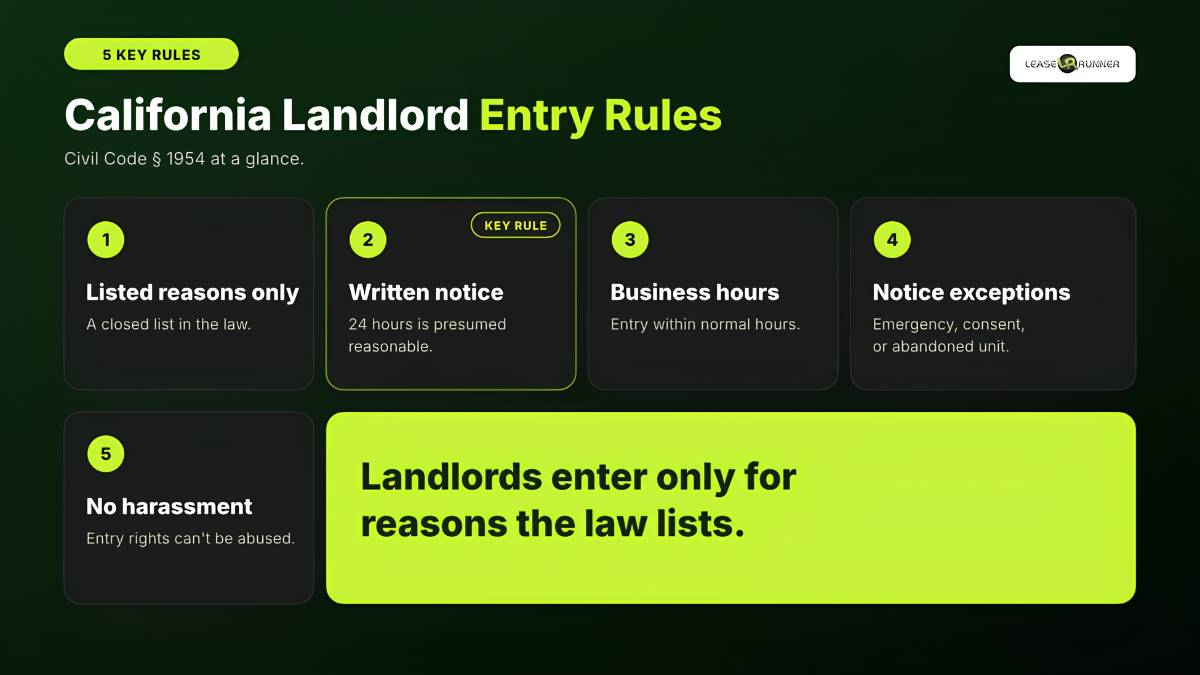
- State law sets notice and hours. In Minnesota, a landlord must make a good-faith effort to give at least 24 hours' notice, and entry is limited to 8 a.m. to 8 p.m. unless both sides agree otherwise. Source: Minnesota Revisor of Statutes.
- Access cannot become harassment. Washington bars landlords from abusing the right of access or using it to harass a tenant. After one written warning, each later violation can cost up to $100. Source: Washington State Legislature, RCW 59.18.150.
- The lease clause sets the routine. A signed inspection clause can state how often routine visits happen, and the landlord should follow it.
- Local and program rules may add visits. Some cities run rental inspection programs, and subsidized units follow program schedules, so landlords should check local rules.
The real risk lies in excessive inspections and quiet enjoyment. A tenant can claim a breach of quiet enjoyment when visits keep coming with no new reason, even if each notice was correct. So how often can a landlord do an inspection? It depends more on the reason for each visit than on the count. A landlord who walks through every two weeks to "check in" invites a complaint, while one who inspects twice a year for a stated purpose rarely gets one.
How Often Should Landlords Inspect a Rental Property?
Most rentals do well with move-in, one or two visits during the lease, and move-out. In most states, a landlord could legally come by far more often than any rental truly needs, so how often a landlord should inspect a property is a business choice, not a legal one. The table compares the schedules landlords use most.
| Schedule | Visits during the lease | Best fit | Downside |
| Annual | 1 | Newer property, tenant with a clean record | A slow leak can go unseen for a year |
| Semiannual | 2 | Most single-family homes and small buildings | Needs a calendar reminder |
| Quarterly | 4 | Older property, first-year tenant, past damage | More tenant friction |
| Seasonal | 2, before the heating and cooling season | Homes with HVAC, roofs, or pipes at risk of freezing | Timing depends on the climate |
| Exterior drive-by | As needed, exterior only | Any rental | Shows nothing inside the unit |
Annual and semiannual inspections suit most tenants who pay on time and report repairs. Quarterly and seasonal inspections make sense for older systems or a tenant with no rental history. How often do apartments do inspections? Larger buildings often follow a property-wide calendar, once or twice a year.
Choose a schedule based on the property's age, the tenant's history, and the property type. Then apply the same schedule to every unit of the same type, since uneven visits can look like unfair treatment.
Building a Mid-Lease Inspection Schedule

A mid-lease inspection schedule turns the question of how often a landlord can inspect a property into real dates. It works best when the landlord writes it down and shares it at lease signing.
A Sample Schedule for a 12-Month Lease
In a standard one-year lease, inspections can follow this plan:
- Month 0: move-in inspection to record the baseline condition.
- Month 3: optional check for a first-year tenant.
- Month 6: routine inspection in the middle of the lease.
- Before heating or cooling season: a systems check, which can be combined with the month 6 visit.
- Month 12: move-out inspection, or a renewal walkthrough if the tenant stays.
Add up the optional stops, and the calendar lands between three and five visits for the year. Running every visit through one apartment inspection process means the tenant sees the same steps each time.
Adjusting the Schedule for Other Leases
A month-to-month lease has no fixed end date, so set a steady rhythm instead. We suggest a routine visit every six to twelve months. For a lease of two years or more, an annual walkthrough near each lease anniversary keeps the record up to date.
Landlords who hire a manager should ask how the manager schedules visits before signing. Most property manager inspections follow a fixed calendar set in the management agreement. The owner should confirm that the calendar matches the lease clause, so the tenant never gets two different schedules.
When Can a Landlord Inspect More Often?

A landlord can inspect more often when a new and specific reason arises. Each extra visit still needs the notice that state law or the lease requires, unless there is an emergency. These are the common reasons for additional inspections:
- A second visit after a repair request or a completed repair.
- A reported leak, mold growth, or pest problem.
- A suspected lease violation backed by evidence, such as an unauthorized pet or smoke damage.
- A safety device check or a product recall notice.
- Damage after a storm, flood, or fire nearby.
- An extended tenant absence, if the lease allows a check during that time.
- An inspection that someone else requires, such as an insurer, a lender, code enforcement, or a housing program.
That last group runs on the other party's calendar, not the landlord's. For Housing Choice Voucher units, the local housing agency must inspect at least once every two years, or every three years for small rural agencies. Source: eCFR. A true emergency, such as a burst pipe or a gas leak, allows a landlord to enter without notice in most states.
One quick question settles how often a landlord can inspect without causing trouble: can the landlord name the reason in one sentence on the notice? If so, the visit usually holds up. Writing these triggers into the inspection clause before move-in avoids arguments later.
No law sets a fixed number of inspections. What matters is the reason for each visit and the notice and lease terms behind it. A move-in inspection, one or two visits during the lease, and a move-out inspection cover most rentals, and extra visits are fine when you can point to a repair, a report, or real evidence. Trouble starts when visits pile up with no new reason, because that pattern supports a quiet enjoyment claim. Write the schedule into the lease and use it for every unit of the same type. Our state-specific lease agreement templates give you a place to start.
Disclaimer: The information provided in this post is intended for general informational and educational purposes only. It should not be construed as legal, accounting, or tax advice. For guidance specific to your situation, we recommend consulting with a qualified professional in the relevant field before taking any action based on the content provided.