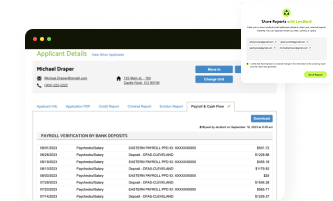
How to get a portable tenant screening report is one of the most practical things a renter can know before starting a housing search. You order the report once, review it on your own time, and share it with landlords as you apply. Fewer repeat fees. Less waiting on someone else to run your background.
At LeaseRunner, we built our tools with renters in mind. This guide covers every step, from choosing a provider to handing over your results, so you walk into every showing fully prepared, not scrambling.
Why Should Tenants Consider Using a PTSR?

A portable tenant screening report saves you money and gives you full control over the information landlords see. A portable tenant screening report works by letting you order your own background data, review it, and share it directly with landlords instead of paying each one to run a separate check.
Traditional screening fees range from $30 to $50 per application. Apply to five properties, and you're out $250 before signing a single lease. A PTSR cuts that cost to one payment, no matter how many landlords you submit to.
There's a second, often overlooked benefit: visibility. Most renters have no idea what their credit history or eviction history actually shows until a landlord rejects them. With a tenant screening report for renters that you order yourself, you review everything before it reaches anyone else. You catch errors before they cost you a placement.
Speed is the third advantage. In competitive rental markets, serious landlords move fast. Uploading a ready-to-share reusable tenant screening report the moment you reach out puts you ahead of applicants still waiting for a landlord to run their own check.
For a deeper look, we break down what a portable tenant screening report includes, section by section, in plain language.
A standard tenant screening report may include your credit report, background check, and eviction history. A portable version covers the same ground. The difference is who orders it and who controls where it goes. If you're apartment-hunting, this is one of the simplest ways to cut costs and move faster.
Before you order, though, it helps to know whether your state actually requires landlords to accept your report. That changes how much leverage you have.
Eligible States for PTSR Acceptance
PTSR laws vary by state. Some require landlords to accept tenant-provided reports. Others recognize reusable reports but stop short of mandating acceptance. Many have no specific rules at all. Knowing which group your state falls into before you apply changes how much leverage you actually have.
Which States Require Landlords to Accept PTSRs?
States fall into three distinct groups when it comes to portable tenant screening reports.
Group 1: States That Require Acceptance Under Specific Conditions
These states go the furthest in protecting renters. Landlords must accept a qualifying PTSR when the renter submits one, and cannot charge a separate screening fee on top of it.
Colorado is the clearest example. State law, first enacted in 2023, requires landlords to accept a valid portable report under defined conditions. To qualify, the report must meet all of the following conditions:
- Prepared by a consumer reporting agency
- Completed within the previous 30 days
- Provided to the landlord at no cost
- Accompanied by a statement confirming no material change has occurred since the report was generated.
For Colorado renters asking where to get a portable tenant screening report, the ordering process is the same as anywhere else. You use a licensed provider, generate the report directly, and present it with your application.
Group 2: States That Recognize Reusable Reports and Require Disclosure
These states do not mandate that landlords accept your PTSR, but they do require landlords to be upfront about whether they will, and restrict what landlords can charge if they do accept it.
Washington operates under RCW 59.18.257: landlords are required to notify applicants whether they accept a comprehensive reusable tenant screening report. If a landlord agrees to accept it, they may still run their own separate screening, but they cannot charge the tenant for that additional report.
Group 3: States Without Specific PTSR Rules
Most states currently fall into this group. There is no law requiring landlords to accept a tenant-provided report, nor is there any fee restriction tied to it. Acceptance is entirely voluntary. That said, many landlords in these states will still accept a PTSR because it saves them time and the cost of running their own check. It is always worth asking upfront before you apply.
How PTSRs Can Help Save You Money in Certain States
In states with defined rental application fee laws, the financial benefit is direct and easy to calculate. Colorado law prevents landlords from charging a new screening fee when a valid portable report is submitted. If a landlord opts not to use your report, the fee restriction still applies.
Apply to four properties over a single month of searching, and that alone could save you $120 to $200 compared to paying per landlord under the conventional model.
State-Specific PTSR Rules and Regulations
State rules differ on three key points: report age (usually within 30 days of submission), required contents (credit score, rental history, criminal history), and accepted provider types. In states with PTSR legislation, reports generally need to come from a licensed consumer reporting agency operating under the Fair Credit Reporting Act (FCRA).
Before you use a portable tenant screening report online in your state, confirm current requirements with your local housing authority or tenant rights organization. You can also run through our tenant screening checklist to confirm what landlords in your market expect before you share anything.
State laws update regularly. Always cross-check against your state's current housing statutes, not just third-party summaries. Now that you know your state's rules, here's exactly how to get your report ordered and ready to share.
How to Get a Portable Tenant Screening Report?
Getting a portable tenant screening report comes down to six steps. Knowing how to get a portable tenant screening report online saves you the most time, since everything runs digitally from one platform. Most renters complete the process within one business day when they choose the right provider and come prepared.
Step 1: Choose a Trusted PTSR Provider
Pick a licensed consumer reporting agency that operates under the Fair Credit Reporting Act (FCRA), the federal law that governs how your personal data is collected, used, and shared. FCRA compliance means the provider is legally accountable for accuracy, and you have the right to dispute any errors in your report.
LeaseRunner lets tenants get a tenant screening report online, without waiting for a landlord to request it. The process starts with you and stays with you throughout. When comparing providers, check three things:
- Credit, criminal history, and eviction history report
- A shareable link or downloadable PDF
- A clear process to dispute tenant screening report errors if they appear
The right provider keeps you in control from start to finish.
Step 2: Gather the Required Information
Before starting, collect what you'll need:
- Full legal name and date of birth
- Social Security number
- Current address and previous addresses (2 to 5 years back)
- Income documents and employment details for income verification and employment verification
Identity verification runs before your report does. Providers confirm your identity before pulling any data. See what identity proofing involves so you know what to expect before your application runs.
Step 3: Complete the Online Application
Fill in your details and authorize the background check. The FCRA requires your written consent before a consumer reporting agency can access your records. Check every field before you submit. A typo in your Social Security number can delay your report by hours.
Step 4: Pay for Your PTSR
LeaseRunner service charge $20 for one PTSR. That one payment covers your credit report, eviction history, and criminal history across every application you submit during the validity window.
Some renters look for a portable tenant screening report that is free or low-cost online. A few providers offer limited free versions. These rarely meet state requirements for mandatory acceptance. A paid, FCRA-compliant report is the practical choice for renters applying in mandated states.
Paying once still beats paying a $40 fee on every single application you send out.
Step 5: Wait for the Report to Be Processed
Many providers deliver reports within a few hours, though turnaround times can vary. Credit checks run quickly. Criminal history and eviction records take slightly longer, depending on which counties are searched. If timing matters, here's how long tenant screening typically takes from application to decision. Request your report one to two days before a showing to be safe.
Step 6: Review Your PTSR Results
Read your rental application screening report before sharing it with anyone. Check:
- Credit score and credit history accuracy
- Criminal history entries (confirm each one is actually yours)
- Eviction history and rental history for outdated or incorrect items
- Employment verification and income verification details
Errors are more common than most renters expect. The FCRA gives you the right to dispute inaccurate data before sharing your report. Think of your renter background check report as a preview of exactly what landlords will see.
Not sure what each field means? A rental background check shows more than most renters realize, and knowing what to look for makes the review much faster. We also walk through how to read your tenant screening report section by section, if anything looks unfamiliar.
Once everything checks out, you create your portable tenant screening report link or PDF and start submitting applications with confidence. Once your report looks clean, you'll want to understand how long it stays usable and what it actually costs you over time.
Cost and Validity of Portable Tenant Screening Reports

A portable tenant screening report typically costs between $25 and $45. Most FCRA-compliant reports at this price point include credit, criminal, and eviction history, as well as identity verification.
A portable tenant screening report stays valid for 30 days in most mandated states. Colorado is explicit: a report must be dated within 30 days of submission for a landlord to be required to accept it. Order too early, and your report may expire before you find the right place. Order when you're actively submitting applications, not weeks before you start looking.
Whether landlords must accept portable tenant screening reports depends on your state's law, and the rules differ more than most renters expect:
- Colorado requires landlords to accept a qualifying PTSR under defined conditions, meaning they cannot reject it without legal grounds.
- Washington takes a different approach: landlords must disclose upfront whether they accept a comprehensive reusable report, and if they do, they cannot charge you a separate screening fee, though they may still run their own additional check.
In other states, acceptance is voluntary. Many landlords in non-mandate states will still say yes because it saves them work, too. It's always worth asking upfront.
If a landlord in a mandatory state refuses your report without legal justification, get the reason in writing. An adverse action notice from a rental application rejection tells you the stated reason for denial. That information helps you address the issue directly, whether it's a data error or a misunderstanding about state law.
The cost of a PTSR pays for itself the moment it replaces a second or third application fee. With your report ordered, reviewed, and ready to go, here's the bottom line on putting it all together.
Conclusion
Getting a portable tenant screening report is one of the smartest moves a renter can make. You pay once. You share it everywhere. You walk into every application more prepared than anyone else in the running.
At LeaseRunner, we built our screening platform around that idea. Renters deserve full visibility into their credit report, background check, eviction history, and rental history before any landlord sees a line of it. If anything looks wrong, disputing an eviction on your tenant screening report is the place to start.
FAQs
1. How Do I Share My PTSR with a Landlord?
You can share your screening report with a landlord through a secure link or a downloadable PDF, depending on the provider. Most platforms let you generate a shareable link with optional time limits for privacy. Attach the PDF or paste the link directly into your rental application or email. LeaseRunner supports report sharing so renters can submit their documents in one place.
2. Can I Use the Same PTSR for Multiple Applications?
Yes. A reusable tenant screening report is designed for exactly this purpose. One payment covers all your applications within the validity window, usually 30 days. There is no limit on how many landlords you can create and share your screening report with during that period.
3. What Should I Do If a Landlord Rejects My PTSR?
Ask the landlord to explain their reason in writing. If you're in a state that mandates PTSR acceptance and the refusal lacks legal grounds, that may constitute a violation of tenant protection law. If the rejection stems from information in the report itself, review the data and address any inaccuracies.
4. Does Your PTSR Expire After 30 Days?
Yes, in most states with PTSR laws. The 30-day validity window starts from the report date. After that, landlords in mandated states are no longer required to accept it. If your report expires before you find a place, you'll need to order a new one. Plan your timing around your active application window.
5. Can Landlords Charge Extra Fees for PTSRs?
No, not in states with PTSR mandates. In those states, rental application fee laws prohibit landlords from charging a separate screening fee when a renter submits a qualifying portable report. In states without a mandate, landlords may still charge their own fee regardless of whether you provide a PTSR. Confirm your state's rules before assuming the protection applies.
Disclaimer: The information provided in this post is intended for general informational and educational purposes only. It should not be construed as legal, accounting, or tax advice. For guidance specific to your situation, we recommend consulting with a qualified professional in the relevant field before taking any action based on the content provided.