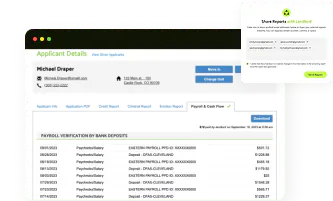
A roommate background check confirms a potential roommate's identity, credit history, criminal record, and rental history. Running a background check for a roommate protects three things: your safety, your finances, and your day-to-day living situation. You may also share joint and several liability — meaning the landlord can hold either of you responsible for the full rent and damage — once someone moves in, even if only one name is on the lease. This guide covers how to screen a roommate the right way, what to check, what it costs, and which red flags matter most.
Key Takeaways
|
Roommate Background Check vs. Roommate Screening
A roommate background check is one part of roommate screening. The background check is the report itself: credit, criminal, and eviction data pulled through a screening service. Roommate screening is the full process. It includes the conversation, the consent form, the report, income checks, references, and the final decision.
| Aspect | Roommate Background Check | Roommate Screening (Full Process) |
| Scope | One report: credit, criminal, eviction data | The whole vetting process, start to finish |
| What it involves | Pulling data from a screening service or CRA | Consent, verification, references, a decision |
| Legal requirements | FCRA consent, permissible purpose | FCRA rules plus fair, consistent criteria |
| Output | A report with scores and records | A yes-or-no decision on moving in together |
How to Run a Roommate Background Check Step by Step
Running a roommate background check takes eight steps. It starts with a conversation and ends with a written agreement.

Step 1. Talk about screening before collecting information
Tell the potential roommate you plan to run a background check before you collect anything. Being upfront gives the person a chance to explain anything before the report brings it up.
Step 2. Get the appropriate authorization
Get written consent before anyone pulls a credit report, criminal record, or eviction history. Under the FCRA, the roommate's signed, written consent is what gives you a permissible purpose to request the report (15 U.S.C. §1681b(a)(2)). A clear, dedicated consent form is the safer choice, since it documents exactly what the applicant agreed to. Source: FTC, Using Consumer Reports: What Landlords Need to Know
Step 3. Choose a reputable roommate or tenant screening service
Pick a screening provider that pulls real data from a licensed consumer reporting agency. Services built for tenant and roommate screening, like LeaseRunner's tenant background screening, pull records from major bureaus and handle consent capture and adverse action support under FCRA rules. "Instant" free background check sites just scrape public records and often return outdated or mismatched information.
Step 4. Have the potential roommate submit their information securely
Have the applicant enter their own details directly into the screening platform instead of texting a photo of their ID or emailing their SSN. A secure intake protects sensitive data and keeps a record of consent.
Step 5. Review the background check carefully
Read the full report line by line, not just the summary score. Check how recent each item is, confirm the name and date of birth match exactly, and watch for duplicate entries, since mismatched records are a known issue with criminal and eviction data.
Step 6. Verify income and references separately
A background check does not confirm employment or income. Ask for recent pay stubs or bank statements and compare them with what the applicant told you. A big gap between claimed and actual income is worth asking about directly.
Step 7. Talk through anything that does not match
If the report shows something unexpected, like a past eviction or a criminal record, bring it up directly instead of quietly rejecting the person. Reports can contain outdated or inaccurate information, and the Fair Credit Reporting Act gives people the right to dispute errors with the reporting agency.

Step 8. Put expectations into a roommate agreement
Once you decide to move forward, write it down. A roommate agreement should spell out the rent split, security deposit responsibility, house rules, and what happens if someone leaves early. Agree on these terms going in, because removing a roommate later is much harder, especially a roommate who is not on the lease.
Is It Legal to Run a Background Check on a Roommate?
Yes, running a background check on a potential roommate is legal. It must go through a consumer reporting agency, with the roommate's written consent, for a valid permissible purpose under the FCRA. The law does not stop you from screening a future roommate. It regulates how that screening happens. Source: Consumer Financial Protection Bureau (CFPB)
The catch is practical, not legal: major screening platforms generally only open accounts for verified landlords or property managers, not private individuals. That leaves two workable paths. Either the landlord runs the check because the new roommate is being added to the lease as a co-tenant (see how multiple tenants on a lease works), or the roommate orders their own report, such as a portable tenant screening report, and shares a copy directly.
What Should You Check Before Choosing a Roommate?
Check 6 things before you choose a roommate: identity, income, credit, rental history, criminal background, and references. Each one answers a different question.

Identity verification
Identity verification confirms the applicant is who they say they are. Screening services match a government-issued ID against the SSN and date of birth provided.
Income and employment
Verifying income and employment tells you if the person can afford their share of rent and utilities. A common rule of thumb says rent should not exceed roughly 30% of gross income.
Credit history
A credit report shows payment history, outstanding debt, collections accounts, and bankruptcies. TransUnion, Experian, and Equifax each keep separate files, so scores can vary slightly between bureaus.
Rental and eviction history
Eviction history shows whether someone has been formally removed from a past rental or has unresolved judgments tied to unpaid rent. A single old eviction, resolved years ago, carries less weight than a recent, unresolved one.
Criminal background information
A criminal background check usually searches county and state court records, and some checks add federal records and the national sex offender registry. Under the FCRA, non-conviction records, like an arrest that never led to a conviction, can't be reported after seven years, but there is no federal time limit on reporting a conviction (15 U.S.C. §1681c). Some states and cities, such as California and New York City, limit this further, so confirm local law before weighing an old record.
Previous landlord and roommate references
A former landlord or past roommate can tell you what a report cannot: whether the person pays on time, keeps noise reasonable, and communicates well. Asking "would you rent to this person again?" usually gets an honest answer.
How Much Does a Roommate Background Check Cost?
A standard roommate background check typically costs between $30 and $50, depending on the level of screening requested.
| Package Level | Typical Price Range | Key Components Included |
| Basic Credit Check | $15 – $25 | Equifax, Experian, or TransUnion credit report and credit score |
| Standard Background Check | $30 – $40 | Credit check, nationwide criminal search, national sex offender registry |
| Comprehensive Screening | $40 – $60+ | Credit, criminal, national eviction history, identity verification |
Pricing ranges are estimates from commonly advertised screening services; check the provider's current pricing before ordering. Many services let the applicant pay, and no law says who has to. If your roommate already has a recent portable screening report from an apartment application, reusing it can skip the fee entirely.
How to Choose a Roommate Background Check Service
Not every background check tool is built for housing decisions. Before you pay, confirm the service:

- Verifies identity and lists every report included (credit, criminal, eviction, sex offender registry), not just a vague "comprehensive" label.
- Captures consent and protects data inside its own platform, with a dispute process for inaccurate records.
- Supports housing screening, not just employment checks, which may not be licensed for a housing purpose.
Roommate Background Check Red Flags
These red flags deserve further review, but no single item should decide the outcome without context:
- Multiple recent evictions, which point to a repeat rent or lease problem.
- Unresolved collections, especially for unpaid rent or utilities.
- Personal details that don't match what the applicant told you.
- Recent convictions for violence, theft, or property damage, weighed by recency and state rules.
- Refusal to sign a consent form. Ask why first; some people are simply wary of unfamiliar sites.
Learn more about evaluating risks in our guide to red flags in background checks.
Conclusion
A roommate background check can help you make a more informed decision before sharing a home. Combine it with income verification, references, and a clear roommate agreement to reduce surprises later.
If you need a simple way to screen a potential roommate, LeaseRunner offers tenant screening tools that help you review credit, criminal, eviction, and other housing-related information in one place.
FAQs
What does a roommate background check show?
It usually shows identity verification results, credit history, criminal records, and eviction history. Some packages add a sex offender registry check. Learn more about what a rental background check shows.
How long does a roommate background check take?
Most roommate background checks return results within a few minutes to 24–48 hours. Criminal record searches in some counties take longer if the court hasn't digitized its records.
Can roommates background check each other?
Yes. A mutual check can feel more balanced than a one-sided one. Curious what your own report would show first? You can also run a tenant screening on yourself.
Disclaimer: The information provided in this post is intended for general informational and educational purposes only. It should not be construed as legal, accounting, or tax advice. For guidance specific to your situation, we recommend consulting with a qualified professional in the relevant field before taking any action based on the content provided.