An apartment inspection checklist is a dated document that lists every room of a rental unit in sequence. It records each item inspected, a condition rating, a photo for each finding, what needs repair, and who signed off. Landlords use the same form for move-in, routine, and move-out inspections so the records can be compared later.
Key takeaways
|
What Should an Apartment Inspection Checklist Include?
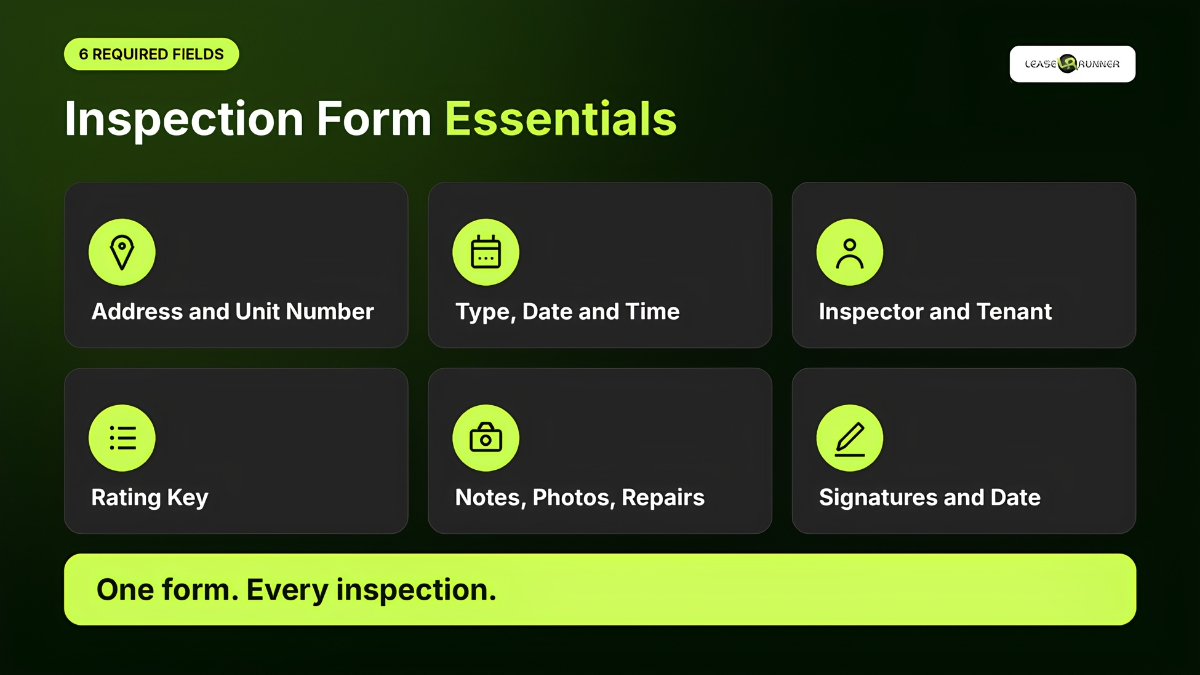
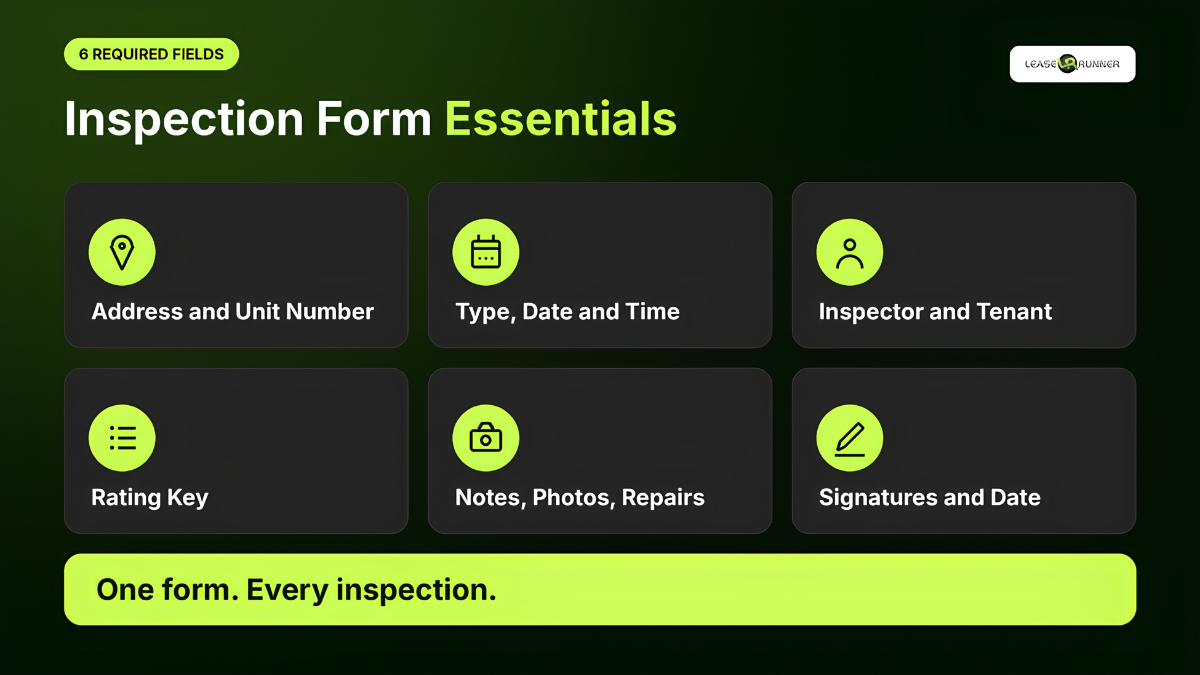
A complete rental inspection checklist includes the unit's identifying details, a rating key, item-level notes, and signatures. Without these fields, the record is hard to defend later. Before you start, review the apartment inspection process so each visit follows the same steps.
Add these fields to every form:
- Property details: Property address and unit number.
- Inspection details: Inspection type (move-in, routine, or move-out), date, and time.
- People present: Inspector's name, tenant's name, and whether the tenant attended.
- Rating key: A consistent scale for evaluating each item's condition.
- Item-level records: Condition rating, specific notes, photo reference, and whether repairs are needed.
- Signatures: Landlord or inspector signature and date, plus the tenant's signature and date where applicable.
Keep the form in an editable format, such as a spreadsheet or document, so you can reuse it for every unit and save each completed copy as a record.
Room-by-Room Inspection Checklist
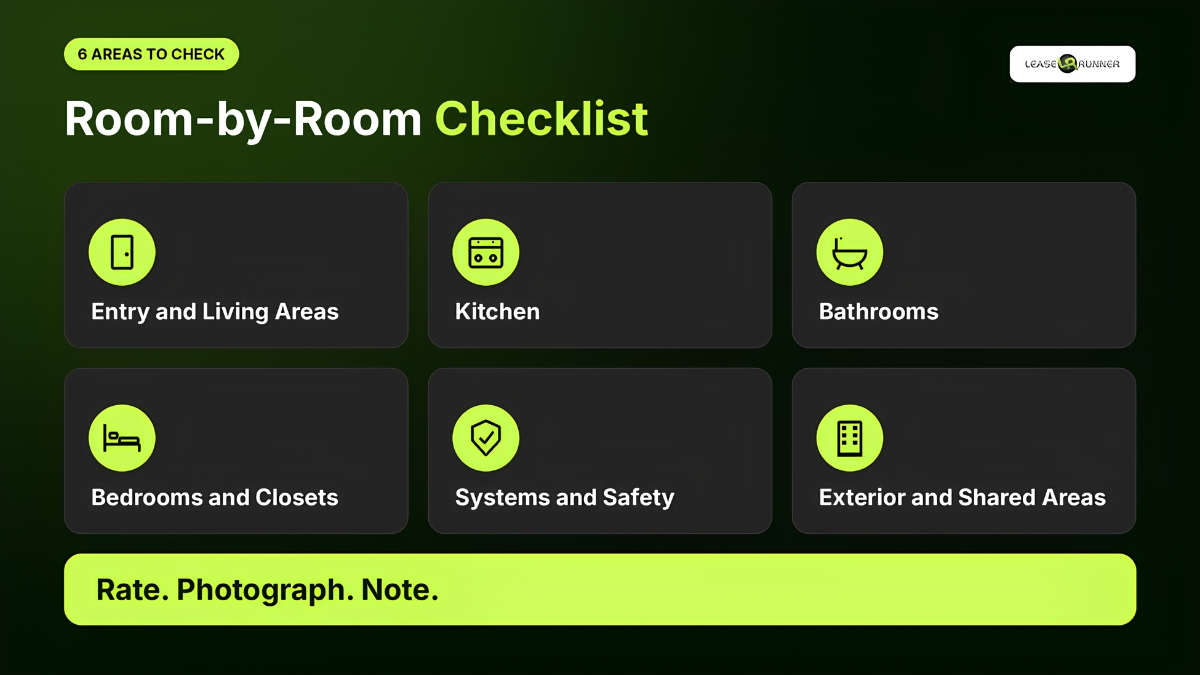
The checklist below covers six areas, and you can download it as a free editable rental inspection checklist (PDF) to fill in on screen or print. Inspect each room in the same order every time, because a fixed route keeps you from skipping items. Rate each line and add a photo reference for anything that is not in good shape.
Entry and Living Areas
Check the entry and living areas for secure doors, intact surfaces, and working fixtures.
- Walls, paint, and baseboards
- Ceiling cracks, stains, and discoloration
- Carpet, hardwood, or tile flooring
- Entry door, locks, and door frame
- Interior doors, handles, and hinges
- Windows, locks, and window screens
- Blinds, shades, and curtain hardware
- Light fixtures, switches, and outlets
- Signs of moisture, mold, or pests
Kitchen
The kitchen checklist should confirm that appliances work and that no leaks or surface damage exist.
- Countertops, backsplash, and cabinet surfaces
- Cabinet doors, drawers, and hinges
- Kitchen sink, faucet, and drain
- Visible plumbing leaks beneath the sink
- Refrigerator and freezer operation
- Stove, cooktop, and oven operation
- Dishwasher operation, if provided
- Range hood and exhaust fan
- Flooring, walls, and ceiling
Bathrooms
Check bathroom fixtures, water flow, drainage, ventilation, and moisture-related damage.
- Toilet flush, base, and visible leaks
- Sink, faucet, and drain
- Bathtub or shower fixtures and drainage
- Caulking and grout condition
- Tiles, walls, and flooring
- Mirrors, cabinets, and vanity
- Exhaust fan and ventilation
- Water stains, mold, or mildew
Bedrooms and Closets
Bedrooms are usually quick, but check closets and windows closely.
- Walls, ceilings, and baseboards
- Carpet or other flooring
- Bedroom doors, handles, and hinges
- Windows, locks, and screens
- Closet doors, shelves, and hanging rods
- Light fixtures, switches, and outlets
- Signs of water damage, mold, or pests
Systems and Safety
Group heating, cooling, plumbing, electrical, and safety devices in one place. Test each one rather than looking at it.
- Heating, air conditioning, and thermostat operation
- Accessible HVAC filters and vents
- Water pressure and hot water
- Visible plumbing pipes and connections
- Smoke alarm test result and date tested
- Carbon monoxide alarm operation, where installed
- GFCI outlets in required locations
- Visible electrical damage or exposed wiring
- Fire extinguisher condition, if provided
- Accessible emergency exits and escape routes
Exterior and Shared Areas
Check the outdoor spaces and storage that belong to the unit, since these are the areas the tenant signs off on.
- Balcony or patio surfaces and railings
- Patio or balcony door, lock, and track
- Private yard or garden, if included
- Assigned parking space or garage, if included
- Storage unit, if included
Record hallways, stairwells, shared laundry rooms, and other common areas on a separate building checklist. Tenants share those spaces with other residents, so they do not sign off on them.
How Should You Rate Each Item's Condition?
Rate each item on a 5-level scale so every inspector uses the same language. Pick one level per line and keep the key on every form.
| Rating | Meaning |
| New/Excellent | No visible wear, fully works |
| Good | Light wear, fully works |
| Fair/Worn | Clear wear from normal use, still works |
| Damaged | Broken, stained, holed, or beyond normal use |
| Missing/Not working | Absent or fails the test |
For every item rated Fair/Worn, Damaged, or Missing/Not working, record the location, specific condition, photo reference, and repair requirement. For example, write "Living room carpet, 6-inch stain by window, photo LR-03" rather than "carpet stained."
Do not automatically classify worn surfaces as tenant damage. Normal wear and tear refers to deterioration from ordinary use over time, while damage may involve misuse, negligence, or other causes. The distinction matters when reviewing potential security deposit deductions, and state laws may differ.
How Does the Checklist Change by Inspection Type?
The same checklist changes focus depending on whether you are setting a baseline, running a routine maintenance check, or evaluating move-out damage. The table shows how to use it for each walk-through type:
| Move-in | Routine | Move-out | |
| Goal | Set the baseline | Catch maintenance and safety issues early | Compare against the baseline |
| Who attends | Landlord and tenant together | Landlord (tenant optional) | Landlord, tenant invited |
| What you fill in | Every line rated, with photos | Only changes, safety items, and repair needs | Every line rated and compared to move-in rating |
| Compare against | Nothing; this is the starting record | Last routine or move-in record | Move-in record |
| Sign-off | Both sign; tenant gets a copy | Inspector signs; copy to tenant | Both sign if present |
Some states set their own rules for this record. In Massachusetts, a landlord who takes a security deposit must give the tenant a signed statement of the unit's condition, and the tenant has 15 days to return a corrected copy. Source: Mass.gov, Mandatory statement of condition. For the move-out column, see move-out inspections for how the final walkthrough fits into the lease end.
During routine inspections, focus on the physical condition of the apartment, required maintenance, and safe working appliances. Do not record details of tenants' personal property or lifestyle. See what can a landlord look at during an inspection for more on this.
An apartment inspection checklist helps landlords assess every room in a consistent manner and document maintenance issues, so later inspections can confirm that promised repairs were completed. LeaseRunner offers landlord-focused tools to run your rental operations and keep paperwork organized. Start with the free editable inspection checklist above, then keep every report clearly organized and easy to retrieve.
Disclaimer: The information provided in this post is intended for general informational and educational purposes only. It should not be construed as legal, accounting, or tax advice. For guidance specific to your situation, we recommend consulting with a qualified professional in the relevant field before taking any action based on the content provided.