Can a landlord inspect your apartment? Yes, but the right comes from your lease and state law, not from owning the building. In most states, the landlord needs a lawful reason, advance notice, and a reasonable time of day. Emergencies are the main exception. This guide covers the legal basis, the notice rules, the limits, and what you can do if a landlord breaks them. Landlords who follow these rules also avoid complaints and penalties. Our state landlord-tenant laws library covers the details for each state.
Key takeaways
|
Can a Landlord Inspect Your Apartment?
Yes, it is legal for a landlord to inspect your apartment when state law, the lease, or another legal exception allows the entry. However, landlords do not have unlimited access to an occupied unit.
Common lawful reasons for inspection include checking the property's condition, identifying maintenance issues, assessing reported damage, and verifying compliance with the rental agreement. The exact grounds vary by state, and some states limit routine inspections to specific circumstances.
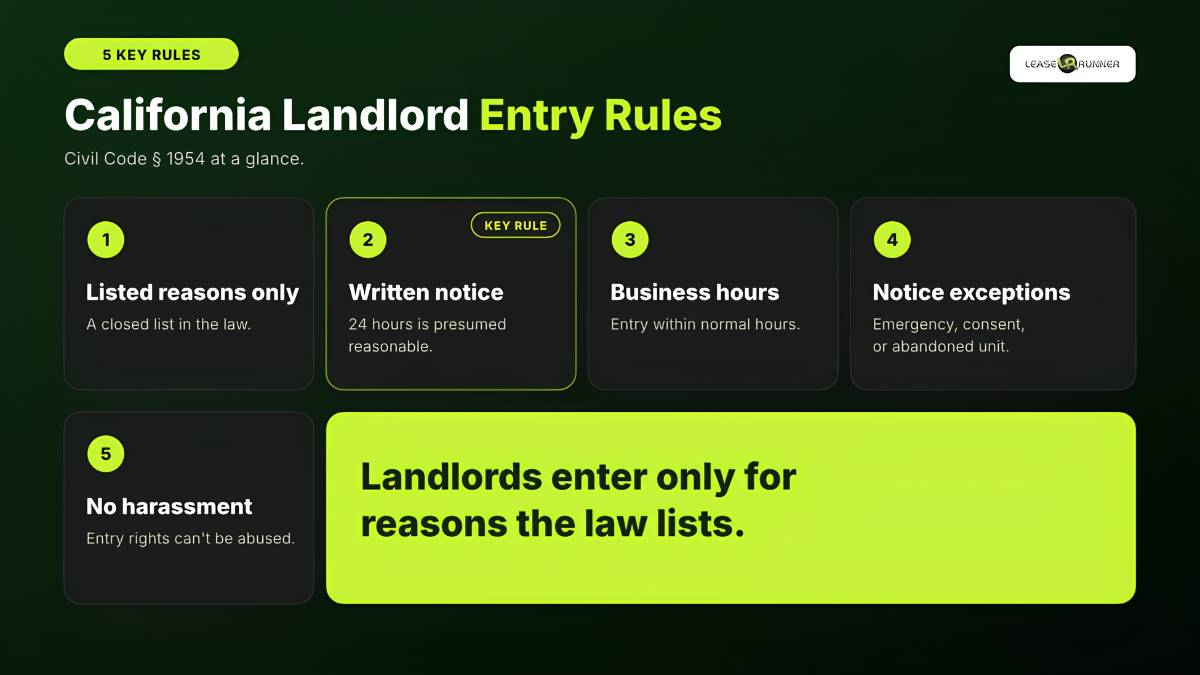
Washington, Florida, and California each list lawful purposes for entry in their statutes. California's list includes an emergency, repairs, services, showings, a pre-move-out inspection, abandonment, and a court order. Source: Washington State Legislature, RCW 59.18.150; Florida Senate, Fla. Stat. §83.53; California Civil Code §1954.
A lease inspection clause fills in the details, such as how often the landlord may check the unit and how notice is delivered. Where a state has an entry statute, the clause should match it. Where none exists, the clause is your main written protection.
Notice, Timing, and Consent Requirements
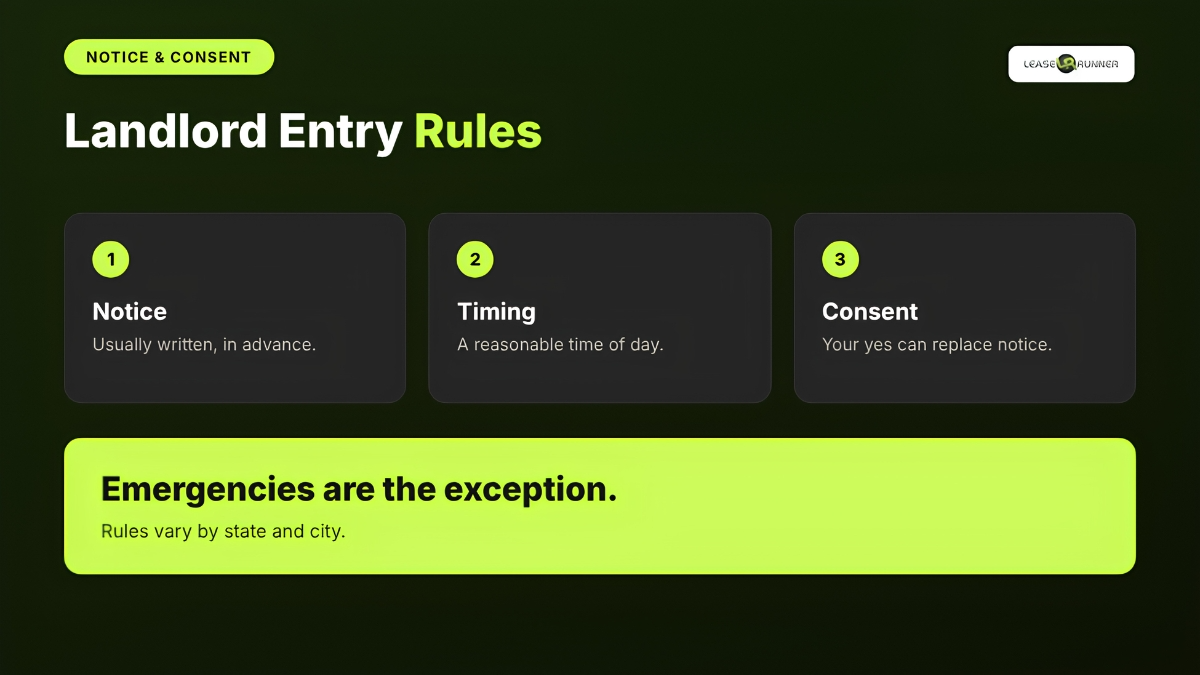
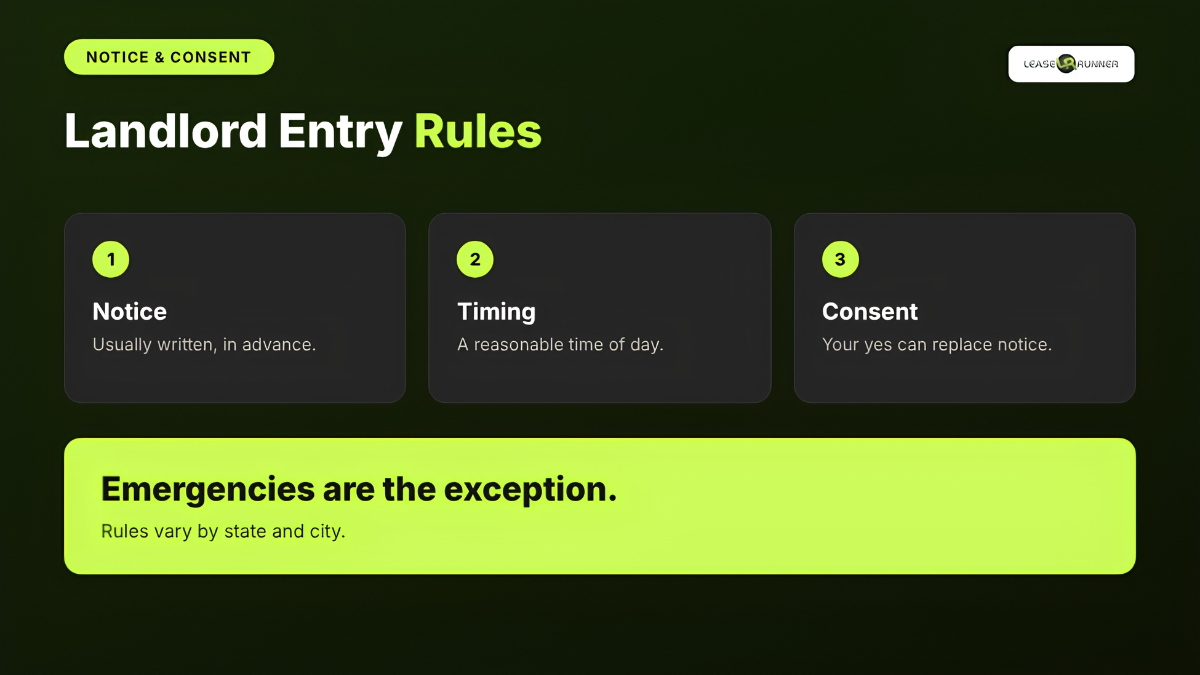
Can your landlord inspect your apartment without notice? In most states, a landlord must give advance notice and enter at a reasonable time, unless you consent to something else or an emergency exists. These are the requirements to look for:
- Notice: Many statutes call for written notice. California and Washington do, while Florida's statute only requires reasonable notice. Some states also require a date and time or a time window.
- Reasonable times: This usually means normal business hours. Other hours need your agreement.
- Consent: Your agreement can replace notice in some places. In California, no notice is required if you are present and consent at the time of entry. Put any agreement in writing, even in a text or email.
- Refusal: You generally cannot refuse a lawful, properly noticed visit. Washington and Florida bar tenants from unreasonably withholding consent. Offer another time rather than a flat no. Our guide explains when you can refuse a landlord inspection.
- Emergency exception: A fire, gas leak, or burst pipe allows entry without notice. In Chicago, the landlord must notify you within two days afterward if you were not home. Source: Chicago Mun. Code §5-12-050.
The table below compares five states as examples.
| State | Notice | Timing | Statute |
| California | 24 hours, written (6 days if mailed) | Normal business hours | Civ. Code §1954 |
| Washington | 2 days, written (1 day for showings) | Reasonable times | RCW 59.18.150 |
| Florida | 24 hours for repairs; none to protect or preserve the premises | 7:30 a.m. to 8 p.m. (for repairs) | Fla. Stat. §83.53 |
| Texas | No statewide minimum; the lease governs | Set by the lease | No statewide entry statute |
| Illinois | No statewide minimum; local rules apply (Chicago: 2 days) | Local rules apply | No statewide entry statute; Chicago Mun. Code §5-12-050 |
Rules vary by state and city, so check your state's landlord entry law. Source: California Civil Code §1954; Washington RCW 59.18.150; Florida Fla. Stat. §83.53; Texas State Law Library, Landlord Entry; Chicago Mun. Code §5-12-050.
Once notice arrives, the visit itself usually follows a set routine. For a walk-through of that sequence, see the apartment inspection process.
Where a Landlord's Right to Inspect Stops
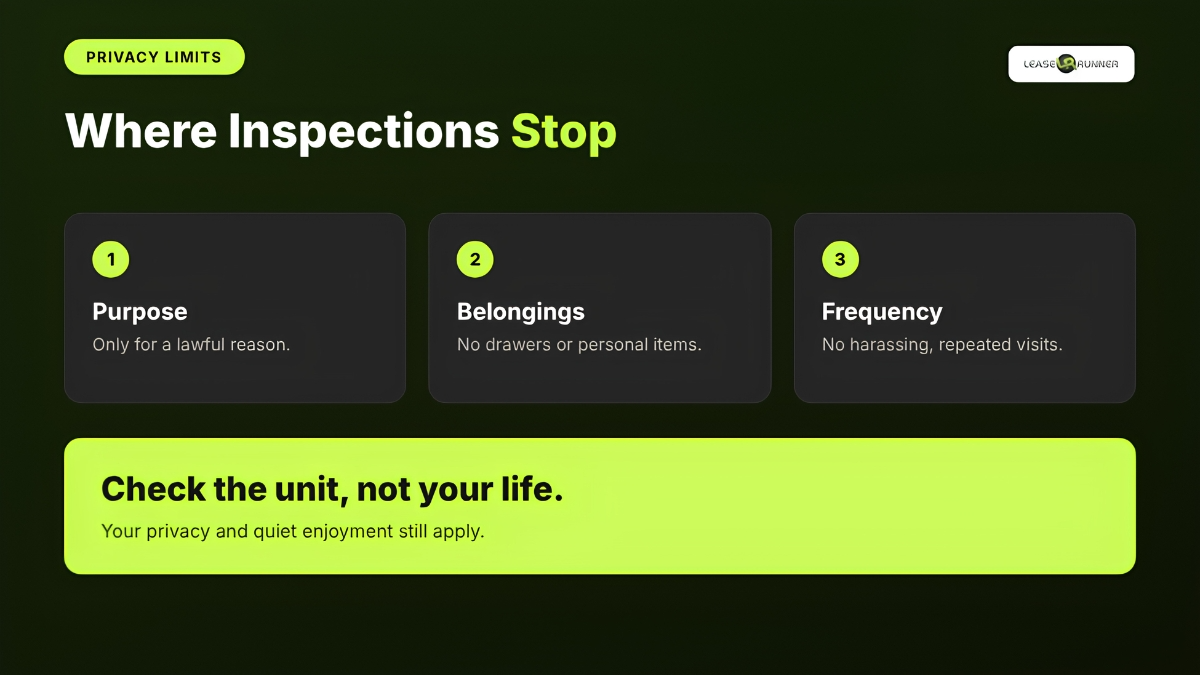
Landlords may inspect for the purpose of the visit: checking the unit, not searching your belongings or dropping by at will. California, Washington, and Florida each bar a landlord from abusing the right of entry or using it to harass a tenant. Washington adds that a landlord may not interfere with your enjoyment of the unit by showing it too often.
Visits focus on condition, safety devices, and lease compliance. For the full breakdown, see what can a landlord look at during an inspection.
Tenant privacy and quiet enjoyment add another layer. Entering too often, or without notice, can breach your right to quiet enjoyment. Texas courts, for example, treat that right as part of every lease, even though no Texas statute sets entry rules. Source: Texas State Law Library, Landlord Entry.
Can a Landlord Inspect Some Tenants More Than Others?
No, a landlord cannot inspect some tenants more often or more strictly because of a protected trait. Federal fair housing law covers race, color, religion, sex, national origin, familial status, and disability, and it bars bias in the terms and conditions of a rental. A landlord who checks one household far more often than similar ones may face a complaint if the pattern tracks a protected trait. Source: Cornell Legal Information Institute, 42 U.S.C. §3604.
A landlord can still change the schedule for neutral reasons, such as a documented lease violation or an open repair. If you wonder whether your landlord can inspect your apartment more often than your neighbors', ask for the reason in writing.
What Happens If a Landlord Enters Unlawfully?
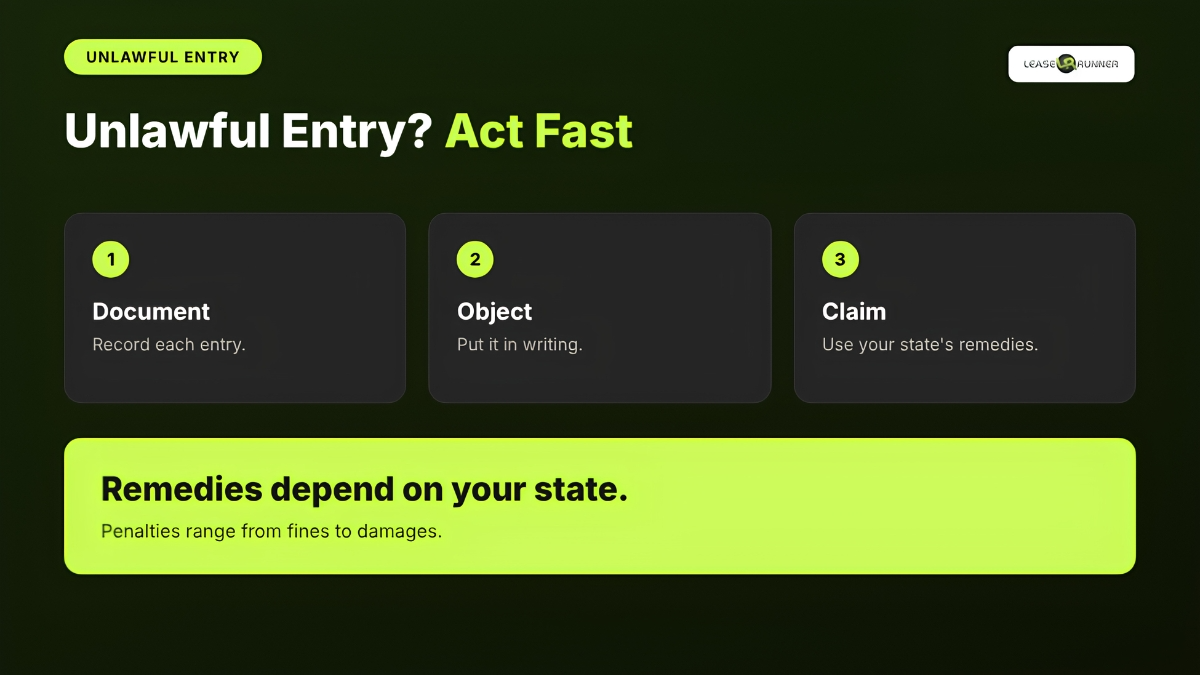
An unlawful entry can give you a legal claim, but the remedy depends on your state. An entry is usually unlawful when it has no lawful purpose, skips required notice, happens at an unreasonable hour, or is used to harass you. A pattern of entries carries more weight than a single slip.
What Can a Tenant Do After an Unlawful Entry?
Start a record, object in writing, then decide where to take the complaint. The steps below apply in most states, though the remedy depends on local law.
- Document each unlawful entry. Record the date, time, and the landlord's conduct. Save all written notices, emails, text messages, and photographs.
- Object in writing. Use email or mail and keep a copy. In Washington this step matters, because the $100 penalty applies only to violations after the landlord receives written notice listing the date and time of the violation.
- Choose a forum. Options include a local housing or code office and small claims court. California tenants can bring a Civil Code §1940.2 claim in small claims.
What Penalties Can a Landlord Face?
Penalties range from small statutory fines to damages and lease termination, depending on the state. In California, a significant and intentional violation of §1954 committed to push a tenant out can cost the landlord up to $2,000 per violation, and the tenant must win a civil action, which small claims court counts as. Source: California Civil Code §1940.2.
Washington sets a lower figure. A landlord who keeps violating the entry rules after receiving one written notice can owe up to $100 for each later violation, and the winning side may recover the costs of the suit. In Arizona, a tenant can seek an injunction (a court order to stop the conduct) or end the lease after an unlawful or harassing entry, and can recover actual damages of at least one month's rent. Source: Washington RCW 59.18.150; Arizona A.R.S. §33-1376.
Florida's entry statute bars abuse of access and harassment but lists no penalty of its own. Texas has no entry statute, so claims there usually rest on the lease or the implied right to quiet enjoyment. Landlords can lower this risk with clear entry terms in the lease, and LeaseRunner offers state-specific lease agreement templates for that.
A landlord has the right to enter your apartment, but it is not unlimited. The right is set by your lease and by state and local law. Look for the entry clause in your lease, keep a record of any unlawful entry, and seek legal advice in your local jurisdiction if you believe your privacy has been violated.
Disclaimer: The information provided in this post is intended for general informational and educational purposes only. It should not be construed as legal, accounting, or tax advice. For guidance specific to your situation, we recommend consulting with a qualified professional in the relevant field before taking any action based on the content provided.