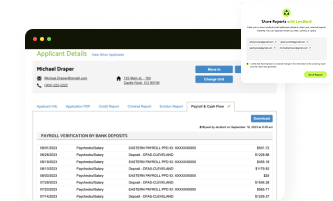
Free rental history data is often part of tenant screening, but it is not always the deciding factor. The term also blends three different things that renters should separate early. A free credit report is available once a year under federal law. Rental history data, such as tenancy dates and payment records, can be gathered at no cost from past landlords. A full tenant screening report, which bundles credit, eviction, criminal, and risk data, always carries a fee that either the renter or the landlord pays.
Knowing which piece is actually free prevents confusion down the line. At LeaseRunner, the LeaseRunner tenant screening service lets landlords run full reports while applicants pay the fee. This keeps screening costs off the property owner. The guide below shows tenants and landlords every real way to get your free rental history report, how to build one from scratch, and how to fix errors. No hidden fees. No filler. Just the steps that matter.
What Is a Rental History Report?
A rental history report shows how a renter performed in past leases. The core parts include current address, previous addresses, tenancy dates, rent payment history, lease history, and landlord references from past landlords. Versions vary by source. A basic tenancy rental history report focuses solely on housing data.
A fuller resident screening report layers in credit report data, eviction history from housing court records, criminal records, bankruptcy filings, employment history, and income verification. Some versions also provide a risk score that ranks the applicant relative to typical lease standards.
Take a Texas landlord, for example. The applicant might show two clean leases, no missed rent, and a low risk score. That signals a strong tenant. A different file might show a 2022 eviction and three short leases in two years. That signals caution. The meaning of this report goes well past paperwork. It often determines whether the lease moves forward, what the deposit will be, and whether a co-signer is needed. For a deeper look at every data point, the complete guide to what shows up in a rental history report covers each section in detail.
Can I Get My Rental History for Free?
Yes. But only certain parts of a full report are truly free. Access depends on who is asking. Renters can request several records at no cost under federal law and public records laws.
The Fair Credit Reporting Act guarantees one free credit report per bureau every 12 months, but all three bureaus now offer free weekly reports through AnnualCreditReport.com on a permanent basis. That includes rental tradelines reported by some landlords. Court systems in most states also let renters search housing court records and eviction history for free or for a small copy fee. Landlord references cost nothing to gather, since past landlords can confirm tenancy dates and rent payment history by phone or email.
For landlords, “free" usually means the applicant pays. Sites like LeaseRunner shift the screening fee to the renter. The landlord runs a full tenant background check and pays nothing. That setup counts as free tenant screening for landlords in real terms.
The cost still exists. It just shifts hands. Pure no-cost tools for landlords are rare. Pulling a credit report legally requires a fee paid to the bureau. The phrase rental report free sounds simple. The real cost shifts to the other party. The real question is which side covers it.
How Tenants Can Check Their Own Rental History for Free (Step-by-Step)

Renters who want to check rental history for free can follow four simple steps. Each step ties to a different data source. The full picture lives across many databases. So one search rarely covers everything. Renters who skip steps often miss data on their own files.
Step 1: Request from Credit Bureaus (Free Annually)
Tenants start with the three main credit bureaus. All three now offer free weekly credit reports through AnnualCreditReport.com permanently. Renters can pull all three and compare them side by side. Errors often show on one bureau's file but not the others. That is why pulling all three matters.
However, rental history only appears on a credit report if the landlord or property manager actively reports rent payments to a bureau. Many landlords do not. Experian RentBureau is one of the few services that collect rental payment data, but coverage is still limited. If rent was never reported, the credit file will show no rental tradelines at all.
The rental payment history report section shows on-time payments and any missed rent payments when the data exists. This step covers the credit and rental tradeline part of a rental history background check, but renters should not assume it reflects their full rental record. The next steps fill in what credit reports miss.
Step 2: Use Self-Service Tenant Portals
Tenants can review their rental history reports through self-service portals. These show what landlords would see during screening.
Several sites run consumer-facing versions of their screening tools. TransUnion SmartMove and certain LeaseRunner workflows allow renters to share a portable report with multiple landlords using a single fee.
Some services offer a free preview of the tenant history report. The preview shows summary data without payment. The free version of the full rental history report usually requires a charge. But even a free preview helps a renter spot mistakes before applying anywhere.
Step 3: Contact Previous Landlords Directly
Past landlords hold the most accurate records of rent payment history and lease history. They almost always share the data at no cost. A renter can email or call each past landlord. The renter requests a written statement covering the tenancy dates, payment history, lease violations, and the reason for the move-out. A signed proof of rent payment letter carries weight with future landlords.
A signed letter pairs well with a rent ledger that shows every transaction. This is how to look up rental history for free when official databases come up thin or incomplete.
Step 4: Check State-Specific Portable Screening Laws
Several states have laws around portable or reusable screening reports. These can lower costs for renters, but the rules vary and acceptance is not always guaranteed.
Washington requires landlords to disclose whether they accept a comprehensive reusable tenant screening report. If a landlord opts in, the renter can submit an existing report instead of paying a new screening fee. California (under AB 2559) allows landlords to elect to accept reusable reports, but does not require them to do so. If a landlord does accept one, they cannot charge the applicant an additional screening fee. Oregon allows renters to submit their own reports from the past 30 days, though landlords are not obligated to accept them.
Renters should check their state housing agency for current rules. Where a landlord does accept portable reports, this route remains one of the cleanest ways to check your rental history without paying repeated fees across multiple applications.
Free Rental History for Landlords: What's Actually Free?
Landlords rarely get a fully free report. But several models reduce or eliminate out-of-pocket costs. Most “free" landlord screening setups shift the fee to the applicant. The table below compares the three most common models.
The applicant-paid model is the most common form of free tenant screening for landlords today. A landlord posts a listing, sends the applicant a screening link, and the renter pays the fee. The landlord then gets a complete report with credit report data, eviction history, criminal records, and a risk score. LeaseRunner uses this exact setup. The property owner spends nothing while still seeing previous addresses, tenancy dates, and verified landlord references.
Landlords seeking fully zero-cost options can also pull public housing court records through state court portals to verify eviction history. This works as a backup or a second layer when the budget is tight. However, court records alone do not cover credit, criminal, or full rental history data.
An online tenant screening service that uses applicant-paid billing remains the most efficient path for landlords managing many units. The full answer to "what is free" depends on whether the goal is zero spend or zero cost to the landlord.
What If Tenant Has No Rental History?
A renter with no rental history can still get approved. Other proofs of stability matter just as much.
First-time renters, new graduates, and people moving from family-owned housing often have no formal lease history. Landlords reviewing these applicants face a thinner file. The resident screening report shows limited rental tradelines. That can lower a risk score even when the applicant is solid. This does not mean an automatic decline. Smart landlords look at the full picture. They review employment history, income verification, and the depth of the applicant's credit report.
A renter with no formal record should bring stronger supporting documents to the table. Pay stubs, an offer letter, savings statements, and a co-signer agreement help fill the gap. Some landlords also accept utility bills tied to a current address as informal proof of stable housing. New immigrants and college graduates often use this approach. A clean criminal records search and no bankruptcy filings further strengthen the application.
LeaseRunner sees first-time applicants often. The screening tools flag thin rental data. But the broader tenant background check still gives a usable picture. Landlords who weigh the full file rather than the rental section alone often approve these tenants. Sometimes, a slightly higher deposit or a guarantor closes the deal.
How to Build Rental History for Free?
Renters can build a documented rental history at no cost. They can capture proof from informal rentals and pull free official reports. Building a track record takes a few months. But the steps below cost nothing and create a paper trail that future landlords trust.
1. Document Informal or Private Rentals
Renters living with family or in private sublets should document every rent payment as it happens. A simple monthly bank transfer with the memo "rent" creates a record. A signed certificate of rent paid from the property owner adds legal weight. This builds rent payment history even outside formal lease history. It helps when the renter applies for a first traditional lease.
2. Use Alternative Financial Proofs
Renters without rental tradelines can lean on financial documents. These show similar reliability. Bank statements, utility accounts in the renter's name, and on-time loan payments all support a thin rental history background check. These also count toward income verification and overall financial stability. Some landlords accept these in lieu of formal landlord references when the applicant is otherwise strong.
3. Access Free Official Reports
Renters should pull every available free record before applying anywhere new. The annual free credit report from each bureau matters first. So do court searches for eviction history. A self-service preview of a tenant rental history report rounds out the set. This combination delivers the cleanest path to free rental reports. The reports show current data and let renters spot errors early.
4. Strategies for First-Time Renters
First-time renters can strengthen applications with simple signals of reliability. Offering a slightly larger deposit helps. So does providing a co-signer. Applying with a roommate who has a strong lease history also reduces risk. A short written personal statement can explain the lack of a rental record. Landlords value transparency. Especially when paired with a strong credit report and steady employment history.
How to Dispute Errors on Your Free Rental History Report?
Renters who spot mistakes can dispute errors on a free rental history report under the Fair Credit Reporting Act. The full process usually takes 30 to 45 days.
Errors are more common than most renters realize. Mixed files, outdated entries, and incorrect previous addresses are common in screening reports.
Step 1: Review Your Rental History Report Thoroughly
Renters should read every line of the report. They should flag anything inaccurate or outdated.
Common errors include misreported missed rent, wrong tenancy dates, evictions filed but later dismissed, and housing court records belonging to someone with a similar name. Reviewing all three credit bureau files matters too. The same error may not appear on each one.
Step 2: Gather Supporting Documentation
A successful dispute depends on solid evidence that contradicts the disputed entry.
Renters should collect canceled checks, bank statements, lease agreements, and written statements from past landlords. The eviction history check guide walks renters through pulling court records that show dismissals or sealed cases. A complete rental payment history report from the bank often resolves payment disputes quickly.
Step 3: Contact the Reporting Agency
Renters must submit the dispute directly to the agency that issued the report.
The agency could be Experian, TransUnion, Equifax, or a specialty tenant screening company like CoreLogic SafeRent. Most agencies offer online dispute portals. The renter must include identifying details, the disputed item, and supporting documents to start the review.
Step 4: Submit a Formal Dispute
Renters should file the dispute in writing. They should do this even when an online portal is available. A written record creates a clear paper trail.
A written dispute letter referencing FCRA Section 611 forces the agency to investigate within 30 days. The letter must list each error in the rental history report. The letter must explain why each is wrong. It must also request correction or deletion of the entry.
Step 5: Follow Up on Your Dispute
Renters should track the dispute status. They should follow up if the agency misses the 30-day deadline. If the agency confirms the error, the entry is corrected or removed. If the agency denies the dispute, the renter can add a 100-word consumer statement to the file. The renter can also escalate the matter to the Consumer Financial Protection Bureau.
Step 6: Verify the Correction and Get an Updated Report
After resolution, renters should pull a fresh report and confirm the change appears. A dispute tenant screening report is not closed until the corrected version is in hand. Renters should also notify any landlord who pulled the old report. The updated file replaces the old one in the application package.
Red Flags in Rental History: What Landlords Actually Look For

Landlords scan rental history reports for specific patterns that predict future risk. A handful of red flags carry the most weight. Knowing what triggers a decline helps renters prepare honest answers. It also helps landlords screen applicants consistently.
Late/missed payments
Repeated late payments are the single most common red flag in any tenant rental history report. A landlord seeing two or more late entries in 12 months often hesitates. Past rent payment history predicts future behavior. One late payment with a clear reason rarely kills an application. A pattern of missed rent does.
Eviction filings
Eviction filings appear in housing court records. They stay visible for up to 7 years in most states. Even a dismissed filing shows up. That is why rental history vs eviction history matters as a distinction. The two reports overlap but cover different data sets. A careful landlord cross-checks both before deciding.
Frequent unexplained moves
Many short tenancies without clear reasons signal possible lease issues or general instability. A renter with five previous addresses in three years raises questions during review. Job moves and military relocations are easy to explain. Unexplained gaps are much harder to address.
Property damage records
Damage charges, withheld deposits, and small claims judgments all appear in deeper screening files. These entries connect to lease history and, sometimes, to bankruptcy filings when judgments went unpaid. Landlords weigh these heavily. The financial loss is direct and recoverable only through legal action.
Lease violations
Documented lease violations such as unauthorized occupants, pets, or repeated noise complaints round out the red flag list.
These show up through landlord references rather than databases. That is why direct landlord contact during screening is so valuable. The difference between rental history vs credit report signals appears here. Credit data misses behavior issues entirely. Understanding the distinctions between rental history and tenant screening reports helps landlords build a complete picture without overweighing any single source.
Conclusion
Free rental history access is real. But only when the right tools are matched to the right party. Renters get genuine free pieces through credit bureaus, court searches, and direct landlord contact. Landlords reach near-zero cost through applicant-pay platforms like LeaseRunner. This keeps the screening fee off the property owner.
Rental history is one slice of a fuller screening file. Both renters and landlords benefit from knowing the difference. Errors should be disputed quickly. Missing history can be built with simple documents. And red flags deserve honest answers, not avoidance. Anyone ready to get their free rental history report now has a clear, practical path forward without paying for information that should be free.
FAQs
Can I see my rental history for free?
Yes. Renters can pull a free credit report from each bureau every year. They can also search housing court records at no cost. They can request landlord references by email or phone. Some self-service portals also offer a free preview of a rental history check. The preview shows summary data for free.
Are free rental history reports really free?
Some are. Some are not. The free versions for renters come from federal rights and public records. For landlords, "free" usually means the applicant pays. Services like the LeaseRunner tenant screening service remove the screening cost from the property owner.
How do you get a rental history if you have none?
First-time renters document private rentals with bank transfers. They use signed letters from family landlords. They show a clear history of rent payments. Strong employment history, solid income verification, and a co-signer all help bridge the gap on a thin file.
How often can I get a free rental history check?
Federal law guarantees one free credit report per bureau every 12 months, but all three bureaus now offer free weekly reports through AnnualCreditReport.com on a permanent basis. Court records can be searched anytime for free or for a small fee. Landlord references can be requested whenever a renter needs them. There is no annual limit on either.
How to dispute errors on my free rental history report?
Renters review the file. They gather supporting proof. They file a written dispute under Section 611 of the FCRA. Then they follow up 30 days later. The Consumer Financial Protection Bureau handles unresolved cases. This applies when the reporting agency fails to correct verified errors.
Disclaimer: The information provided in this post is intended for general informational and educational purposes only. It should not be construed as legal, accounting, or tax advice. For guidance specific to your situation, we recommend consulting with a qualified professional in the relevant field before taking any action based on the content provided.