Knowing how to get approved for an apartment starts with knowing what landlords review. Most check your credit, income, rental history, and court records, and each landlord sets its own rules, so approval odds vary. This guide covers what screeners look for, seven steps to prepare, and what to do with bad credit, no credit, or a past eviction.

How to Get Approved for an Apartment: What Do Landlords Check?
Landlords check five things: your identity, credit, income, rental history, and public records. Most pull these through a tenant screening company, which builds a report from credit bureau data and court records. Common providers include TransUnion SmartMove, Cotality (formerly CoreLogic), RealPage, and SafeRent Solutions.
Each landlord sets its own criteria, so the same application can pass at one building and fail at the next. No federal law sets a minimum credit score or income. The rules still have limits: the Fair Housing Act bars denials based on race, color, national origin, religion, sex, familial status, or disability (HUD, Fair Housing Act Overview).
| What landlords check | What they look at | What to have ready |
| Identity | Name, birth date, photo ID, SSN or ITIN | Driver's license or passport |
| Credit | Score, collections, bankruptcies, late payments | Your free credit reports and a short note on any problem |
| Income and employment | Gross monthly income, often compared with the rent | Pay stubs, W-2 or 1099 forms, bank statements, or an offer letter |
| Rental history | On-time rent, lease violations, damage | Names and numbers of past landlords |
| Evictions and criminal record | Court filings, judgments, and convictions as local law allows | Proof of dismissal or payment, plus a brief written explanation |
Source: CFPB, Review Your Rental Background Check. Once the checklist is clear, you can prepare each item before applying.
How to Prepare Before You Apply (7 Steps)
Seven steps prepare you to apply: check credit, check court records, set a budget, build a document packet, line up references, plan for a cosigner, and get a portable report if allowed. Finish them before you tour. Doing so can also shorten the wait after you submit.

Step 1: Pull your credit reports and dispute errors
Pull your free credit reports at AnnualCreditReport.com and dispute any error before you apply. Look for unknown accounts, wrong balances, and late payments that are not yours. Free tools like Credit Karma show a score, but it may differ from the model a landlord uses (FTC, Free Credit Reports).
Step 2: Check housing court records
Search your state or county court records for eviction cases in your name. Screening reports often include them, even though credit reports usually do not. A dismissed case may still appear, so read each record closely. Under the Fair Credit Reporting Act, a report can generally list lawsuits and judgments for seven years. If a record is wrong or too old, dispute it with the screening company.
Step 3: Set a budget the screen will accept
Set your rent budget near one-third of your gross monthly income. Most landlords want income of about three times the rent, known as the 3x rule. A $1,500 rent needs about $4,500 a month. Applying above your range wastes an application fee, and some states cap those fees. California's cap is $65.86 for 2026, and New York limits background and credit check fees to $20.
Step 4: Assemble the document packet
Build a packet with a government photo ID, recent pay stubs or an offer letter, W-2 or 1099 forms, bank statements, your employer's contact details, and past landlord contacts. Self-employed applicants should add tax returns and several months of bank statements. For a fuller list, see the guide to documents needed for apartment rental.
Step 5: Line up your references
Line up two or three references and tell each one to expect a call. Include a current or past landlord and one personal contact. Landlord references matter most because they show how you paid rent. A missed call can stall your application for days.
Step 6: Decide on a cosigner or guarantor before touring
A cosigner signs the lease with you and shares full responsibility for the rent. A guarantor signs a separate agreement, does not live in the unit, and pays only if you fail to pay. Some landlords use the two terms loosely, so read each document before anyone signs. The difference is covered in cosigner vs. guarantor. Lease guarantor services such as TheGuarantors and Insurent offer a paid alternative, but fees and landlord acceptance vary.
Step 7: Get a portable screening report if your state or landlord allows it
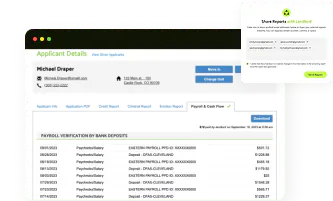
A portable tenant screening report is a report you buy once and share with several landlords. Colorado requires most landlords to accept a qualifying report, and California lets landlords opt in and then bars them from charging a screening fee for it. Most other states have no rule, so ask each landlord first. The LeaseRunner Portable Tenant Screening Report bundles credit, eviction, criminal, and income checks in one file.
How Much Income and Credit Do You Need to Get Approved?
Most landlords want gross monthly income near 3 times the rent and a credit score around 600 or higher. No federal law sets either number. Experian notes that landlords commonly ask for three to four times the rent.
| Monthly rent | Income needed at 3x | Income needed at 4x |
| $1,200 | $3,600 | $4,800 |
| $1,500 | $4,500 | $6,000 |
| $2,000 | $6,000 | $8,000 |
Roommates can combine incomes on one application, and some landlords accept a larger security deposit instead of the full ratio. The guide to apartment income requirements covers ratios and exceptions, and what credit score is needed to rent an apartment covers the credit side. Landlords also read your history for collections, late payments, and bankruptcies, not just one number.
Voucher income follows its own rules. Federal law does not require landlords to accept a Section 8 voucher, but many states and cities do, so check local law first.
Can You Get Approved With Bad Credit, No Credit, or an Eviction?

Yes, but you will usually need to offer extra reassurance. No universal minimum score exists, and Experian says a fair or poor score does not automatically disqualify you. These moves can raise your odds:
- Explain the problem in writing, with proof of recovery.
- Offer a larger security deposit or prepaid rent, within your state's limits.
- Add a cosigner, a guarantor, or a roommate with stronger credit.
- Ask independent landlords, since some smaller owners skip credit checks.
A thin credit file is common for first-time renters. Fill the gap with proof of income, an employer letter, bank statements, and two solid references. For more tactics, read getting an apartment with bad credit.
An eviction is harder, but not final. Pay any unpaid judgment, get proof of payment or dismissal, explain what happened, and offer extra security. See how to rent with an eviction on your record for more. A criminal record can also limit your options, and some states and cities add their own fair chance rules.
Mistakes That Get Otherwise-Qualified Applicants Rejected
Incomplete forms, mismatched details, and unexplained red flags can sink a qualified application. Most of these errors take minutes to fix:
- Blanks and guesses. Differences between your application and the screening report cause delays, so use exact dates, names, and addresses.
- Overstating income or hiding an eviction. Landlords verify income with employers and find court records.
- Slow replies and unreachable references. Send requested documents fast, and warn your references first.
- Applying above your budget. Each failed application can cost a nonrefundable fee.
- Misreading conditional approval. It means the landlord still needs something, such as a verification or deposit. Do not give notice to your current landlord until approval is final.
Conclusion
How to get approved for an apartment comes down to three things: solid credit, clear proof of income, and a complete file. Check your reports early, gather your documents, and explain any weak spot before you apply. LeaseRunner's Portable Tenant Screening Report lets you pay once and share one verified report with more than one landlord. Get started with LeaseRunner and apply with a file that is ready.
FAQs
How long does it take to get approved for an apartment?
Most applications get a decision within 24 to 72 hours, though busy properties can take longer. Complete forms and ready documents shorten the wait. See how long a rental application takes, and what happens after approval.
Does applying for an apartment hurt your credit?
Applying can hurt your credit slightly, but often it does not. A soft inquiry does not affect your score, while a hard inquiry can lower it a little. Ask which type a landlord uses before you pay.
What should I do if my apartment application is denied?
Ask the landlord for the reason, request your free report within 60 days, and dispute any errors. When a credit report or screening check played any part, the landlord must send an adverse action notice that names the screening company and explains your rights. If you think the denial was based on a protected class, you can file a complaint with HUD within one year.
Disclaimer: The information provided in this post is intended for general informational and educational purposes only. It should not be construed as legal, accounting, or tax advice. For guidance specific to your situation, we recommend consulting with a qualified professional in the relevant field before taking any action based on the content provided.