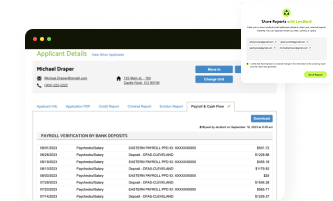
To rent an apartment in 2026, applicants need a complete set of documents needed for apartment rental, including a government issued id, proof of income, social security number, and a verified rental history report to secure a lease. Landlords and property managers rely on these documents required to rent an apartment to confirm identity, evaluate financial capacity, and review past behavior through tenant screening.
Strong preparation allows a tenant to submit a rental application quickly in competitive markets. The guide below LeaseRunner will explain what documents do you need to rent an apartment, why each requirement matters, and how to prepare a complete paperwork for renting an apartment package that satisfies all requirements to get an apartment efficiently.
Essential Documents Required to Rent an Apartment

Documents required to rent an apartment typically include ID, income verification, tenant screening consent, and rental references. Each document supports a specific part of tenant screening and confirms that a tenant meets the requirements to get an apartment.
A standard checklist answers what paperwork is needed to rent an apartment and aligns with what do most apartments require to move in:
- Identity verification
- Financial capacity proof
- Rental behavior history
- Risk assessment via screening
Government-Issued Photo ID
A government issued id verifies the legal identity of each adult listed on the rental application and is required for tenant screening. Every landlord or property manager uses this document to confirm that the tenant matches the submitted personal and financial records.
Most applications require a valid driver license or passport identification. These documents support identity verification and reduce fraud risk during the background check and credit report rental application process.
A standard government issued id confirms:
- Full legal name
- Date of birth
- Current address (if listed and updated)
- Clear photo verification
A valid and unexpired document is essential. Expired IDs often lead to delays, additional verification requests, or outright rejection because identity cannot be confirmed reliably.
Commonly accepted IDs include:
- Driver license
- Passport
- State-issued ID card
Identity verification is a required step in tenant screening across all U.S. states. Accurate identification ensures that the correct records appear in the tenant screening report, including credit data, criminal records (where permitted), and eviction history.
Providing clear and consistent identification also prevents mismatched records, which can otherwise slow down approval or create unnecessary complications in the rental process.
Social Security Number (SSN)
A social security number allows the landlord to run a comprehensive tenant screening report. This number connects the applicant to their credit report rental application and criminal history. Without an SSN, a property manager cannot easily access an eviction history report or perform a credit check authorization. International applicants without an SSN may sometimes use an Individual Taxpayer Identification Number (ITIN).
A valid social security number supports:
- Credit report rental application
- Identity matching
- Fraud prevention
- Employment verification
During application, applicants sign a credit check authorization and background check authorization. These permissions allow access to:
- Credit report
- Eviction history report
- Criminal records (if applicable)
For more detail on screening scope, review this guide on what a rental background check shows.
Proof of Income

Proof of income confirms that a tenant can consistently cover rent payment and meet financial requirements for an apartment. Every landlord or property manager uses this documentation to evaluate affordability during tenant screening.
Most qualifications for apartment approval follow a standard income rule: applicants must earn 2.5x–3x monthly rent. For example, a unit priced at $1,500 typically requires $3,750–$4,500 in monthly income. This ratio helps reduce the risk of missed rent payment.
Accepted proof of income documents include:
- Pay stubs (last 2–3 months)
- Employment verification letter
- Tax returns rental application
- Bank statements proof of income
- Employment offer letter
Many landlords also request a bank statement for rental application review to confirm consistent deposits, spending patterns, and available cash flow. Regular income deposits strengthen the overall financial profile.
A strong rental application often combines multiple documents to provide a complete picture of income stability. For example:
- Pay stubs + employer contact verification
- Bank statements + freelance invoices or contracts
Providing clear, consistent, and verifiable income records increases approval chances and speeds up the tenant screening report process.
Rental History & References
A rental history report provides a track record of a tenant's reliability and adherence to past lease terms.
Applicants should prepare a list of landlord references, includes:
- Previous addresses
- Lease duration
- Payment consistency
- Reason for moving
Rental verification allows a new landlord to ask about late payments or property damage. If a tenant has no prior history, credit references on rental application forms can serve as an alternative.
Renter's Insurance
Renter's insurance protects the tenant's personal belongings and provides liability coverage for the landlord. Most modern requirements to renting an apartment include a minimum liability policy of $100,000.
A typical policy covers:
- Personal property damage
- Liability coverage
- Temporary living expenses
A tenant must often show a "Declaration Page" before the lease signing process is finalized. This insurance ensures that the property manager is not held liable for the tenant's private property losses. Although not always mandatory, renter’s insurance strengthens an application and shows responsibility.
Pet Documentation

Pet documentation confirms compliance with building policies and verifies animal health and behavior.
Required documents may include:
- Vaccination records
- Breed information
- Pet license
- Emotional support animal (ESA) documentation
Service animals and Emotional Support Animals (ESAs) require a letter from a licensed healthcare professional. These what paperwork is needed to rent an apartment additions help the property manager manage community safety.
Guarantor/Co-signer Paperwork
A guarantor or co-signer provides financial backing when a tenant does not meet income or credit requirements for apartment approval. This arrangement allows a landlord or property manager to reduce risk during tenant screening while still approving the rental application.
A strong guarantor profile usually shows higher income and a solid credit history, which helps offset weaknesses in the primary application. Using a guarantor is common in situations where the applicant has:
- Low or unstable income
- Limited or no credit report history
- No established rental history report
With proper documentation, a guarantor can significantly improve approval chances and help meet the full requirements to get an apartment.
Additional Documents
Other what documents do i need to rent an apartment list items include a background check authorization and a credit check authorization.
These may include:
- Bank statement for rental application
- Offer letters for new jobs
- Scholarship or grant proof
- Court documents (if explaining eviction history)
A tenant should also be prepared to provide application fee payment receipts. Tenant background screening is a standard procedure that usually uncovers what a rental background check shows, such as criminal records.
What If You Don’t Have Traditional Proof of Income?
Non-traditional workers can use tax returns, bank statements, or job verification letters to prove financial stability. Landlords understand that the modern workforce includes many roles without a standard pay stub.
Providing 1099 forms or tax returns rental application documents can satisfy the requirements to get an apartment. Clarity and transparency are key when presenting alternative documents for rental application sets.
Self-Employed or Freelancers
Freelancers often use tax returns rental application copies (Form 1040) from the previous two years to show stable earnings. Bank statements proof of income act as secondary evidence of current liquidity.
Accepted documents include:
- Tax returns rental application (last 1–2 years)
- Invoices and payment records
- Bank statements proof of income
- Profit and loss statements
A tenant may also provide a proof of income letter from a Certified Public Accountant (CPA). This paperwork is needed to rent an apartment and alternatives ensure that self-employed individuals are not unfairly excluded.
Retirees & Benefits Recipients
Retirees can submit Social Security benefit statements or pension distribution records as proof of income. These official apartment rental documents carry significant weight because the income is guaranteed. Landlords value the stability of fixed-income tenants during the tenant screening phase. For these applicants, a bank statement for rental application purposes can show the regular arrival of these funds.
Students
Students often rely on a job verification letter for part-time work or proof of financial aid and grants:
- Scholarship letters
- Student loan disbursement records
- Guarantor income documents
If a student lacks income, a landlord will usually require a guarantor who meets the qualifications for apartment standards. The security deposit payment might also be slightly higher for those without a long rental history report. A student's driver license and passport remain essential for basic identity verification.
Passive Income Earners
Individuals earning from dividends, royalties, or real estate must provide tax returns and bank statements. These documents for rental application prove that the tenant does not need a traditional 9-to-5 job to afford the rent payment.
Property managers look for "liquidity," or the ability to access cash quickly. Clear bank statements proof of income are the most effective way to demonstrate this to a landlord.
Proof of Savings and Investments
Applicants with high savings but low monthly income can provide brokerage or savings account bank statements. These what do most apartments require to move in documents show a "cash cushion" that mitigates the risk of a missed rent payment.
Typical expectation:
- Savings covering 6–12 months of rent
- Verified through bank statement for rental application
Submitting these documents needed for apartment rental can help a tenant with a low credit score needed to rent an apartment. Savings alone may not replace income in strict markets, but helps significantly.

Location-Specific Requirements for Renting an Apartment
Rental requirements vary by state and city due to local housing laws and tenant protections. For example, in some cities, there are strict limits on the application fee for rental units, often capped at the actual cost of the background check.
Examples across the U.S.
Knowing what landlords look for in a credit check helps a tenant prepare specific paperwork for renting apartment needs based on local competitiveness.
Conclusion
Organizing documents needed for apartment rental ahead of time gives a tenant a competitive edge. A complete package includes government issued id, proof of income, and a clean rental history report.
By understanding what paperwork is needed to rent an apartment, an applicant can move from the rental application to the first month rent payment seamlessly. Total preparation reduces the stress of tenant screening and leads to a faster approval.
FAQs
1. Can I rent an apartment without a job?
Yes, a tenant can rent an apartment without a job by providing proof of savings, using a guarantor, or showing passive income. Landlords primarily care about the ability to make the rent payment consistently. Providing several months of bank statements proof of income can often override the lack of a current employment verification letter.
2. How much proof of income do I need for renting an apartment?
Most property managers require gross monthly income to be at least 3 times the monthly rent. For a $2,000 apartment, a tenant should show pay stubs reflecting at least $6,000 in monthly earnings. These qualifications for apartment standards ensure the tenant can handle the rent plus other living expenses.
3. Do I need to provide a credit report to rent an apartment?
While a tenant rarely provides the report directly, they must sign a credit check authorization. This allows the landlord to pull the credit report rental application data from bureaus like TransUnion or Equifax. This report is a vital part of the requirements to get an apartment because it shows financial responsibility.
Disclaimer: The information provided in this post is intended for general informational and educational purposes only. It should not be construed as legal, accounting, or tax advice. For guidance specific to your situation, we recommend consulting with a qualified professional in the relevant field before taking any action based on the content provided.