Renting an apartment for the first time means budgeting for the deposit, gathering proof of income and ID, passing a credit and background check, and reviewing the lease before signing. Most first-time applicants get tripped up skipping that prep: a denied application, a lost fee, and no explanation. A leasing agent asks for two months of pay stubs a recent graduate does not have.
LeaseRunner sits on the landlord's side of the apartment rental process, and this guide shows what that side looks for.

What Do You Need to Rent an Apartment for the First Time?
Before any tour, anyone working out how to rent an apartment for the first time should understand what a landlord is buying: twelve months of rent payments.
A rental contract grants the use of a unit for a fixed term in exchange for rent, and everything a first-time renter submits serves to prove that rent will be paid on time. The components barely change: a photo ID, a completed rental application, an application fee, proof of income at least 3 times the rent, a credit report pulled with consent, personal references, and cash for the security deposit plus first & last month's rent. Strictness varies.
A managed community runs an automated screening process with a floor score; a duplex owner may weigh a steady job more heavily. Rules shift by state: New York caps application fees at $20, D.C. sets its 2026 cap at $54, and New Jersey caps fees at $50 from May 1, 2026.
In practice, a 23-year-old earning $4,500 and applying for a $1,400 unit hands over an ID, two pay stubs, a reference, and $50, then waits two days. What is needed for a first-time apartment is not perfection; it is a documented income story.
What If the Applicant Has No Rental History?
Zero rental history is the most common worry for a first-time applicant, and it is far less fatal than it feels. Landlords treat an empty rental history as missing data rather than a negative mark, so the fix is substitution.
A dorm housing agreement, a parent's mortgage statement listing the applicant, or a utility bill in the applicant's name all establish residence; employers can serve as personal references when no former landlord exists. Tactics for renting with no rental history matter most when a landlord receives six applications for one unit, and the minimum age to sign a lease is 18 in most states.
The goal for a first-time renter is not to have a rental record; it is to leave nothing on the form unverified, because every blank line gives a landlord a reason to pick the other applicant.
How to Rent Your First Apartment Step by Step

These 12 steps run in order, and skipping ahead is where money is usually lost, typically at the deposit stage. This guide focuses on apartments, but the process largely overlaps with renting a house. The main differences are a larger deposit, more personal screening from the owner, and upkeep responsibilities an apartment's maintenance line would normally cover.
1. Figure Out How Much Rent You Can Afford
HUD treats a household as cost-burdened when housing costs, including utilities, exceed 30% of gross income, which is where the 30 percent rule rent guideline comes from.
On a $54,000 salary, that is roughly $1,350 a month, against a median asking rent of $1,531 in Q2 2026.
2. Save for Upfront Apartment Costs
The upfront costs first apartment applicants face usually double what they budgeted, and this is where people learning how to rent an apartment for the first time run short.
Move-in day demands the security deposit, first month's rent, and sometimes last month's rent, too. Caps vary sharply: California limits most landlords to one month under AB 12, effective July 1, 2024, while Texas and Florida set none.
Knowing how first and last month's rent works matters, since last month's rent is prepaid, while the deposit is refundable money held against damage.
3. Decide What You Need in an Apartment
Commute time, laundry access, pet policy, and parking drive most regret among people renting an apartment for the first time, so ranking three non-negotiables beats a wish list. The process of renting a house for the first time follows the same steps, though single-family owners screen applicants more personally.
4. Gather Your Rental Application Documents
The documents needed to rent an apartment are predictable, and assembling them early is the cheapest advantage available to a first-time applicant. Most landlords request the same stack:
- Photo ID that matches the application name exactly
- Proof of income: two recent pay stubs, or a signed offer letter
- Bank statements covering two months, showing consistent deposits
- References: a former landlord, if one exists, plus an employer
- Social Security number or ITIN is needed to pull a credit report
What If the Applicant Has No Pay Stubs or Established Credit?
A signed offer letter stating salary and start date is widely accepted, and self-employed applicants can supply last year's tax return or six months of bank statements. The guide to alternative proof of income outlines what each type of landlord accepts. A cosigner / guarantor closes the gap outright, though requirements vary enough that an applicant should ask before paying an application fee.
5. Search for Apartments That Fit Your Budget
Listings should be filtered to the Step 1 affordability number before browsing starts, and direct property management sites carry fewer fraudulent posts than open social marketplaces. Practical tips for renting an apartment include tracking every unit you view on a single sheet, with rent, deposit, included utilities, and pet fees, since these determine the true monthly cost.
6. Tour Apartments Before You Apply
A working apartment tour checklist covers shower water pressure, cell signal, window and door locks, staining under sinks, and hallway noise. Anyone learning how to rent an apartment for the first time should photograph every room, since an in-person tour confirms the unit exists and that the person showing it controls it. Those are the two things a fake listing cannot survive.
7. Ask the Landlord the Right Questions
5 questions do most of the work:
- What is the total move-in cost, itemized, including non-refundable fees?
- Which utilities are included, and which does the tenant set up?
- What is the guest, pet, and subletting policy?
- How are maintenance requests submitted, and what is the emergency response time?
- What are the renewal terms and the notice required to vacate?
A landlord who avoids itemizing move-in costs in writing has said something useful.
8. Submit Your Rental Application
The apartment application process moves fastest when an application arrives complete, early in the week, fee paid.
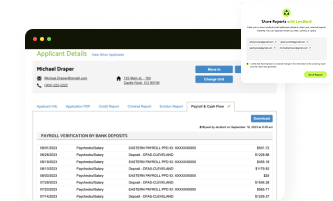
Applications filed through screening platforms return credit, background, eviction, and cash flow results within minutes, with decisions following in 24 to 72 hours. LeaseRunner's screening tools work this way in all 50 states, with FCRA and Fair Housing compliance built in. Accuracy beats speed, because a mistyped SSN stalls verification for days.
9. Review the Lease Before You Sign
The lease agreement governs the next 12 months, and signing is the last moment an applicant holds leverage.
Rent, due date, late fees, deposit return timeline, maintenance duties, and early termination penalties all deserve a line-by-line read. The questions to ask before signing a lease include whether verbal promises from the tour appear in writing, since an agreed dishwasher replacement belongs in an addendum.
10. Pay the Deposit and Move-In Costs Safely
The FTC logged nearly 65,000 rental scam reports and about $65 million in losses between January 2020 and June 2025, with a median loss of $1,000, and renters aged 18 to 29 were three times more likely to report losing money.
Money should never be sent by wire transfer or gift card, and checking how much a security deposit can legally be locally prevents overpayment.
11. Do a Move-In Inspection and Document Existing Damage
The move-in checklist is the only thing standing between a first-time tenant and a deduction for damage that predates the tenancy.
Every scratch, stain, chipped tile, and dead outlet should be photographed with a timestamp before furniture arrives, then both parties sign the completed move-in checklist and keep a copy. California now requires photo documentation before and after tenancy under AB 2801, signaling where the wider market is heading.
12. Set Up Utilities, Insurance, and Your New Address
Electricity, gas, water, internet, and trash accounts should start on the lease start date. Applicants who budget for utilities should know the national residential electricity rate hit 18.44 cents per kilowatt-hour in 2026, putting a one-bedroom near $90 to $135 a month for power.
Renters insurance runs about $13 to $24 a month, and its coverage explains the requirement.
Each step above produces a document that the next step depends on, which is why applicants who jump straight from searching to applying are the ones who get denied.
How to Get Approved for Your First Apartment

Approval is a scoring decision rather than a personality test, and for anyone renting an apartment for the first time, four factors carry nearly all the weight.
Meet the Landlord's Income Requirements
Most landlords apply a gross income multiple, with 3 times the monthly rent as the standard. The 3x the rent rule is a guideline rather than a law, so it flexes. An applicant at 2.6x with six months of savings and a strong reference often clears a bar that a 3.1x applicant with erratic deposits does not.
Be Ready for a Credit Check
Most landlords look for scores between 620 and 650, and scores above 680 make an application competitive. Age matters: Experian and Federal Reserve data from 2026 puts the average Gen Z score at 680, compared with 696 for Millennials and 709 for Gen X, which helps explain the conditional approvals first-time applicants receive.
The full picture of what credit score is needed to rent an apartment includes renting with no credit history, where a thin file is scored as unknown rather than bad. A landlord denying an application on credit grounds must issue an adverse action notice naming the reporting agency.
Use a Guarantor or Co-Signer If Needed
A cosigner/guarantor is the fastest route to approval when income or credit falls short. The guarantor signs the lease agreement and becomes liable for unpaid rent, which is why landlords typically require them to earn 80 to 100 times the monthly rent and pass their own screening. Some large communities do not accept guarantors at all.
Show Alternative Proof of Financial Stability
When standard metrics look weak, evidence of cash and consistency carries real weight. Cash flow analysis is increasingly part of screening, and LeaseRunner's options include a cash flow report alongside credit, background, and eviction checks. Six months of rent in savings or a larger deposit, where the law permits, moves a borderline file, and strong personal references for an apartment round this out.
Landlords are pricing default risk here rather than judging character, so anything that reduces uncertainty about a first-time renter is worth more than fifty extra points of credit score.
How Much Money Do You Need for Your First Apartment?
Anyone pricing out how to rent an apartment for the first time should split costs into upfront costs and monthly payments, because confusing the two can drain a savings account in the first week of your first apartment. The table models a $1,500 unit, near the Q2 2026 median asking rent of $1,531.
Move-in day for a $1,500 apartment realistically costs $3,300 to $5,700, and the monthly obligation is near $1,750 once utilities and insurance are factored in. Budgeting for rent alone is where most first time renter advice falls short.
First Apartment Red Flags to Watch For
Most bad outcomes announce themselves before money changes hands, and reading the tells is core to renting an apartment for the first time without losing a deposit.
- Payment is demanded before a viewing. The FTC found scammers pressure applicants to send a fee or deposit to hold a unit sight unseen.
- Wire transfers, gift cards, or P2P apps are requested. Legitimate landlords accept traceable payment.
- No written lease, or blank sections in one. Verbal terms are unenforceable in practice.
- Rent far below comparable nearby units. About half of the rental scams reported in the year to June 2025 began with a fake Facebook ad.
- Pressure to sign the same day. Urgency blocks a background check on the landlord.
Two or more together justify walking away and checking ownership in county records.
First-Time Apartment Renter Checklist

This condensed first-apartment checklist serves as a pre-application audit for anyone mapping out how to rent an apartment for the first time.
Working through this in order is the practical core of any first-time renters' guide.
Conclusion
Understanding how to rent an apartment for the first time comes down to preparation rather than luck, because a landlord approving an application is making a twelve-month bet on a stranger. Applicants who arrive with an affordability number, a complete document file, a verifiable income story, and a substitute for missing rental history turn that bet into an easy yes.
The money math catches most people off guard: roughly $3,300 to $5,700 upfront for a median-priced unit. LeaseRunner builds the screening and lease tools that landlords in all 50 states use to make these calls, which is why getting your first apartment gets easier once an applicant knows what they measure. Start a rental application with LeaseRunner when ready.
FAQs
1. What do I need to rent an apartment for the first time?
Anyone working out how to rent an apartment for the first time needs a photo ID, a completed rental application, proof of income of at least three times the rent, consent for a credit report, two personal references, and funds for the security deposit and first month's rent. Is it hard to get an apartment as a first-time renter? Not usually, because denials trace to incomplete files far more often than to weak credit.
2. How much money should I save before renting my first apartment?
Three times the monthly rent is the working target when renting an apartment for the first time. On a $1,500 unit, that is roughly $4,500, covering the security deposit, first month's rent, the application fee, and moving costs. That rises to four times when a landlord also requires last month's rent.
3. Do I need a co-signer for my first apartment?
Only when income or credit falls below the landlord's threshold. A co-signer/guarantor typically must earn 80 to 100 times the monthly rent and pass a separate screening, so applicants meeting the 3x income rule rarely need one.
4. How long does it take to get approved for an apartment?
Complete online applications are usually decided within 24 to 72 hours, since credit, background, and eviction reports are returned in minutes via modern screening platforms. Manual employment verification can stretch that to five business days.
Disclaimer: The information provided in this post is intended for general informational and educational purposes only. It should not be construed as legal, accounting, or tax advice. For guidance specific to your situation, we recommend consulting with a qualified professional in the relevant field before taking any action based on the content provided.