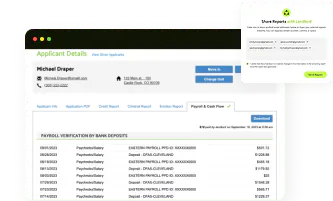
Two people can hold the same report, yet only the one who knows how to read the rental screening science score understands the results. The Rental Screening Science Score (RS³) looks like the score on a traditional credit report, but it works differently. It reads banking data rather than credit bureau tradelines, and it ties each result to a single rent. A wrong read can cost a landlord months of rent and a tenant an apartment. Three numbers carry the answer: the score, the predicted default rate, and the income percentile. Read together, they show whether the rent fits the applicant's income and bank activity.
3 Things to Check Before You Read the RS³ Report
Before you learn how to read rental screening science score numbers, three quick checks come first. They take about a minute and stop a wrong read.
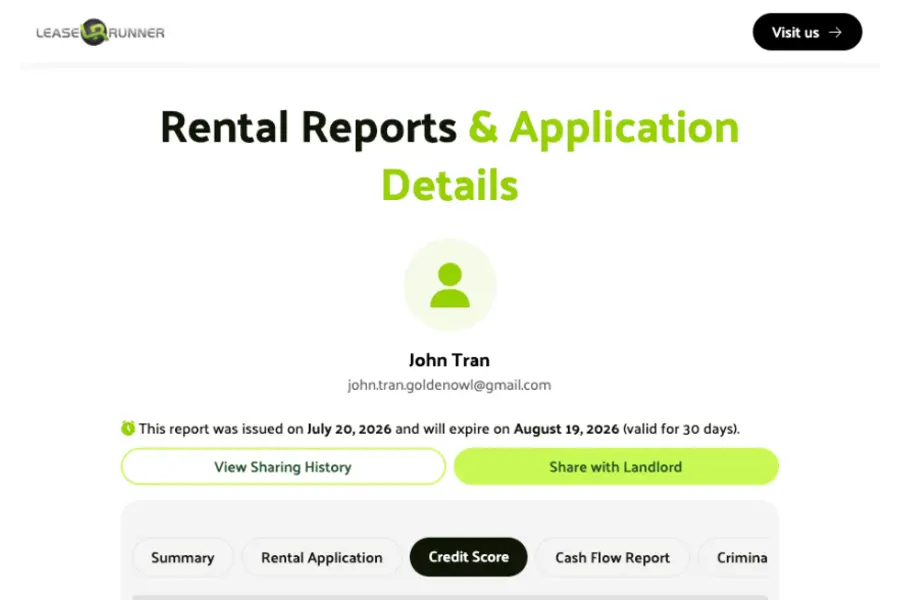
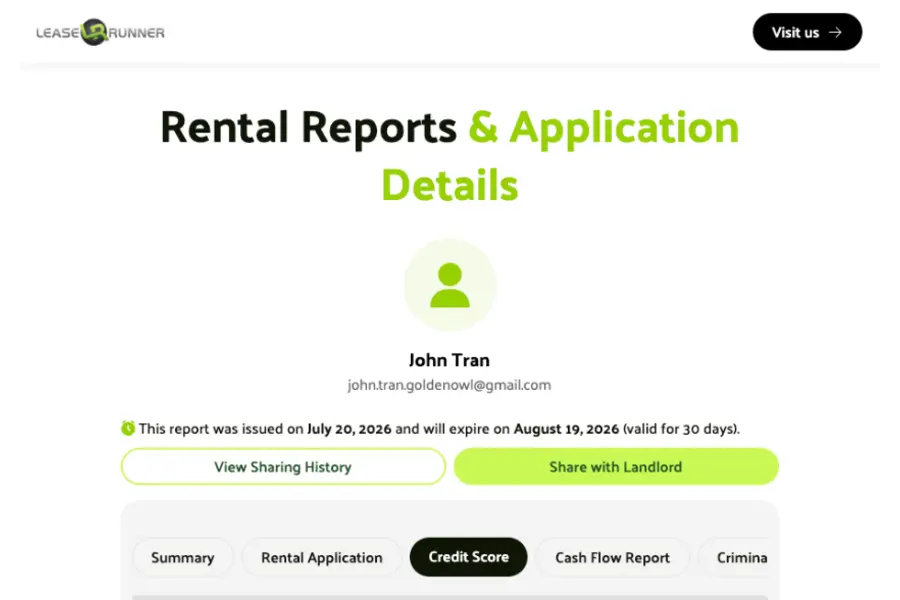
- The issue and end dates. A PTSR is LeaseRunner's Portable Tenant Screening Report, reusable for 30 days. The top of the report prints both dates, and a report read on day 29 has almost no life left.
- The rent amount behind the score. RS³ recalculates for each rent, so $1,800 and $2,600 units get different scores. Match the printed rent to the unit before reading on.
- Whose report it is. The RS³ lives in the Credit Score tab. Match the name on the report to the rental application. LeaseRunner reads banking data only after the tenant authorizes it.
For the other validity checks, see our guide on what a tenant screening report is.
How to Read Rental Screening Science Score Results, Part by Part
Each part of the report answers one question. Here are the five parts in order.
1. The RS³ Score and Rating
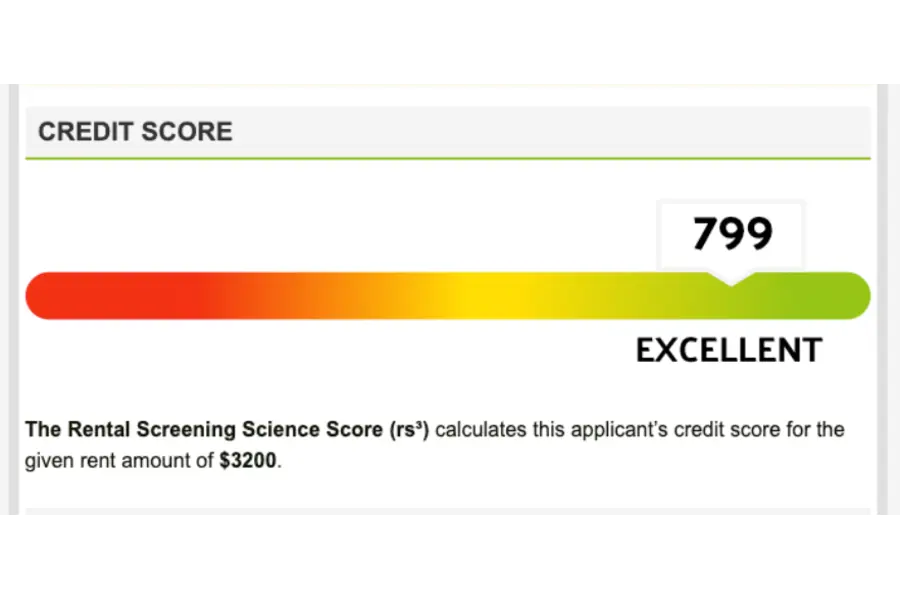
The first step in reading rental screening science score results is the number itself. It runs from 300 to 850, and higher means safer. RS³ is a predictive model built on 15 years of ACH rent payment data. It blends banking data, rental application answers, and the exact rent amount, so a 720 RS³ does not mean the same as a 720 FICO.
The report adds a rating label, such as "Excellent," on a red-to-green bar. LeaseRunner says the ratings follow a smooth curve tied to default risk, with no fixed cutoff between labels. Treat the label as a quick signal and the default rate as the precise reading.
2. The Rent Amount for Which the Score Was Calculated
A traditional credit score stays the same at a $1,200 studio and a $3,500 two-bedroom. RS³ does not. It weighs monthly income, bank balance, cash flow, and the rent to judge affordability at that price. It also reads transaction history, including payroll deposits, cash trends, overdrafts, and returned checks. Every other number on the page depends on this rent line, so check it first.
3. Predicted Default Rate
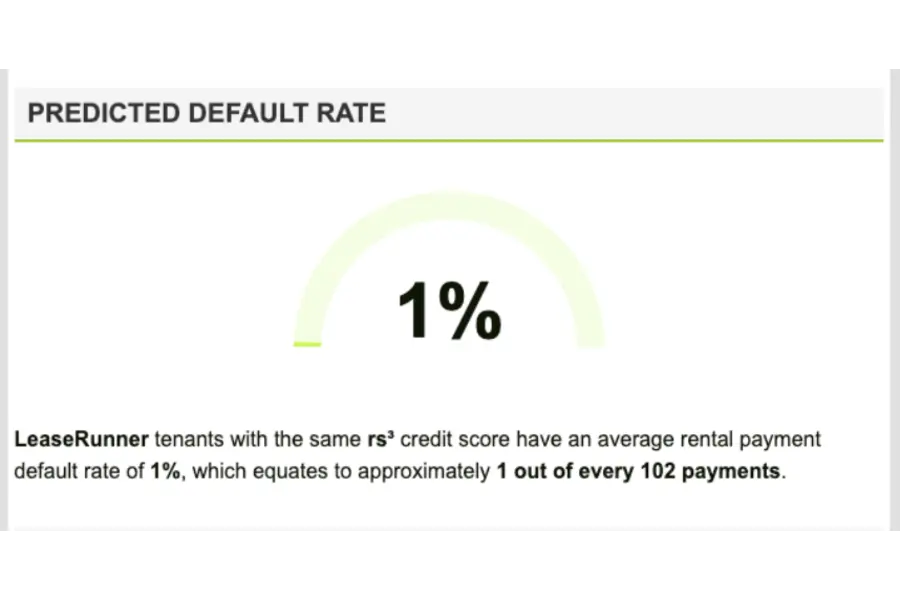
The predicted default rate is the average default rate on rent payments among LeaseRunner tenants with the same RS³ score. In the sample report, the rate is 1%, or about 1 out of every 102 rent payments. It is a group average, not a forecast for one tenant. Read it right after the score, because it puts the risk in one number that fits into written screening criteria.
4. Income Percentile and Rent Range
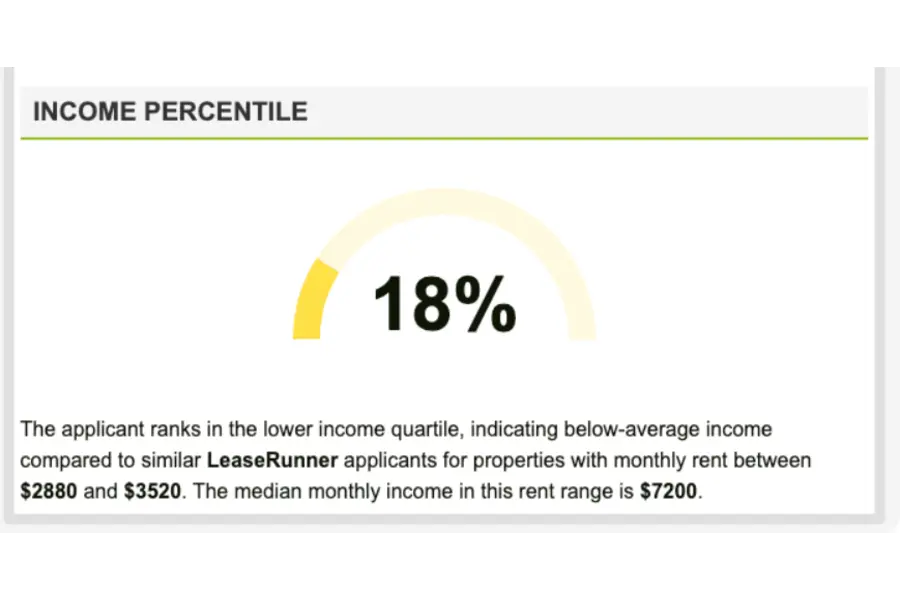
The income percentile ranks the applicant's monthly income against other LeaseRunner applicants targeting a rent within 10% of the same rent. For a $3,200 unit, that band runs from $2,880 to $3,520, and the sample's median income is $7,200 a month. An 18% rank means the applicant sits in the lower-income quartile for that band. It does not put the rent out of reach; most applicants in the band simply earn more.
The percentile does not feed the RS³ score, which is why the two can disagree. A low percentile with a high score means bank balance, payroll deposits, and cash trends carry the rent. Even the median earner would pay about 44% of income toward $3,200 rent, above the 30% mark Harvard's Joint Center for Housing Studies uses to define a cost-burdened renter household (Source: Harvard Joint Center for Housing Studies). Our guide on rent-to-income ratios shows why one ratio can misjudge a reliable tenant.
5. The Compliance Notice at the Top
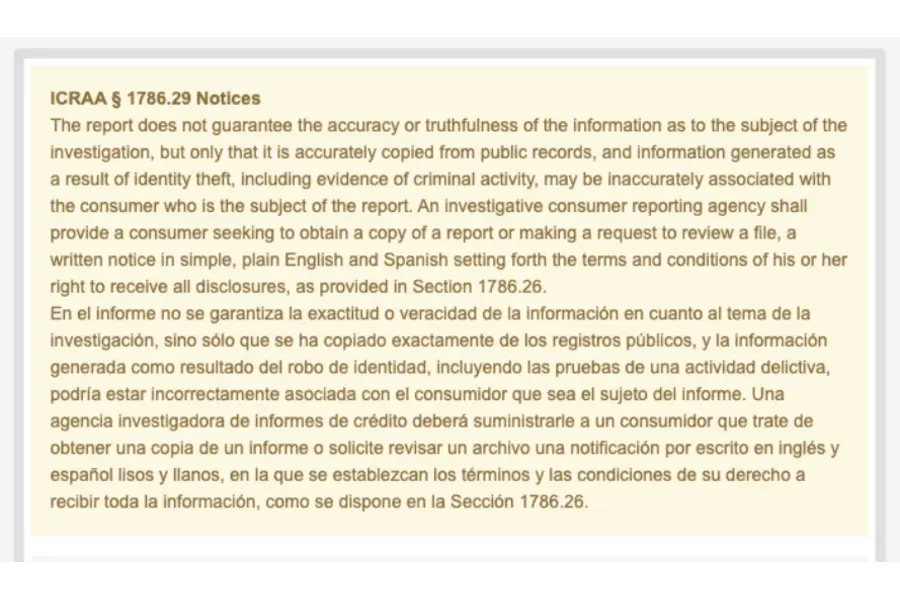
The sample report shows a California notice under ICRAA § 1786.29, printed in English and Spanish. It warns that the report cannot guarantee accuracy, because records copied from public sources can attach to the wrong person (Source: California Legislative Information, Civil Code § 1786.29). Read it, because a consumer report can carry errors a quick glance misses.
How Do the 3 RS³ Numbers Work Together?
The score shows risk, the default rate sizes it, and the percentile shows how far the applicant reaches. The sample shows a score of 799 rated Excellent, a 1% default rate, and an 18% income percentile at $3,200 rent. The low percentile can worry a landlord at first, yet the 799 and the 1% rate show strong financial capacity. The next step is the Cash Flow Report tab, covered in LeaseRunner's income verification and cash flow report. The table gives the four common pairings.
| RS³ score | Income percentile | What it means | Next step |
| Higher | Higher | Strong finances at this rent. | Check the criminal and eviction tabs. |
| Higher | Lower | Solid banking, lower income than peers. | Open the Cash Flow tab and check deposits and cash trends. |
| Lower | Higher | Income is strong, but bank habits raise concern. | Ask about overdrafts and uneven deposits. |
| Lower | Lower | Both signals point to elevated risk. | Weigh a lower rent or a co-signer. |
No pairing is an automatic yes or no, because the rating labels have no fixed cutoffs.
How Should Landlords Use RS³ in an Approval Decision?
Start with written screening criteria tied to the unit's rent: a minimum RS³ score, a top predicted default rate, and a plan for borderline cases. Apply the same criteria to every applicant for that unit, since consistency is the safest way to show Fair Housing compliance. Then read RS³ with the criminal and eviction tabs, because a high score says nothing about lease violations unrelated to payment.
If the report leads to a denial or added conditions, such as a higher deposit or a co-signer, send an adverse action notice. It must:
- Name the consumer reporting agency that supplied the report.
- State that the agency did not make the decision and cannot explain it.
- Describe the applicant's right to a free copy within 60 days and the right to dispute errors.
Source: Federal Trade Commission.
What Should Renters Do With Their RS³ Results?
The tenant decides when and how to share the report. Read every tab and check the rent amount behind the score: if the report used $2,000 and the unit costs $2,400, order a new one. The "View Sharing History" feature shows which landlords received the report, and our guide on what a portable tenant screening report is explains how to reuse it within the 30-day window.
If the report holds wrong data, dispute it right away. An error in the credit report tab goes through Experian's dispute process. An error in the banking data behind RS³, such as a wrong balance or a payroll deposit that did not post, goes to LeaseRunner or the consumer reporting agency named on the report. See how to check a tenant screening report for the steps. Renters with little or no credit history gain the most, since RS³ reads banking data, though they need a U.S. bank account.
Common Mistakes When Reading an RS³ Score
- Reading RS³ against FICO bands. The two models use different inputs and definitions of default, so a "good" score in one carries no equal meaning in the other.
- Using a score calculated for a different rent. The score, default rate, and percentile band all shift when the rent changes.
- Treating the default rate as a personal prediction. A 3% rate means similar tenants missed about 3 of every 100 payments, not that this tenant will.
- Rejecting on income percentile alone. It does not feed the score, so it discards the banking evidence. Learn how to verify a tenant's income using real deposits instead.
- Reading RS³ without the rest of the report. It does not replace the criminal search, the eviction search, or the cash flow report. When the numbers raise questions, landlords can also ask for bank statements.
Conclusion
Knowing how to read rental screening science score results turns a page of numbers into a sound decision. The RS³ gives a score from 300 to 850, a predicted default rate, and an income percentile, each tied to the rent on the application. A landlord with written criteria who reads all three builds a fair, defensible process, and a tenant who checks the report before sharing it applies with clarity. The Rental Screening Science Score page has a worked sample and current pricing.
Disclaimer: The information provided in this post is intended for general informational and educational purposes only. It should not be construed as legal, accounting, or tax advice. For guidance specific to your situation, we recommend consulting with a qualified professional in the relevant field before taking any action based on the content provided.