A rental security deposit receipt is a written confirmation that a landlord has received a security deposit from a tenant, including the deposit amount, payment details, and property information.
This document does more than confirm payment. A clear rental property deposit receipt establishes a verifiable financial trail tied to the lease agreement, helping prevent misunderstandings and reducing the risk of a deposit return dispute at the end of the tenancy.
What Is a Rental Security Deposit Receipt?
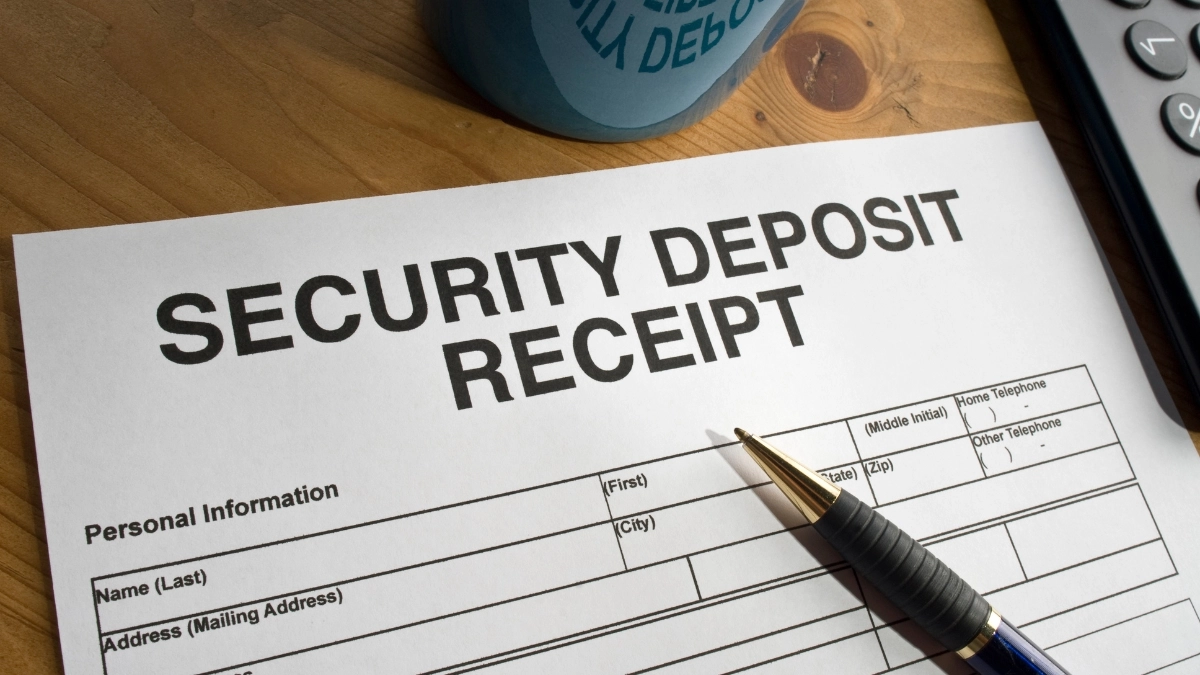
A rental security deposit receipt is a formal payment receipt confirming a tenant has paid a security deposit for a rental property. This document serves as legal rent deposit proof and helps ensure compliance with applicable deposit receipt law across many states.
Unlike rent, which grants the right to occupy a unit, a security deposit functions as financial protection for the landlord against potential losses related to damages beyond normal wear and tear vs damage.
A standard security deposit receipt includes the essential receipt information required to create a valid and enforceable payment record, such as:
- Deposit amount receipt
- Payment method and date
- Names of tenant and landlord
- Property details linked to the lease agreement
Effective rental deposit documentation ensures that the landlord and tenant agree on the starting balance of the security account. This receipt of security deposit form prevents future confusion regarding whether a payment was a move-in fee vs security deposit, which are legally distinct. By maintaining an accurate payment record, landlords uphold professional standards and simplify the accounting process for their rental property portfolio.
Is a Security Deposit Receipt Required by Law?
Yes, a security deposit receipt is required by law in many states, and even where not explicitly required, providing a written receipt is considered best practice under landlord receipt requirement standards.
A landlord must understand that rental deposit documentation serves as the primary defense in housing court. State-specific deposit law determines whether a landlord must issue a security deposit form for rental property.
Consider these specific legal standards:
- New York: Landlords must provide a written receipt that explicitly discloses the bank name and address where the deposit amount is held.
- Massachusetts: A receipt of security deposit form is mandatory within 30 days; failure can result in an immediate full refund.
- Washington: State law requires a rental security deposit receipt to be issued alongside a written checklist of the property's condition.
- Maryland: Landlords must provide a payment receipt within 30 days to maintain the right to withhold any part of the funds for damages.
Failure to provide this document may weaken a landlord’s position in a deposit return dispute. For landlords determining legal caps, it is helpful to understand how much is a security deposit for an apartment to stay within statutory limits.
Rental Security Deposit Receipt (Free Template)
A free security deposit receipt template simplifies documentation and ensures all required deposit receipt details are included.
Below is a clean, compliant security deposit receipt sample:
RENTAL SECURITY DEPOSIT RECEIPT Payment Method: (Cash / Check / Bank Transfer / Other) Acknowledgment: The landlord acknowledges receiving the deposit amount listed above. These funds will be held in accordance with the lease agreement and local landlord tenant law. This rental property deposit receipt serves as transaction proof for the tenant. Landlord Signature: __________________
Tenant Signature: __________________
This security deposit receipt template ensures compliance with deposit receipt law while creating reliable deposit dispute proof.
What Should Be Included in a Security Deposit Receipt?
A security deposit receipt must include complete and accurate details to function as valid rental deposit documentation and legal transaction proof.
Date of Payment
The date of payment must clearly show when the deposit amount was received, establishing the official start of the deposit holding period under deposit law.
This date is critical because many states impose strict deadlines for:
- Providing a receipt of security deposit form
- Depositing funds into a separate account
- Returning the security deposit after lease termination
An accurate date strengthens deposit dispute proof and ensures compliance with statutory timelines. Even a one-day discrepancy can affect a landlord’s ability to enforce deductions.
Tenant and Landlord Information
The receipt must clearly identify both tenant and landlord to ensure the transaction proof is legally binding. Landlords should use full legal names rather than nicknames to maintain a professional payment record. Accurate identification protects both parties if the rental property changes ownership during the lease term.
- Full legal names: Matches the names listed on the primary lease agreement.
- Contact information: Provides a verified way for the tenant to reach the landlord regarding the security deposit.
- Landlord's Business Address: Essential for formal notices regarding tenant deposit rights.
Property Address
The rental property address must precisely match the lease agreement, linking the security deposit receipt to a specific unit. Include:
- Full street address
- Unit or apartment number (if applicable)
This detail prevents disputes where a tenant may claim the deposit applies to a different rental property. It also ensures accurate tracking across a landlord’s portfolio and strengthens overall rental deposit documentation.
Property Description
The deposit amount receipt must show the exact amount paid to prevent future disagreements over the total balance held. This detail prevents deposit return dispute issues involving partial payments or overpayments.
Landlords should explicitly state if the total covers standard security or if it includes specific items like an apartment pet deposit. Clear accounting of the deposit amount receipt simplifies the final reconciliation process.
Bank or Account Details
The security deposit receipt should disclose where the deposit is held when required by law, ensuring transparency and compliance with deposit law.
Depending on the state, required details may include:
- Bank name
- Account type (escrow, trust account)
- Location of the financial institution
Providing this information protects tenant deposit rights by confirming that funds are properly stored and not commingled with personal accounts.
Failure to include required bank details may result in penalties or limit a landlord’s ability to retain any portion of the security deposit.
Signature and Acknowledgment
Signatures from both landlord and tenant confirm acknowledgment of the payment and the terms of the rental security deposit receipt. A signed written receipt increases legal enforceability and serves as the final transaction proof. This mutual acknowledgment is the best way to prevent a landlord withholding deposit funds unfairly later on.
A complete security deposit receipt ensures clear, compliant rental deposit documentation and reduces the risk of disputes. With these basics covered, it’s important to understand how a deposit receipt differs from a standard rent receipt.
Security Deposit Receipt vs Rent Receipt: What’s the Difference?
A security deposit receipt confirms a refundable deposit payment, while a rent receipt confirms a non-refundable payment for occupancy under the lease agreement. The two documents serve different legal purposes and must not be used interchangeably in rental deposit documentation or accounting records.
Key differences:
A rental security deposit receipt also plays a critical role in disputes involving normal wear and tear, since the deposit may only be used for specific legally allowed deductions.
Clear separation between these documents ensures accurate bookkeeping and strengthens compliance with deposit law and landlord tenant law. It also prevents misclassification issues, such as confusing a security deposit with a move-in fee or prepaid rent.
Understanding this distinction allows landlords to maintain clean payment records, reduce disputes, and properly document any deposit return dispute scenario.
What Happens If You Don’t Provide a Security Deposit Receipt?
Failing to issue a security deposit receipt weakens the payment record, increases legal exposure, and creates gaps in rental deposit documentation. In many jurisdictions, missing documentation shifts the burden of proof onto the landlord.
Without a proper deposit payment receipt, it becomes difficult to prove:
- The deposit amount actually received
- The purpose of the payment
- Compliance with deposit receipt law
This gap directly impacts the ability to defend against disputes or enforce deductions.
Legal Risks for Landlords
A landlord who does not provide a written receipt may face serious legal consequences under applicable deposit law.
Common risks include:
- Statutory penalties for violating landlord receipt requirement rules
- Loss of the right to retain any portion of the security deposit
- Court rulings in favor of the tenant due to lack of transaction proof
- Increased exposure in claims involving landlord withholding deposit
In some states, courts may require full deposit return regardless of damage if documentation is incomplete or non-compliant.
Improper documentation also directly impacts your ability to charge for repairs. Before considering a security deposit return letter, you must have a valid record of the initial payment. To avoid these pitfalls, landlords should learn what a landlord can legally deduct from a security deposit to ensure every deduction is backed by a solid paper trail.
Tenant Rights and Disputes
A missing rental deposit receipt significantly strengthens a tenant’s position in any dispute. Courts and regulators often prioritize tenant deposit rights when documentation is unclear or incomplete.
Tenants may reasonably claim:
- No verified payment record of the security deposit
- Lack of transparency in how the deposit was handled
- Improper or unsupported deductions
- Violations of deposit receipt law
In disputes, tenants can argue that without a valid receipt of security deposit form, the landlord cannot prove compliance with legal obligations. This argument often leads to rulings that favor full or partial deposit refund.
A properly issued security deposit receipt eliminates ambiguity, strengthens legal defensibility, and ensures that both landlord and tenant operate with a shared understanding of the deposit terms from the start.
Common Mistakes Landlords Make with Deposit Receipts
Landlords often create legal and financial risk by mishandling security deposit receipt documentation, especially when required deposit receipt details are missing or inaccurate. Even small errors can weaken transaction proof, reduce enforceability, and increase the likelihood of a deposit return dispute.
Common mistakes include:
- Not issuing a receipt of security deposit form: Losing a critical payment record.
- Missing key deposit receipt details: Names, dates, or bank info.
- Incorrect deposit amount receipt: Leading to accounting inconsistencies.
- Failing to link receipt to lease agreement: Creating confusion in multi-unit portfolios.
- Using vague templates: Missing the receipt information required under state law.
These mistakes weaken rental deposit documentation and increase the chance of disputes.
Benefits of Using Rental Management Tools to Automate Security Deposit Receipts
Using rental management tools significantly improves the accuracy, consistency, and legal compliance of security deposit receipt templates. Automation transforms manual documentation into a structured, reliable system for handling rental deposit documentation.
Key benefits include:
- Consistent receipt information required: Automated forms ensure the landlord never forgets to include the bank name, account type, or the deposit amount receipt details.
- Automatic payment record tracking: Software maintains a chronological payment record that integrates directly with the property's accounting ledger.
- Digital transaction proof storage: Cloud-based storage means the rental property deposit receipt is never lost, making it easy to produce during move-out inspections.
- Reduced human error: Automation eliminates handwriting legibility issues and mathematical errors in the deposit amount.
- Faster documentation process: A landlord can issue a security deposit form for rental property in seconds, saving time during the busy move-in period.
Conclusion
A rental security deposit receipt helps document the security deposit, ensures compliance with landlord tenant law, and protects tenant rights. By using a clear security deposit receipt template, landlords minimize the risk of a deposit return dispute and maintain an accurate payment record for the entire lease agreement.
Managing rental deposit documentation shouldn't be a manual burden. LeaseRunner offers automated tools to generate a compliant rental security deposit receipt instantly. From digital signatures to secure payment record storage, we help landlords maintain perfect transaction proof throughout the tenancy.
FAQs
1. Is a landlord required to give a deposit receipt?
Yes, many states require a security deposit receipt under deposit law. Even where not required, providing one is a widely accepted best practice.
2. Can a tenant request a receipt after paying a deposit?
Yes, a tenant can request a rent security deposit receipt at any time. Providing one supports proper documentation and helps avoid disputes.
3. Can I use a digital receipt instead of a paper one?
Yes, a digital receipt is valid in most jurisdictions as long as it includes all required details and can serve as reliable proof of payment.
Disclaimer: The information provided in this post is intended for general informational and educational purposes only. It should not be construed as legal, accounting, or tax advice. For guidance specific to your situation, we recommend consulting with a qualified professional in the relevant field before taking any action based on the content provided.