Yes, tenants can get an apartment with a bankruptcy on their record, though the process requires more preparation and transparency than a standard application.
While bankruptcies affect getting an apartment by lowering credit scores, many landlords that accept bankruptcies prioritize current income stability and recent rental history over past financial distress.
Can You Rent an Apartment After Bankruptcy?
Yes, tenants can rent an apartment after bankruptcy when financial recovery is documented and landlord screening standards are met.
Federal law does not prohibit renting after bankruptcy. No federal housing statute automatically disqualifies applicants solely due to a bankruptcy filing. Instead, approval depends on apartment credit check requirements, verified income, and each property’s written tenant screening criteria.
Bankruptcy appears on consumer credit reports for a defined period. Under the Fair Credit Reporting Act (FCRA), Chapter 7 bankruptcy may remain on a credit report for up to 10 years from the filing date, while Chapter 13 bankruptcy may remain for up to 7 years from the filing date. That reporting timeline answers the common question: how long does bankruptcy stay on credit report? The presence of bankruptcy does not create an automatic denial. Many landlords weigh recent filings more heavily than older, discharged cases.
Landlords generally evaluate total risk rather than bankruptcy alone. A standard review often includes:
- Credit score and tradeline activity
- Debt-to-income ratio and overall affordability
- Income documentation, including proof of income, pay stubs, or bank statements
- Eviction history vs bankruptcy
- Rental payment patterns and landlord references
Bankruptcy alone often carries less risk than unpaid rent or eviction. Many landlords consider eviction history more severe. For reference, eviction records may remain visible for years. LeaseRunner explains more in this guide on how long does an eviction stay on record.
Understanding Bankruptcy Types: Chapter 7 vs. Chapter 13
A tenant's ability to rent an apartment after Chapter 7 is often higher than during an active Chapter 13 because Chapter 7 results in a total discharge of unsecured debts within months. Chapter 7 liquidation clears the slate quickly, making the applicant "debt-free" in the eyes of some property managers. In contrast, Chapter 13 involves a three-to-five-year repayment plan, meaning the tenant still has ongoing financial obligations that impact their rent-to-income ratio.
The apartment credit check requirements differ based on these filings:
- Chapter 7: Stays on credit reports for 10 years. Landlords often prefer this once discharged because the tenant cannot file for Chapter 7 again for another eight years, providing a window of "bankruptcy immunity."
- Chapter 13: Stays on credit reports for 7 years. Because it involves a court-ordered payment plan, some landlords view this as a sign of financial responsibility, provided the tenant has a letter of explanation from the bankruptcy trustee.
When evaluating renting with bankruptcy on credit report, landlords typically consider:
- Whether bankruptcy was discharged
- Whether a Chapter 13 repayment plan remains active
- Whether past rent was included in the bankruptcy filing
- Whether any eviction occurred
- Whether current income supports monthly rent
Housing debt matters most. If unpaid rent to a prior landlord appears in the filing, approval becomes more difficult. By contrast, bankruptcy caused by medical bills or business failure may raise fewer concerns if rental history remains clean.
Understanding screening transparency helps applicants prepare. LeaseRunner explains detailed screening components in this guide on what a rental background check shows.
Factors Affecting Your Ability to Rent with Bankruptcy
Several measurable factors influence whether do apartments accept bankruptcies in practice.
Type of Landlord
Private landlords often exercise discretion. Large apartment communities rely on standardized tenant screening criteria. Corporate properties may apply strict minimum credit score for apartment thresholds.
Independent property owners sometimes prioritize income stability over credit score. Larger management companies frequently use automated approval systems.
Applicants denied due to credit screening must receive an adverse action notice under the FCRA. LeaseRunner explains required disclosures in this guide on what to include in an adverse action letter.
Time Since Filing
Time reduces perceived risk. A bankruptcy filed six months ago creates higher concern than one discharged four years ago.
Landlords reviewing how long after bankruptcy can you rent typically prefer:
- At least 12–24 months since discharge
- Established new credit lines paid on time
- No recent collections
Current Income Stability
Stable income often outweighs past credit events. Most properties require income equal to 2.5x–3x monthly rent. This calculation forms the rent-to-income ratio.
Landlords also calculate the debt-to-income ratio to assess affordability. LeaseRunner provides details in this article on debt-to-income ratio apartment.
Applicants must often:
- Provide pay stubs
- Provide bank statements
- Show stable employment
- Submit employment verification
Consistent earnings signal lower payment risk.
Rental History
Rental payment history carries weight. Clean payment records offset credit concerns.
Landlords may request:
- Rental reference
- Landlord reference
- Proof of rental payment history
- A rent ledger
A rent ledger details payment consistency. Learn more in LeaseRunner’s guide on what is a rent ledger.
Explanation of Bankruptcy
A proactive letter of explanation allows the tenant to define the narrative. Whether the filing was due to medical bills, divorce, or a job loss, explaining the "why" helps the landlord see the tenant as a person rather than a risk statistic.
The letter should:
- State cause (medical debt, job loss, divorce)
- Confirm discharge status
- Show recovery steps
- Highlight stable income
Clear documentation reduces uncertainty.
Documents You Need to Prove Stability After Bankruptcy

To navigate the apartment rental process successfully, tenants must be over-prepared with documentation.
1. Proof of Current Income
Income verification determines affordability. Most properties require gross monthly income equal to 2.5 to 3 times monthly rent. That calculation establishes the rent-to-income ratio. Some landlords also calculate the debt-to-income ratio to measure total monthly obligations against earnings.
Common income documents include:
- Proof of income
- Recent pay stubs
- Bank statements
- Annual tax returns
- Formal employment verification
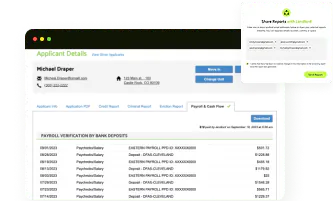
Applicants should proactively provide pay stubs covering at least the last 30 days. Many landlords also request 2–3 months of statements to confirm consistent deposits. When asked to provide bank statements, highlight regular payroll entries to show stable earnings.
2. Rental History & Reliability
Rental payment behavior directly reflects housing risk. Clean rental history can offset lower credit scores.
Strong supporting documents include:
- Written landlord reference
- Prior lease holder confirmation
- Documented on-time payment history
- Signed rent ledger
When presenting proof of rental payment history, include:
- Copies of canceled checks
- Online payment confirmations
- Bank transfer records
Absence of eviction strengthens applications significantly. In screening models, eviction often weighs more heavily than bankruptcy.
3. Bankruptcy-Specific Paperwork
Transparency reduces uncertainty during review. Landlords often ask for proof that bankruptcy has been discharged or remains in good standing.
Relevant documents include:
- Court discharge order
- Bankruptcy filing summary
- Confirmation that bankruptcy closed
- Chapter 13 trustee payment confirmation (if applicable)
For Chapter 13 cases, provide documentation confirming current compliance with the repayment plan. Active repayment affects the debt-to-income ratio apartment calculation because trustee payments count as ongoing monthly obligations.
A concise letter of explanation should accompany court records. The letter should state:
- Cause of bankruptcy (medical debt, job loss, divorce, business closure)
- Discharge or repayment status
- Evidence of financial stability after filing
Clear explanation prevents assumptions.
4. Supporting Evidence for Self-Employed Renters
Self-employed applicants face additional scrutiny because income may fluctuate monthly. Strong financial documentation reduces perceived risk.
Recommended documents include:
- Two years of signed tax returns
- 6–12 months of personal and business bank statements
- Year-to-date profit and loss statement
- Business license or registration confirmation
Consistent deposits demonstrate income reliability. Landlords focus on average monthly earnings rather than highest-earning months.
Self-employed renters should calculate projected income carefully to ensure compliance with required income requirements apartment standards. When necessary, a qualified co-signer or guarantor may further strengthen the file.
How to Overcome the Challenges of Renting After Bankruptcy

A “deny” or “conditional” result during tenant background screening does not end the application process. Several practical steps can reduce landlord risk and improve approval odds.
- Offer a Higher Security Deposit: Providing the first month rent, last month rent, and a double security deposit upfront reduces the landlord’s financial risk.
- Get a Co-signer or Guarantor: A co-signer with excellent credit can guarantee the lease. It is vital to know the difference between a cosigner and a guarantor before signing, as their legal obligations vary.
- Find a Roommate: Applying as a co-tenant with a roommate who has strong credit can help the primary lease holder get approved.
- Be Honest Early: Mentioning the bankruptcy before the landlord runs the credit check builds trust. If the landlord eventually sends an adverse action letter, the tenant will already have their defense prepared.
- Strengthen Income Documentation: Submit updated pay stubs, bank statements, and employment verification to demonstrate stable earnings. Higher verified income improves approval odds even with past bankruptcy.
- Show Clean Rental History: Provide a landlord reference, a rent ledger, and proof of rental payment history to demonstrate consistent housing payments after bankruptcy.
- Target Flexible Landlords: Search for private property owners or listings labeled “second chance leasing.” Smaller landlords often review applications individually rather than relying only on automated scoring.
Each strategy reduces uncertainty. Landlords approve applications based on measurable stability, not past financial hardship alone.
How to Find Apartments Willing to Rent After Bankruptcy

Finding landlords that accept bankruptcies requires targeted research. Applying randomly wastes application fees and increases credit inquiries. A focused strategy improves approval odds.
- Look for Private Owners: Use sites like Craigslist or Facebook Marketplace to find individual owners. These landlords are more likely to accept a portable tenant screening report and listen to personal explanations.
- Search for "No Credit Check" Ads: While rare, some landlords prioritize income over credit. Learn how to rent an apartment without credit to apply these same principles to bankruptcy situations.
- Check Low-Income Housing: Many often ask, "does low-income housing accept bankruptcies?" The answer is generally yes, as these programs are designed for those with financial hardships, provided the tenant meets the specific income caps.
- Use a Rental Broker: Professional agents often know which management companies have flexible tenant screening criteria.
- Avoid Large Corporate Complexes with Strict Score Minimums: Large communities often apply automated minimum credit score for apartment rules. Applicants with recent bankruptcy may face automatic denial under rigid scoring systems.
- Prepare Before Applying: Review the full apartment rental process to understand screening stages and documentation timing. Organized preparation reduces delays and improves negotiation leverage.
- Verify Screening Requirements in Advance: Ask about apartment credit check requirements, income standards, and deposit policies before submitting an application. Clear expectations prevent unnecessary denials.
Strategic targeting saves time and money. The goal is not to convince every landlord. The goal is to apply where financial recovery and stable income receive proper consideration.
Conclusion
Can you get an apartment with a bankruptcies on record? Yes, rental approval remains possible when income stability, documentation, and responsible payment history support financial recovery.
Bankruptcy impacts credit, yet income strength, rental reliability, and preparation carry equal or greater weight in many landlord decisions. Strategic documentation, honest disclosure, and financial discipline significantly improve outcomes.
Renting after bankruptcy requires planning, but approval remains achievable.
FAQs
1. Can I rent an apartment after filing for bankruptcy?
Yes, renting is possible both during and after filing. Most tenants find more success after the bankruptcy is "discharged," meaning the court has finalized the case.
2. How soon can I rent after a Chapter 7 bankruptcy?
Tenants can often rent immediately, but institutional landlords typically prefer to see 12 to 24 months of "clean" financial history post-discharge.
3. What documents do I need to provide to rent after bankruptcy?
Applicants typically submit proof of income, pay stubs, bank statements, employment verification, tax returns, rental references, and discharge paperwork.
4. What can I do to improve my chances of renting after bankruptcy?
Strengthen income, reduce debt, rebuild credit, get a co-signer or guarantor, provide strong references, and consider offering additional deposit funds.
5. Can private landlords rent to someone with a bankruptcy?
Yes. Private landlords often evaluate total financial picture rather than automated credit scoring.
6. How long does bankruptcy stay on my credit report?
Chapter 7 remains for up to 10 years. Chapter 13 remains for up to 7 years under federal reporting rules.
7. What type of apartments accept tenants with bankruptcies?
Private landlords, second-chance leasing communities, and some income-restricted properties may approve applicants with documented recovery.
8. What if my bankruptcy is still pending? Can I rent now?
Renting remains possible during Chapter 13 repayment if income meets requirements and court status is disclosed. Some landlords require written trustee approval.
Disclaimer: The information provided in this post is intended for general informational and educational purposes only. It should not be construed as legal, accounting, or tax advice. For guidance specific to your situation, we recommend consulting with a qualified professional in the relevant field before taking any action based on the content provided.